Enterprise Generative Search — Azure and Open Source · View 36 of 41 · Assurance
Decisions
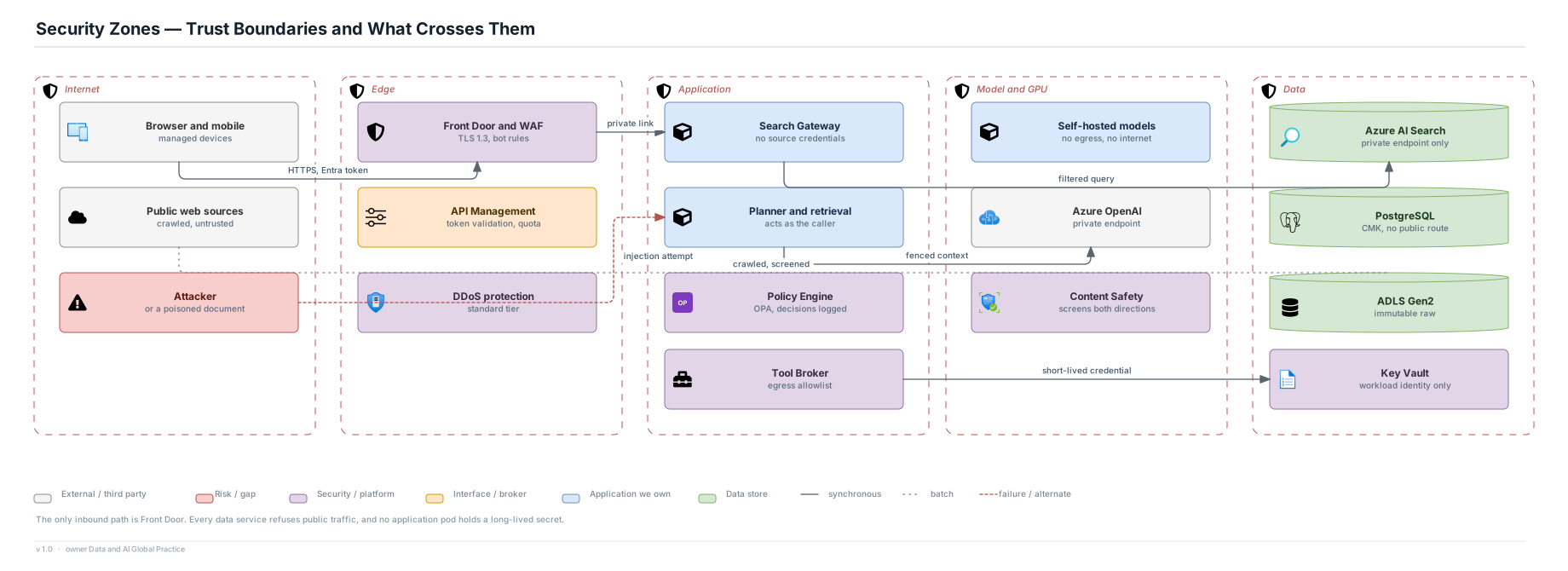
- One inbound path: Front Door. Every data service refuses public traffic, and every application pod authenticates with workload identity rather than a stored secret.
- Self-hosted models have no internet egress at all. A model that cannot reach the network cannot be talked into exfiltrating anything, regardless of what a document tells it.
- The attacker is drawn on the page. A poisoned document arriving through a legitimate connector is the realistic threat, not someone attacking the login page.
What crosses which boundary
- Internet to edge: HTTPS with an Entra token, WAF and bot rules.
- Application to model: a fenced context containing evidence that is never read as instruction.
- Application to data: a filtered query carrying the caller's group set — the only way content leaves the data zone.
Risks
- Azure OpenAI is outside our trust zone even over a private endpoint. What we send it is bounded by the context assembly rules in view 25 and by the sensitive-data controls in view 39.
- Crawled public content is untrusted by definition and is screened at index time; it can still be wrong, which is why source authority weighting exists in view 24.