Enterprise Generative Search — Azure and Open Source · View 35 of 41 · Operations
The decision
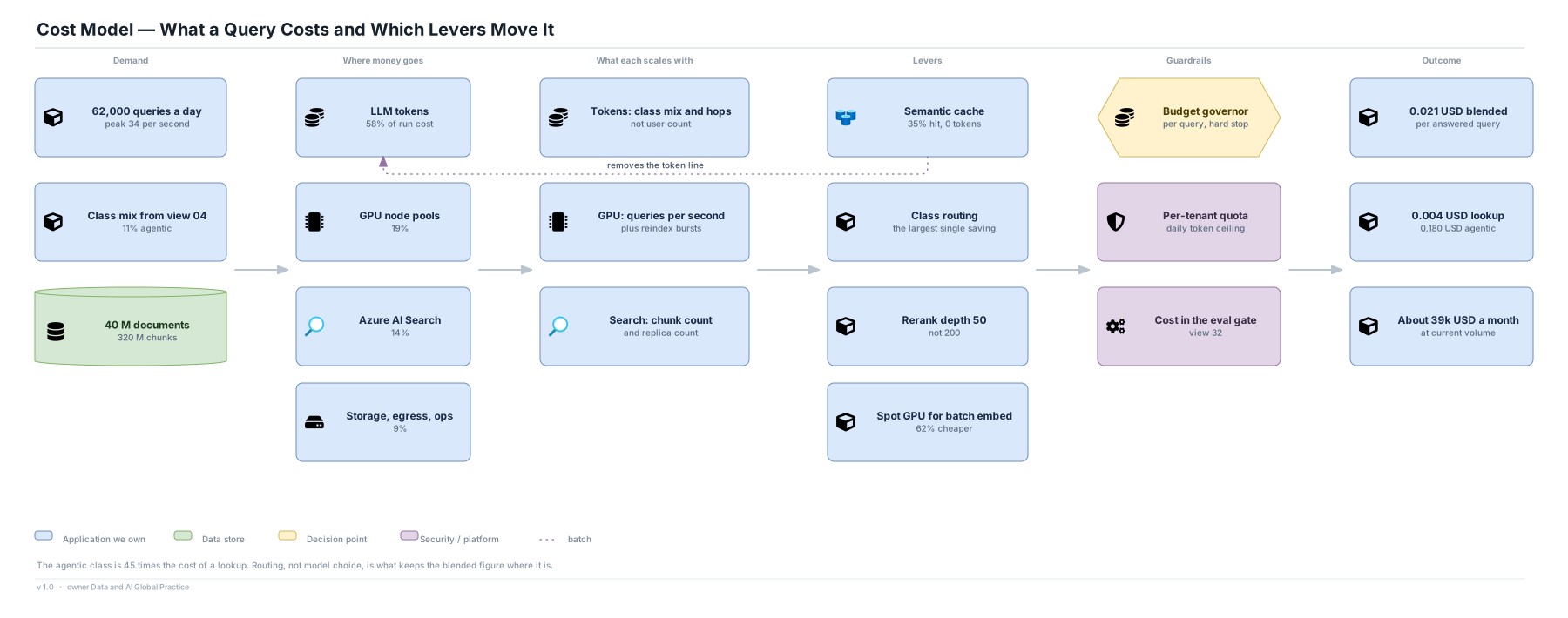
- Routing, not model choice, is the dominant cost control. The agentic class costs 45 times a lookup, so the classifier in view 04 is worth more to the bill than any negotiation on token price.
- Embedding, reranking and verification are self-hosted because their cost scales with queries per second rather than with tokens; synthesis is managed because its quality requirement moves faster than we can.
- Cost is a release gate, not a monthly review. A change that quietly doubles token usage is caught before it ships, in view 32.
Numbers
- 0.021 USD blended per answered query; 0.004 lookup, 0.180 agentic. About 39,000 USD a month at 62,000 queries a day.
- Split: LLM tokens 58%, GPU node pools 19%, Azure AI Search 14%, storage and operations 9%.
- Semantic cache hit rate 35%, which removes the token line entirely for those queries; spot GPU for batch embedding saves 62% on the reindex path.
Assumptions and risks
- Costs assume reserved PTU capacity for the synthesis model with pay-as-you-go spill at peak. Pure pay-as-you-go raises the blended figure to about 0.028 USD.
- The cache hit rate is a function of query repetition, which is high in an enterprise and would not hold on an external corpus. It is measured weekly rather than assumed.