Enterprise Generative Search — Azure and Open Source · View 33 of 41 · Operations
The decision
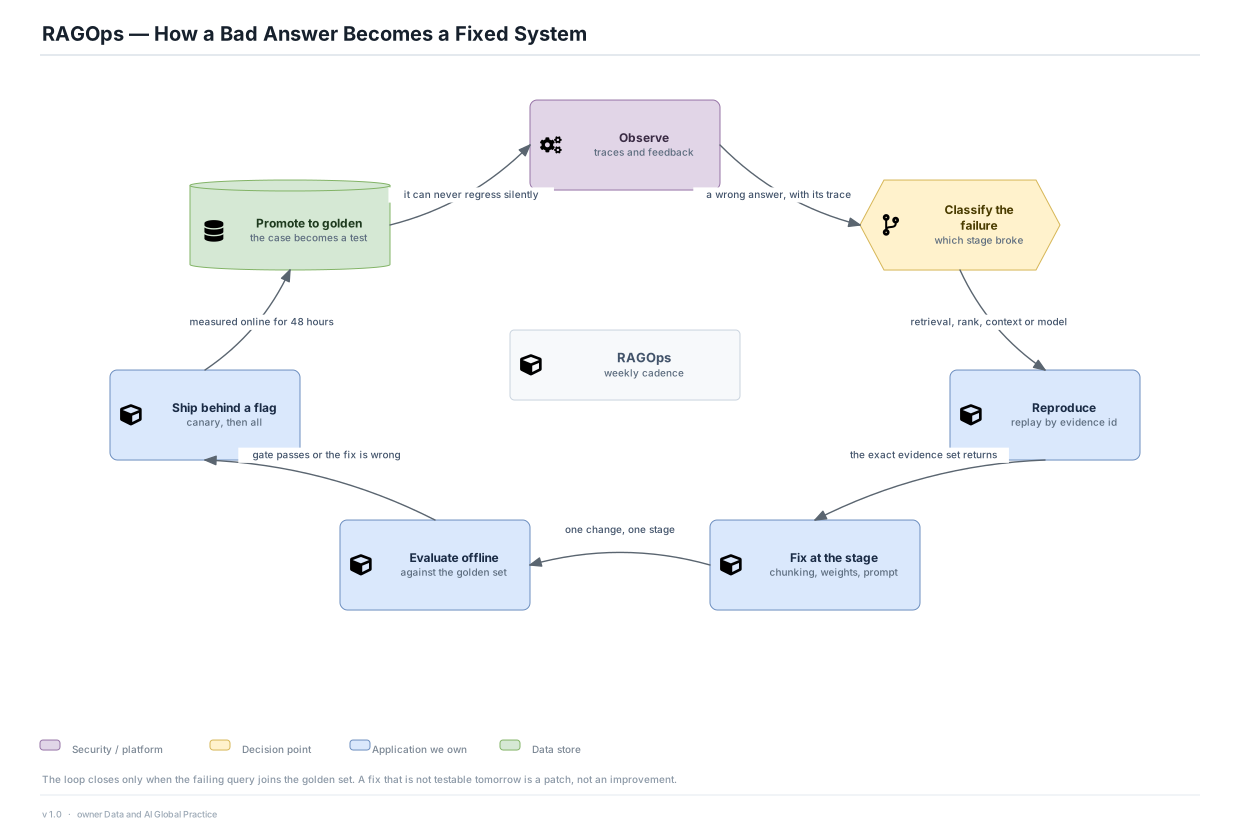
- The loop closes only when the failing query joins the golden set. A fix that is not testable tomorrow is a patch, and the same failure returns within two releases.
- Failures are classified by stage before anything is changed. Without the classification in view 34, teams argue about the model when the document was never retrieved.
- One change per stage, per release. Two simultaneous fixes to retrieval and to the prompt produce a result nobody can attribute.
Numbers
- Weekly cadence, about 40 triaged failures a week at current volume, of which roughly 60% are retrieval or corpus problems rather than generation ones.
- The golden set grows about 30 queries a month from real failures, which is the main reason its difficulty tracks the product.
Assumptions
- Traces are retained 90 days, which bounds how far back a reported failure can be reproduced. Failures older than that are reconstructed from provenance, which is kept for seven years.