Enterprise Generative Search — Azure and Open Source · View 32 of 41 · Operations
The decision
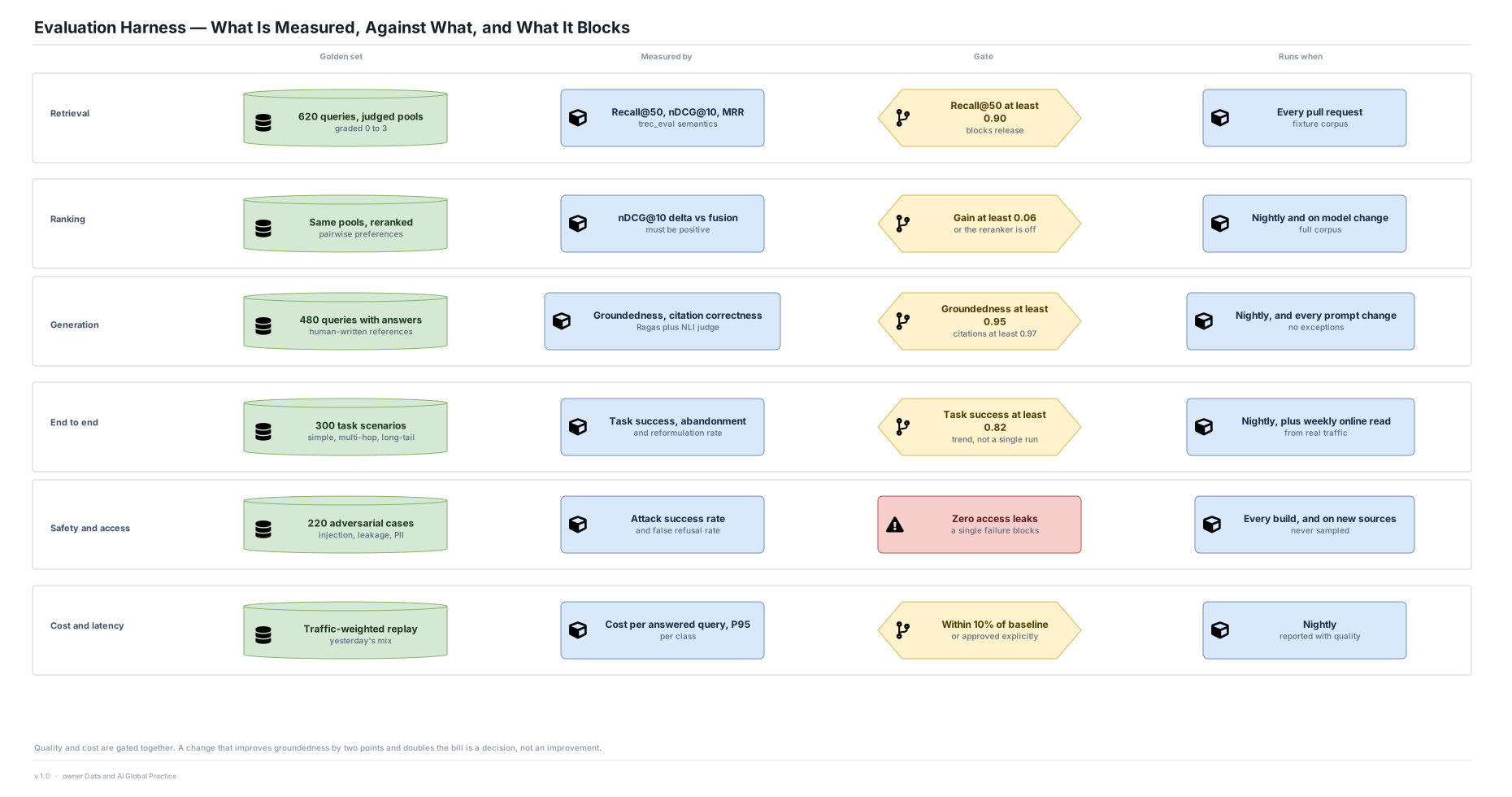
- Evaluation is built before launch, not after. A generative search system with no golden set cannot tell an improvement from a regression, which means every change after that point is a guess.
- Retrieval and generation are measured separately. An end-to-end score alone cannot say whether the answer was wrong because the document was never found or because the model ignored it.
- Access safety has a zero-tolerance gate: one leak in the adversarial suite blocks the release, with no threshold and no waiver path.
Numbers
- 1,400 golden queries: 620 retrieval with judged pools, 480 with human reference answers, 300 task scenarios, plus 220 adversarial cases.
- Gates: Recall@50 at least 0.90, groundedness at least 0.95, citation correctness at least 0.97, task success at least 0.82, cost within 10% of baseline.
- Composition is deliberate: 30% simple, 25% ambiguous, 20% multi-hop, 15% adversarial, 10% long-tail.
Assumptions and risks
- Human reference answers are expensive and go stale as the corpus changes. Budget assumes two annotator-days a month to maintain the set.
- An LLM judge is used for parts of the generation score and is itself validated against human labels quarterly. An unvalidated judge is a metric that drifts with a model release.