Enterprise Generative Search — Azure and Open Source · View 29 of 41 · Runtime
The decision
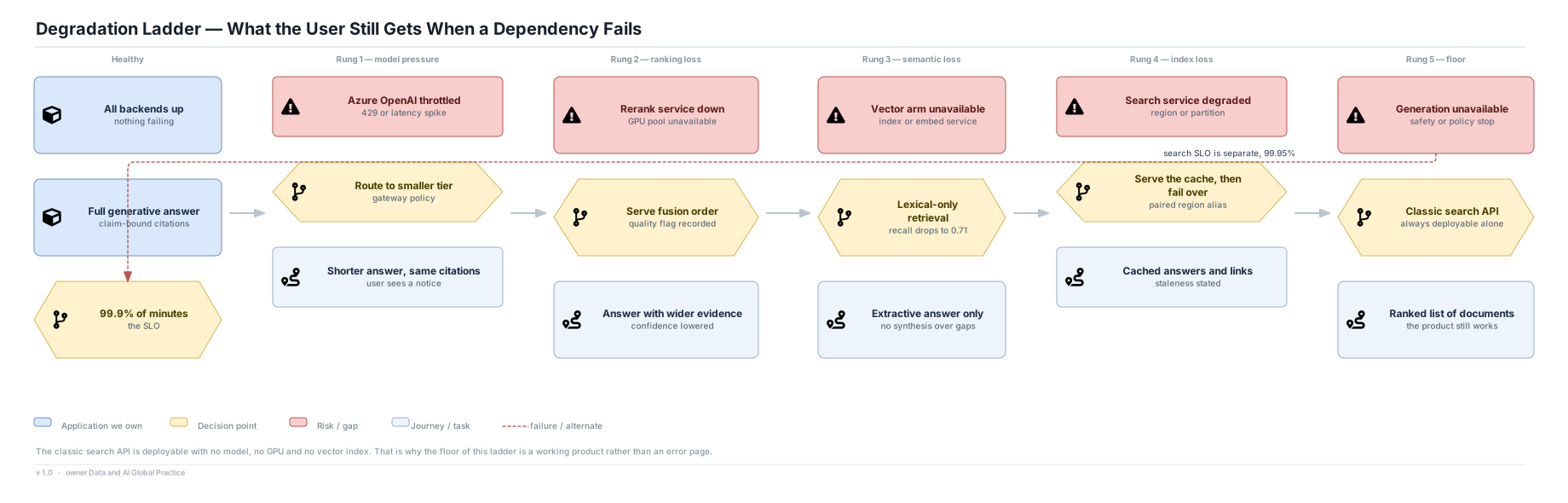
- Each rung is a defined product behaviour with a user-visible statement, not an unplanned error path. The user is told what changed, because an unexplained shorter answer is read as a worse product rather than a degraded one.
- The classic search API deploys with no model, no GPU and no vector index. That is why it carries a higher availability target than generative answers and why the floor is a ranked list rather than an error page.
- Confidence falls as the ladder descends, and the answer says so. Degrading quietly is how a platform loses trust it cannot rebuild.
Numbers
- Generative answers 99.9%; classic search 99.95%. The gap is the model and GPU dependency, priced deliberately.
- Lexical-only retrieval measures Recall@50 of 0.78 against 0.92 hybrid — degraded, and still useful.
- Rungs 1 and 2 are exercised monthly in a game day; rungs 3 to 5 quarterly.
Assumptions
- The cache can serve a meaningful share of common questions during an index outage, which assumes the 35% hit rate holds under a shifted query mix. It is measured during game days rather than believed.