Enterprise Generative Search — Azure and Open Source · View 26 of 41 · Runtime
Decisions
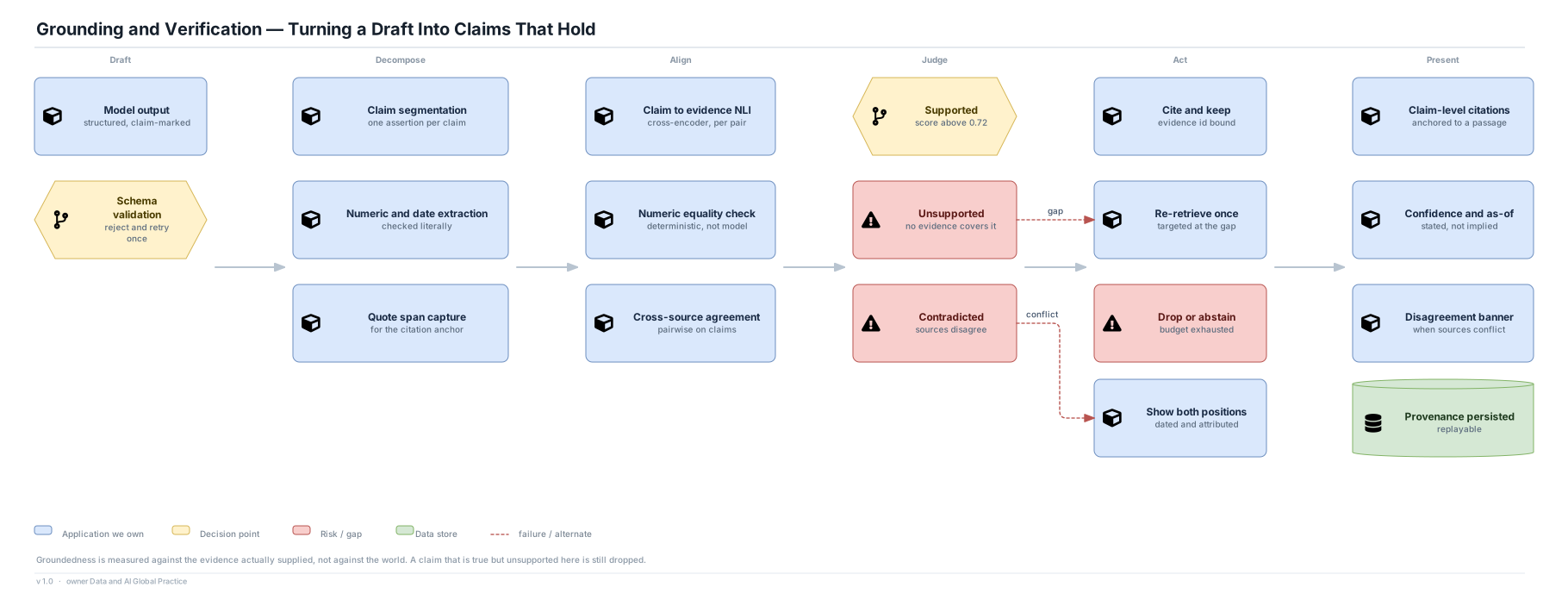
- Groundedness is measured against the evidence actually supplied, not against the world. A claim that happens to be true but is unsupported here is still dropped, because the platform can only vouch for what it retrieved.
- Numbers and dates are checked deterministically, not by a model. An NLI model will accept a transposed figure that a string comparison will not.
- Contradiction is an output state. Both positions are shown, dated and attributed, rather than blended — which is the requirement that came out of the analyst journey in view 07.
Numbers
- Groundedness gate 0.95, citation correctness 0.97, measured hallucination rate 1.1% against a 1.5% ceiling.
- About 14% of drafts contain at least one unsupported claim; 9% are resolved by one targeted re-retrieval, 5% end in a dropped claim or an abstention.
- Verification costs 180 ms and 0.0009 USD per answer.
Risks
- Over-refusal is a real cost. False refusal rate is a gate in view 32 precisely so that grounding is not tightened until the product becomes unhelpful.
- Verification uses a model, and models are wrong. The verifier is a different model family from the synthesiser, so a shared blind spot is less likely, and its disagreements are sampled for human review weekly.