Enterprise Generative Search — Azure and Open Source · View 25 of 41 · Runtime
The decision this view makes
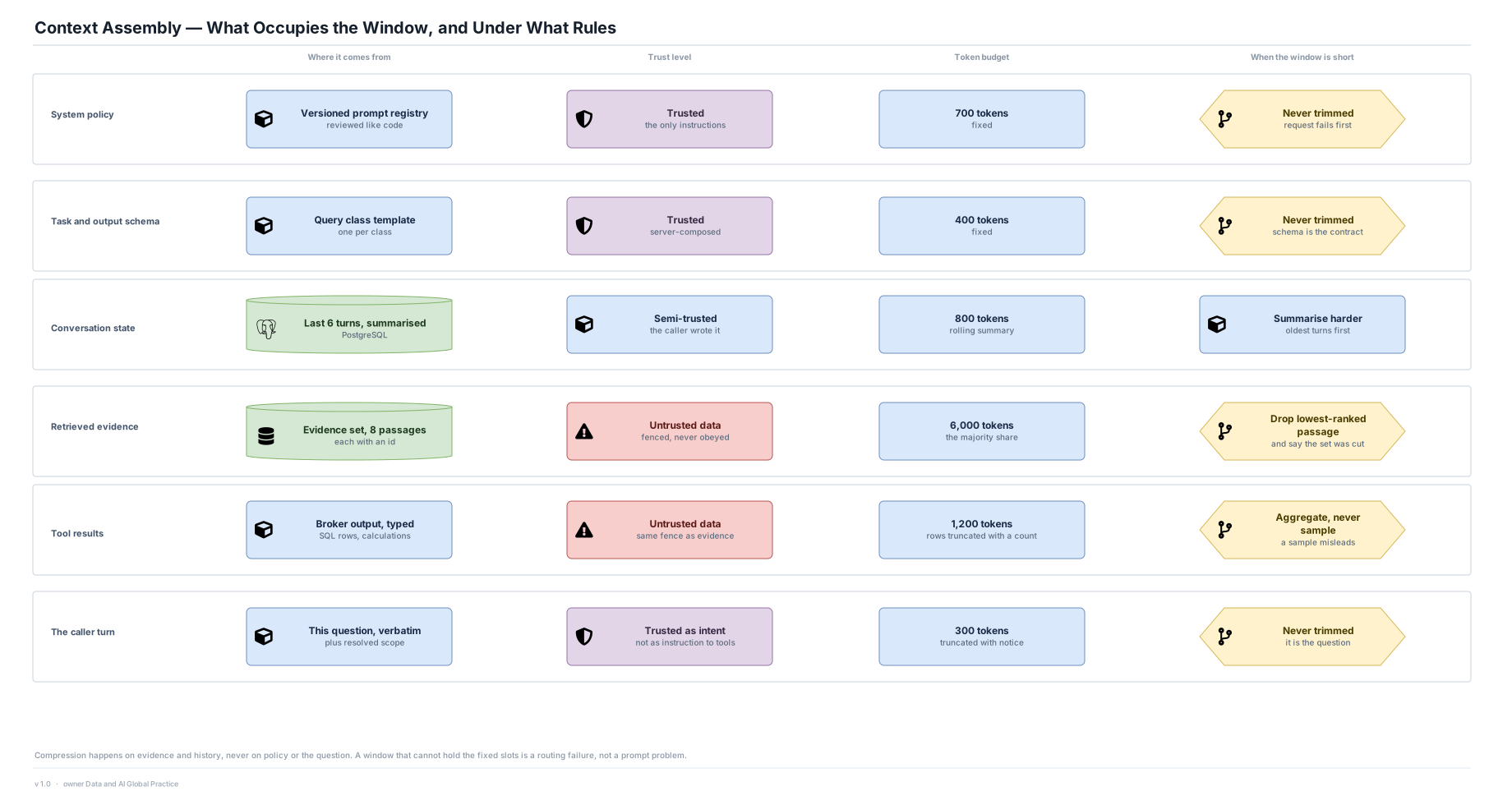
- Context is assembled from typed slots, not concatenated into a string. The slot is what carries the trust level, and the trust level is what stops evidence being read as instruction.
- Only two slots are trusted as instructions: the system policy and the task template, both of which are server-composed and versioned. The user's turn is trusted as intent but never as authority over tools or scope.
- Compression is applied to evidence and history only. A window that cannot hold the fixed slots is a routing failure — the query should have gone to a different class or a different model.
Numbers
- Explanatory class budget: 700 policy, 400 task, 800 history, 6,000 evidence, 1,200 tool, 300 question — about 9,400 tokens in.
- Evidence truncation happens on 3.1% of queries and is reported to the user as a trimmed evidence set rather than passed over in silence.
Risks
- Long-context models make it tempting to skip selection and pass 200 passages. Measured on the golden set, groundedness fell and cost rose fourfold; evidence selection is a quality control, not only a cost one.
- Tool results are truncated with a count, never sampled. A sampled table read as complete is a wrong answer with no detectable cause.