Enterprise Generative Search — Azure and Open Source · View 21 of 41 · Data
Decisions
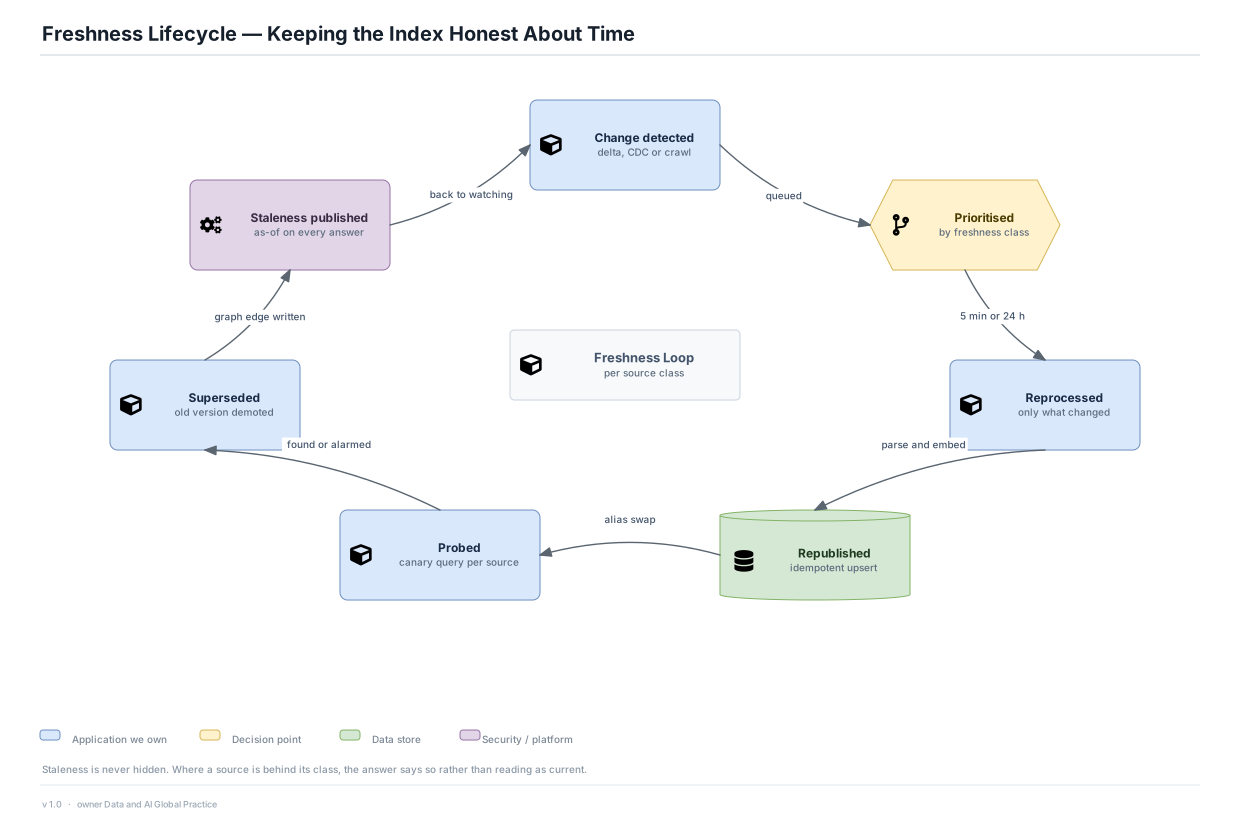
- Staleness is published, never hidden. Where a source is behind its freshness class, answers drawing on it carry an as-of and the confidence is reduced.
- Supersession is written as a graph edge at publish time, so a retired document can still be retrieved and will be labelled as superseded rather than quietly outranked.
- A canary query per source proves the loop actually closed. A pipeline that reports success while returning nothing is the failure this catches.
Numbers
- Freshness classes: collaboration 5 minutes, support 15 minutes, archive and external 24 hours, governed tables query-time.
- Canary queries run every 10 minutes per source; a miss alerts before a user reports it.
Assumptions
- Sources provide a usable change feed. Where they do not — the archive — the blob change feed substitutes, at the cost of a coarser freshness class.
- Stale content is more often useful than harmful, so the platform labels it rather than withholding it. That is a stated risk acceptance, recorded in view 41.