Enterprise Generative Search — Azure and Open Source · View 20 of 41 · Data
Decisions
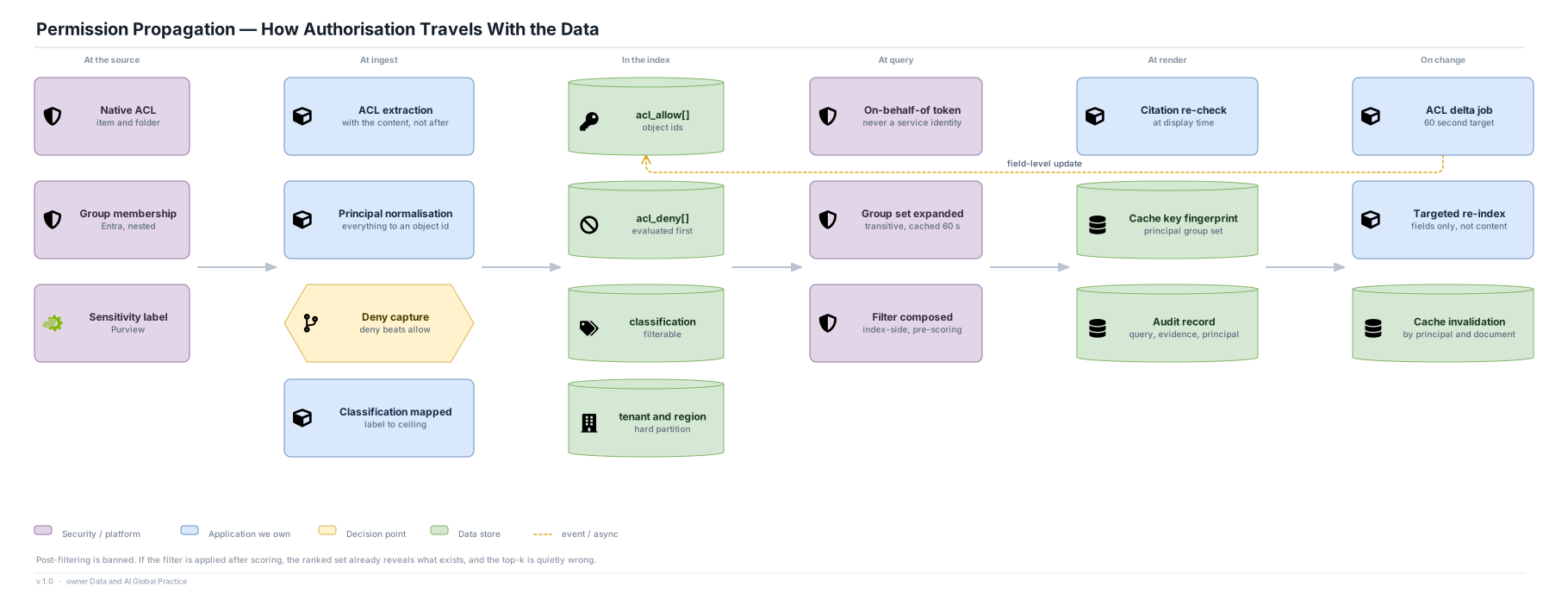
- Post-filtering is banned. A filter applied after scoring means the ranked set was computed over documents the caller cannot see, and the visible top-k is quietly wrong even when nothing leaks.
- Deny is evaluated before allow, and both are stored on the chunk. Reconstructing a deny at query time from group membership is where this pattern usually fails.
- The ACL fingerprint is part of every cache key. Without it, a cache turns an authorisation system into a leak with a hit rate.
Numbers
- Entitlement change to effective in the index: 60 seconds P95, achieved with a field-level index update rather than a content re-index.
- Group set expansion is cached for 60 seconds per principal; expansion latency 40 ms P95 warm, 260 ms cold.
- Median group set size is 34 object ids; the filter is composed server-side and never accepted from a client.
Risks
- A cross-principal cache hit is the highest-severity defect this platform can have. It is guarded by the fingerprint, by a nightly replay assertion, and by a contract test that fails if a cache key is constructed without one.
- Sixty seconds is not zero. For the small number of sources where that window is unacceptable, retrieval is configured to verify entitlement against the source before the passage is shown.