Feature Store · View 13 of 21 · Runtime
Decisions
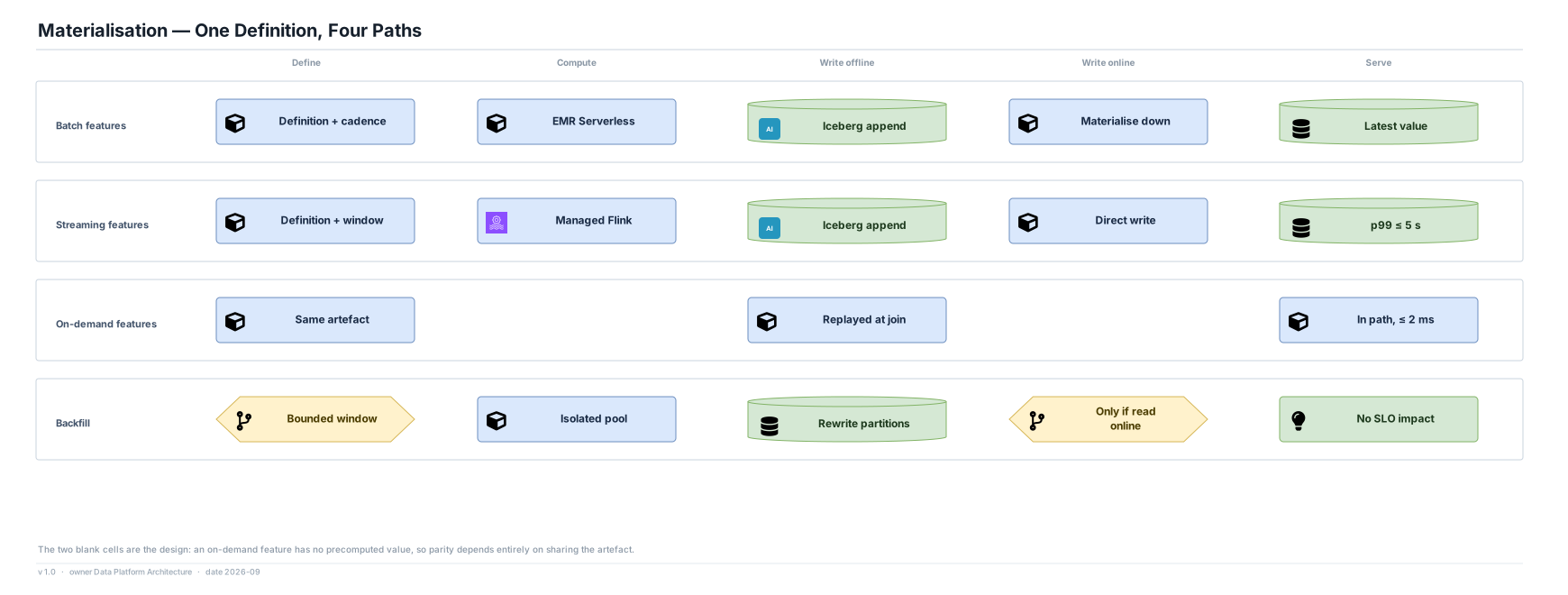
- Batch features are materialised down from the offline store; streaming features are written to both stores from one computation. Provenance where it is affordable, freshness where it is required.
- The two blank cells are the architecture: an on-demand feature has no precomputed value anywhere, so its parity depends entirely on sharing the compiled artefact with the training path.
- Backfill writes online only for features a consumer actually reads online, which is the platform's main cost lever applied at its largest write.
Assumptions
- Windows from 1 minute to 24 hours, tumbling in the MVP and sliding in phase 2.
- Backfill of one feature over 13 months ≤ 6 h in an isolated pool, pre-emptible by live jobs.
Risks
- Dual-write for streaming features has two sinks that can partially fail. The mitigation is the version stamp plus nightly skew replay, not a distributed transaction.