Feature Store · View 12 of 21 · Runtime
Decisions
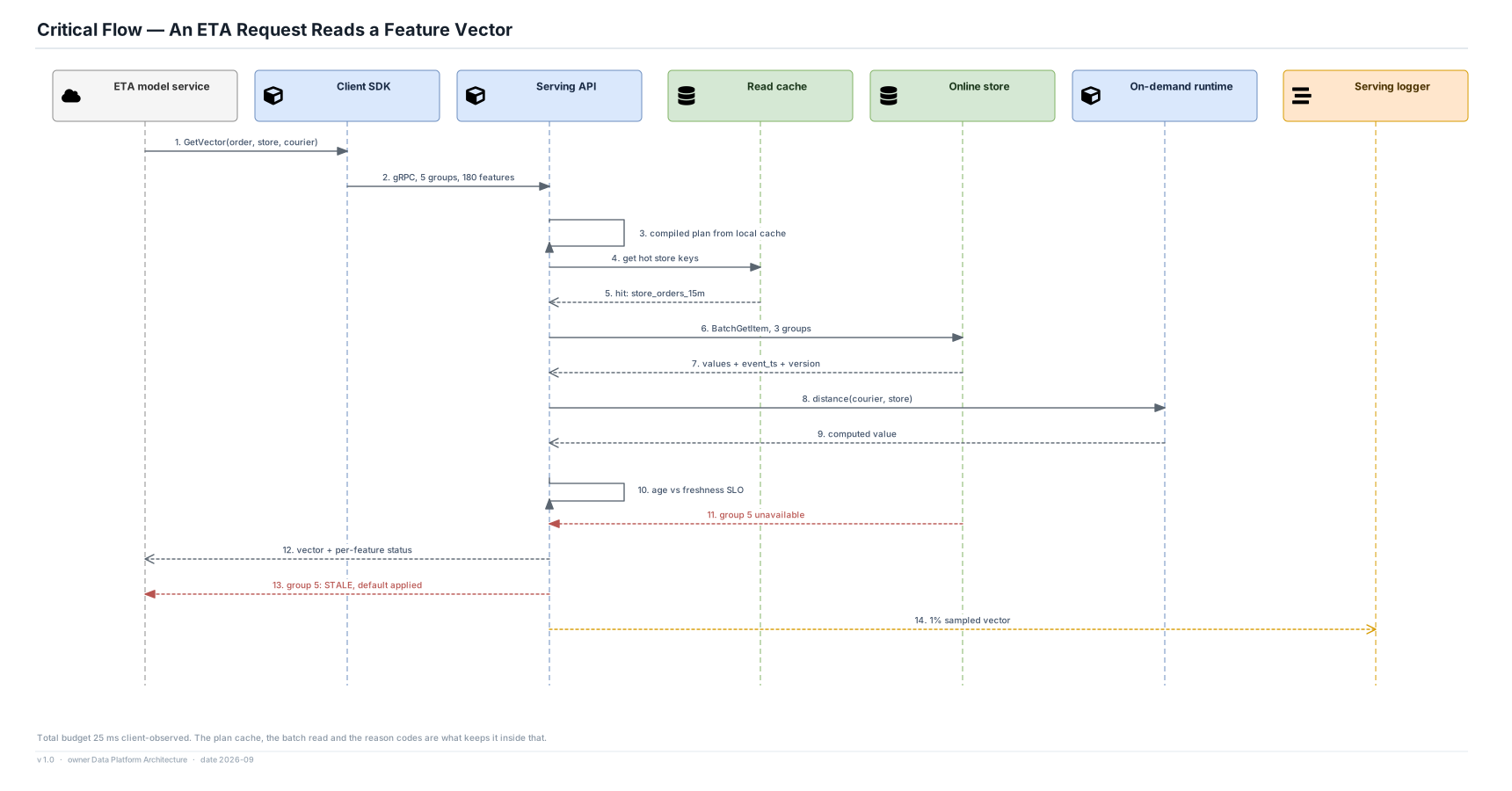
- The compiled plan is resolved from a local cache, never from the registry, which is what keeps the read inside its budget and lets serving survive registry loss.
- One batch read per request across groups rather than one read per group; the fan-out is the dominant term in tail latency.
- An unavailable group returns a reason code and the declared default, and the response says which values are which. Only a consumer-declared critical group fails the call.
Assumptions
- Server-side p50 3 ms, p99 15 ms, p99.9 40 ms for ≤ 200 features across ≤ 5 groups; on-demand transformation adds ≤ 2 ms p99.
- Client-observed p99 ≤ 25 ms including network.
Risks
- On-demand transformation runs consumer-authored code inside the serving path. It buys parity on exactly the transformations most likely to skew, and it puts that code in the latency budget and the failure domain.