Edge Cache and CDN Platform · View 21 of 29 · 6 · Operations
Decisions
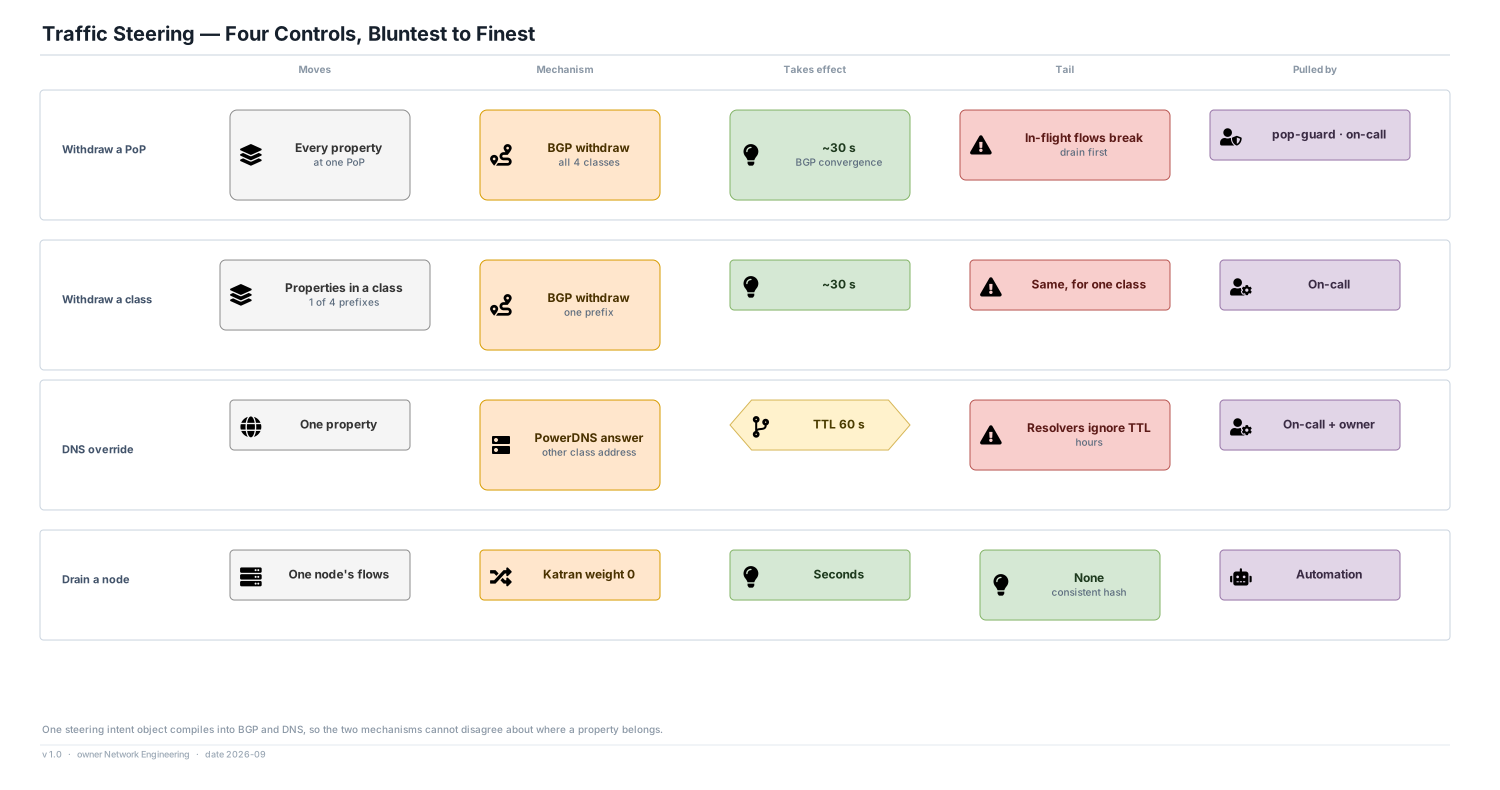
- Anycast is the only automatic mechanism. DNS steering is manual and per property, used when anycast is too blunt, for example to move one property's traffic off a PoP that is near its ceiling.
- Properties are spread across four anycast prefix classes. Withdrawing one class at one PoP moves about a quarter of that PoP's traffic within BGP's own convergence time, without depending on resolvers honouring a DNS TTL.
- Both mechanisms are compiled from one steering intent per property. On-call never edits DNS and BGP separately, so the two cannot disagree about where a property belongs.
The tail
- A DNS change has an unbounded tail: some resolvers keep old answers for hours. Nothing time-critical relies on DNS, and a DNS move is always paired with keeping the old address serving until its traffic has decayed.
Omitted
- Traffic engineering between transit providers through BGP communities is network-team practice and not drawn here.