AI Executive Office — CXO Assistant Platform · View 16 of 30 · 5 · Runtime
The decision
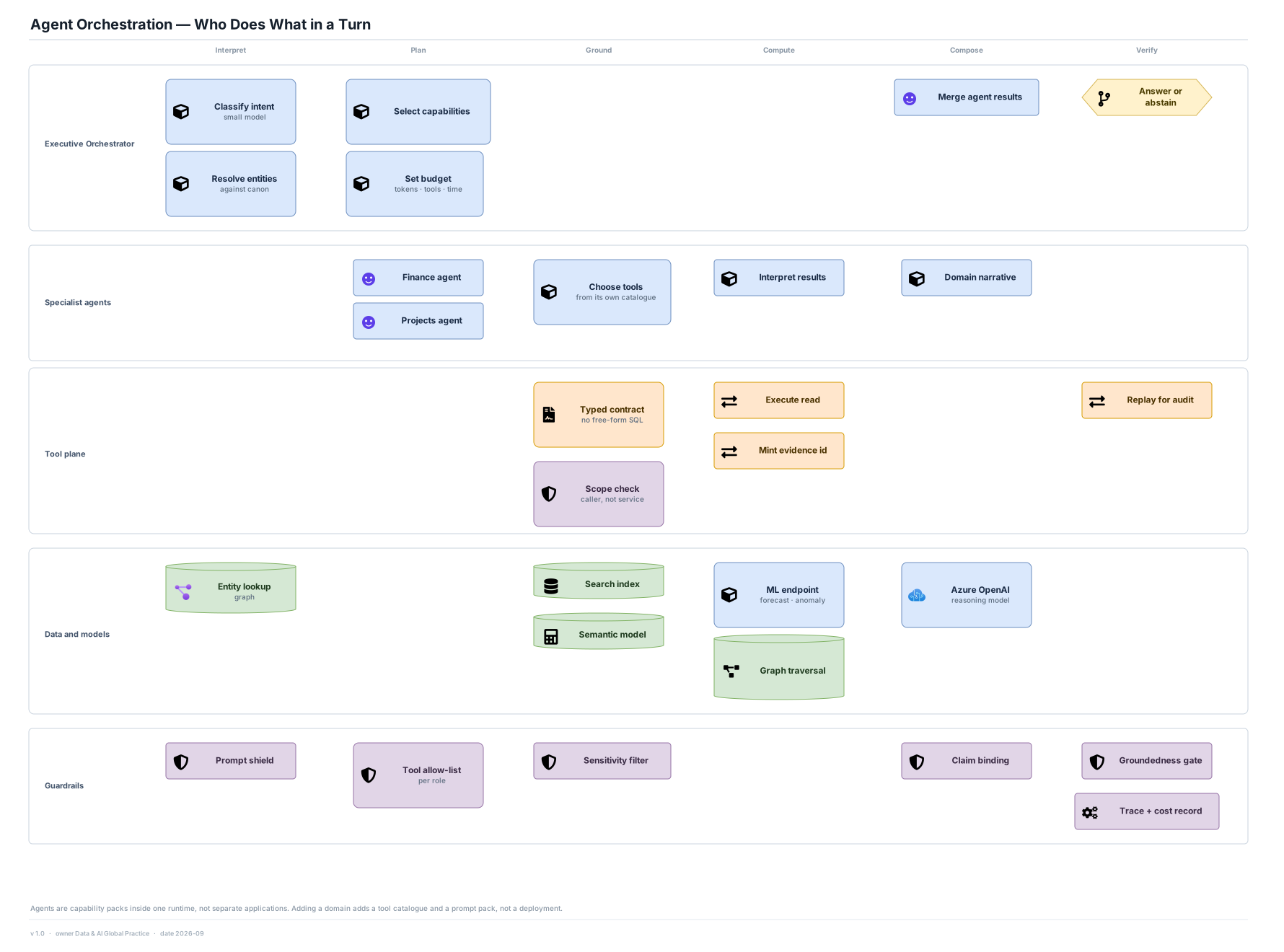
- Specialist agents are prompt packs plus tool catalogues inside one runtime. Adding a domain adds configuration, not a deployment, which is what makes an agent marketplace a product feature rather than a programme
- The orchestrator sets a budget — tokens, tool calls and wall-clock — before any agent runs. Without it, a multi-agent system's cost per question is unbounded and unpredictable, which is fatal to a per-tenant commercial model
- Guardrails run in every column, not as a final check. Prompt shielding at input is worthless if retrieved document content is later treated as instruction
Risks
- Multi-agent orchestration is the most over-used pattern in enterprise AI. Most executive questions need one agent and two tools; the architecture supports fan-out but the router defaults to the cheapest path (view 17)
- Agent-to-agent chatter is where latency and cost hide. Agents return structured results to the orchestrator and do not talk to each other
Assumptions
- Ten capability packs at maturity; three in the prototype. The packs are versioned with the tenant configuration, so a tenant can be behind on a pack without being behind on the platform