AI Executive Office — CXO Assistant Platform  ·  View 08 of 30  ·  3 · Structure

Container Architecture

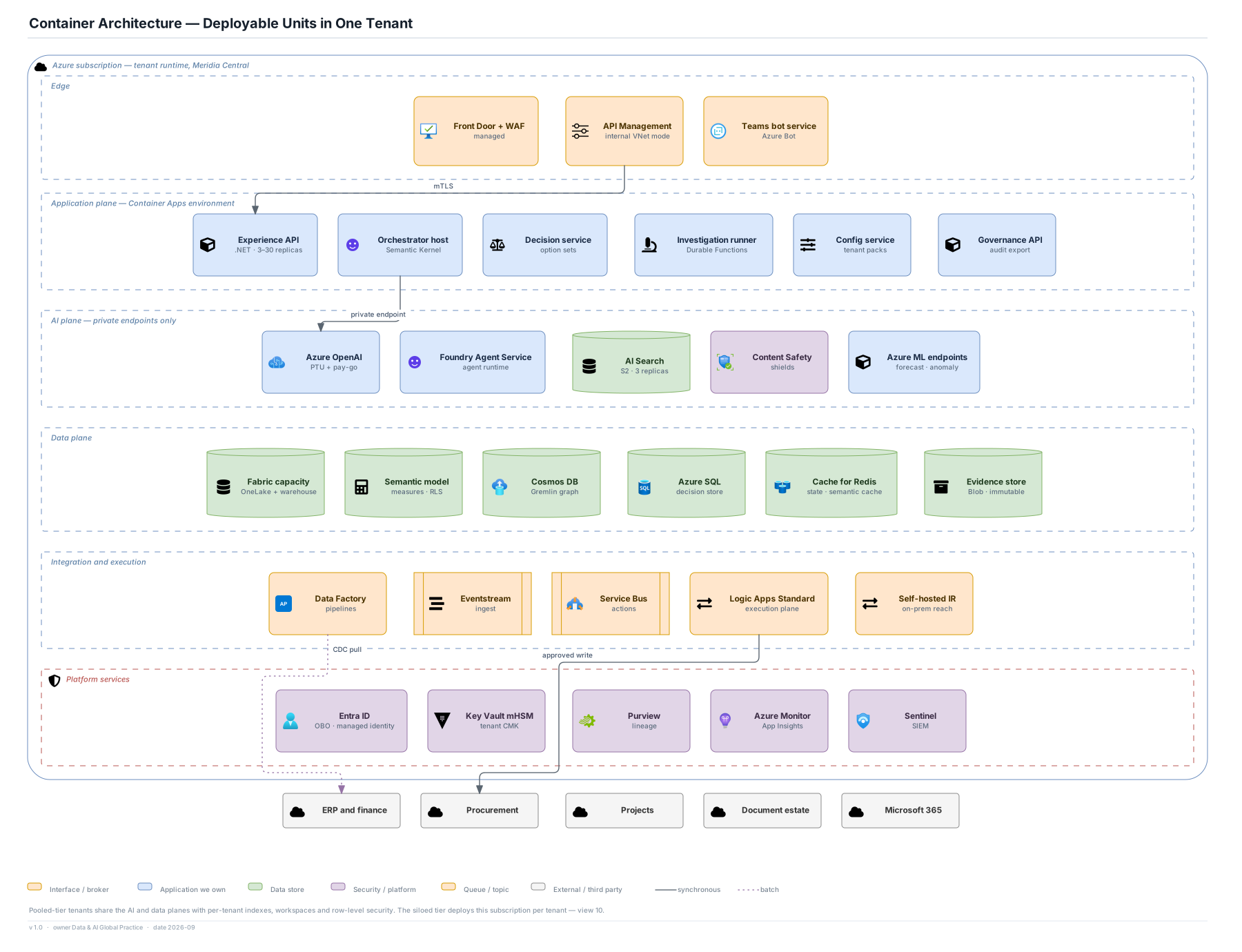
The deployable units inside one tenant, the technology behind each, and which of them holds a credential.

Editable source SVG draw.io All views
Azure subscription — tenant runtime, Meridia Central Edge Front Door + WAF managed API Management internal VNet mode Teams bot service Azure Bot Application plane — Container Apps environment Experience API .NET · 3–30 replicas Orchestrator host Semantic Kernel Decision service option sets Investigation runner Durable Functions Config service tenant packs Governance API audit export AI plane — private endpoints only Azure OpenAI PTU + pay-go Foundry Agent Service agent runtime AI Search S2 · 3 replicas Content Safety shields Azure ML endpoints forecast · anomaly Data plane Fabric capacity OneLake + warehouse Semantic model measures · RLS Cosmos DB Gremlin graph Azure SQL decision store Cache for Redis state · semantic cache Evidence store Blob · immutable Integration and execution Data Factory pipelines Eventstream ingest Service Bus actions Logic Apps Standard execution plane Self-hosted IR on-prem reach Platform services Entra ID OBO · managed identity Key Vault mHSM tenant CMK Purview lineage Azure Monitor App Insights Sentinel SIEM ERP and finance Procurement Projects Document estate Microsoft 365 mTLS private endpoint approved write CDC pull Container Architecture — Deployable Units in One Tenant Interface / broker Application we own Data store Security / platform Queue / topic External / third party synchronous batch Pooled-tier tenants share the AI and data planes with per-tenant indexes, workspaces and row-level security. The siloed tier deploys this subscription per tenant — view 10. v 1.0 · owner Data & AI Global Practice · date 2026-09

Decisions and rationale

  • Azure Container Apps rather than AKS: the workload is a handful of stateless HTTP services with scale-to-zero characteristics between briefings. AKS is the right answer at a much larger estate and is a documented exit, not a rewrite
  • Durable Functions for investigations because an investigation is a long-running, resumable orchestration with checkpoints — not a long HTTP request. This is what makes the asynchronous experience honest rather than a spinner
  • Every service authenticates with a managed identity. There are no connection strings in configuration anywhere in this diagram

Assumptions

  • Provisioned throughput for Azure OpenAI is assumed for latency predictability under the 07:10 brief spike, with pay-as-you-go overflow. Confirm capacity availability in the target region before committing
  • Fabric F64 is the starting capacity for a mid-size tenant. Sizing is a per-tenant exercise driven by refresh frequency, not user count

Deliberate omissions

  • Private endpoints exist on every PaaS service here but are drawn only in views 21 and 26, where they are the subject rather than clutter
  • The self-hosted integration runtime is drawn once; in practice one runs per on-premises network the tenant exposes