Container Registry and Software Supply Chain Platform  ·  View 25 of 33  ·  5 · Operations

Pull Path and Storm Absorption

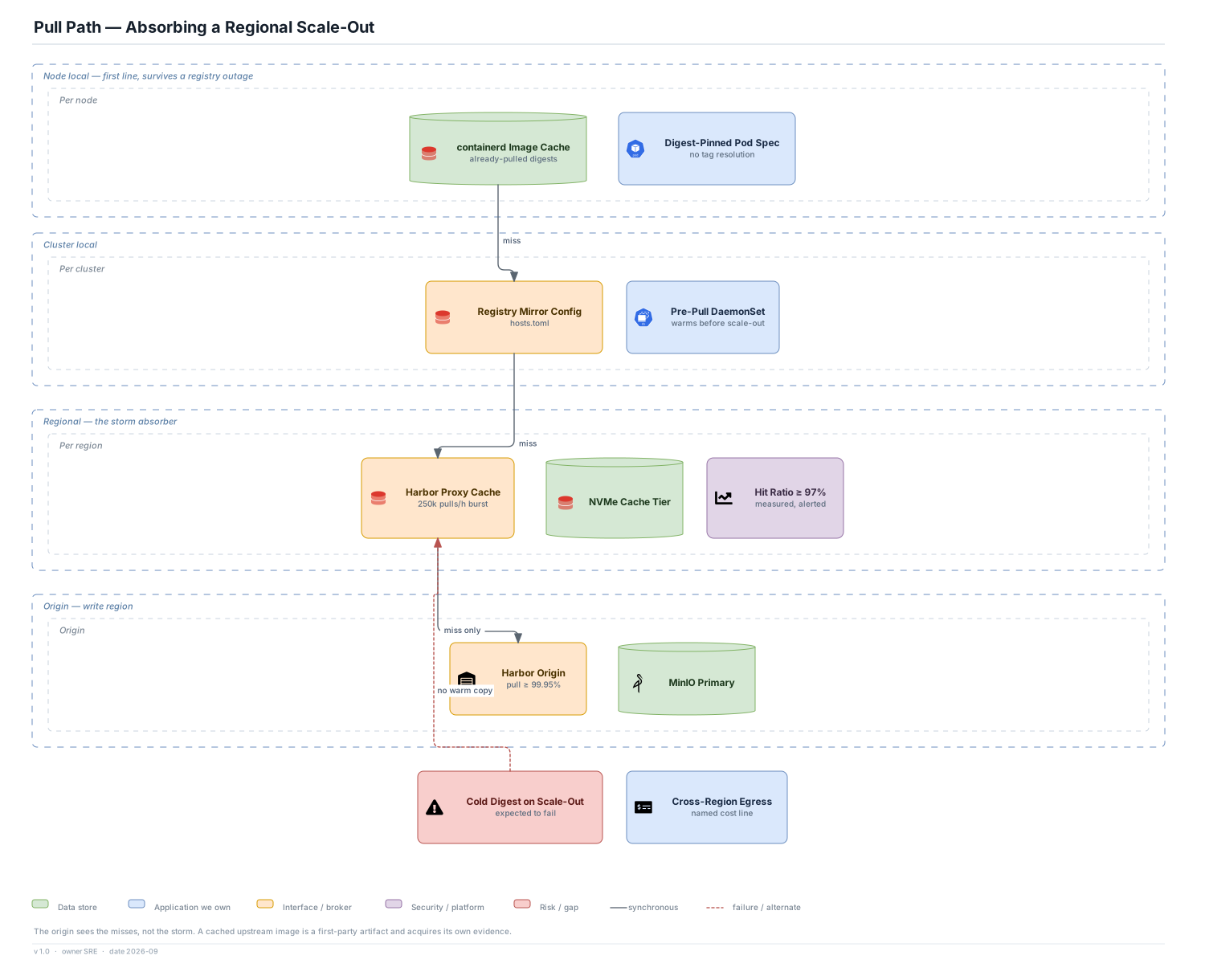
What happens when a regional cluster scales out and 250,000 pulls an hour arrive for the same digest.

Editable source SVG draw.io All views
Node local — first line, survives a registry outage Per node containerd Image Cache already-pulled digests Digest-Pinned Pod Spec no tag resolution Cluster local Per cluster Registry Mirror Config hosts.toml Pre-Pull DaemonSet warms before scale-out Regional — the storm absorber Per region Harbor Proxy Cache 250k pulls/h burst NVMe Cache Tier Hit Ratio ≥ 97% measured, alerted Origin — write region Origin Harbor Origin pull ≥ 99.95% MinIO Primary Cold Digest on Scale-Out expected to fail Cross-Region Egress named cost line miss miss miss only no warm copy Pull Path — Absorbing a Regional Scale-Out Data store Application we own Interface / broker Security / platform Risk / gap synchronous failure / alternate The origin sees the misses, not the storm. A cached upstream image is a first-party artifact and acquires its own evidence. v 1.0 · owner SRE · date 2026-09

Decisions

  • Four cache tiers: node, cluster mirror, regional proxy cache, origin. The origin sees misses, not the storm
  • A pre-pull DaemonSet warms the regional cache ahead of a planned scale-out
  • The enforcement path scales independently of the registry data path; an admission decision needs no registry round trip in the common case

Targets

  • 25,000 pulls/hour steady, 250,000/hour for 10 minutes during a regional scale-out
  • Regional cache hit ratio ≥ 97%, measured and alerted
  • Manifest pull p99 ≤ 200 ms in-region

The honest gap

  • A cold digest during an unplanned scale-out is expected to fail; caching does not solve a cold start
  • This is the accepted cost of caching over full replication, and it is why the pre-pull exists
  • Cross-region egress is reported as a named cost line so the trade-off stays visible