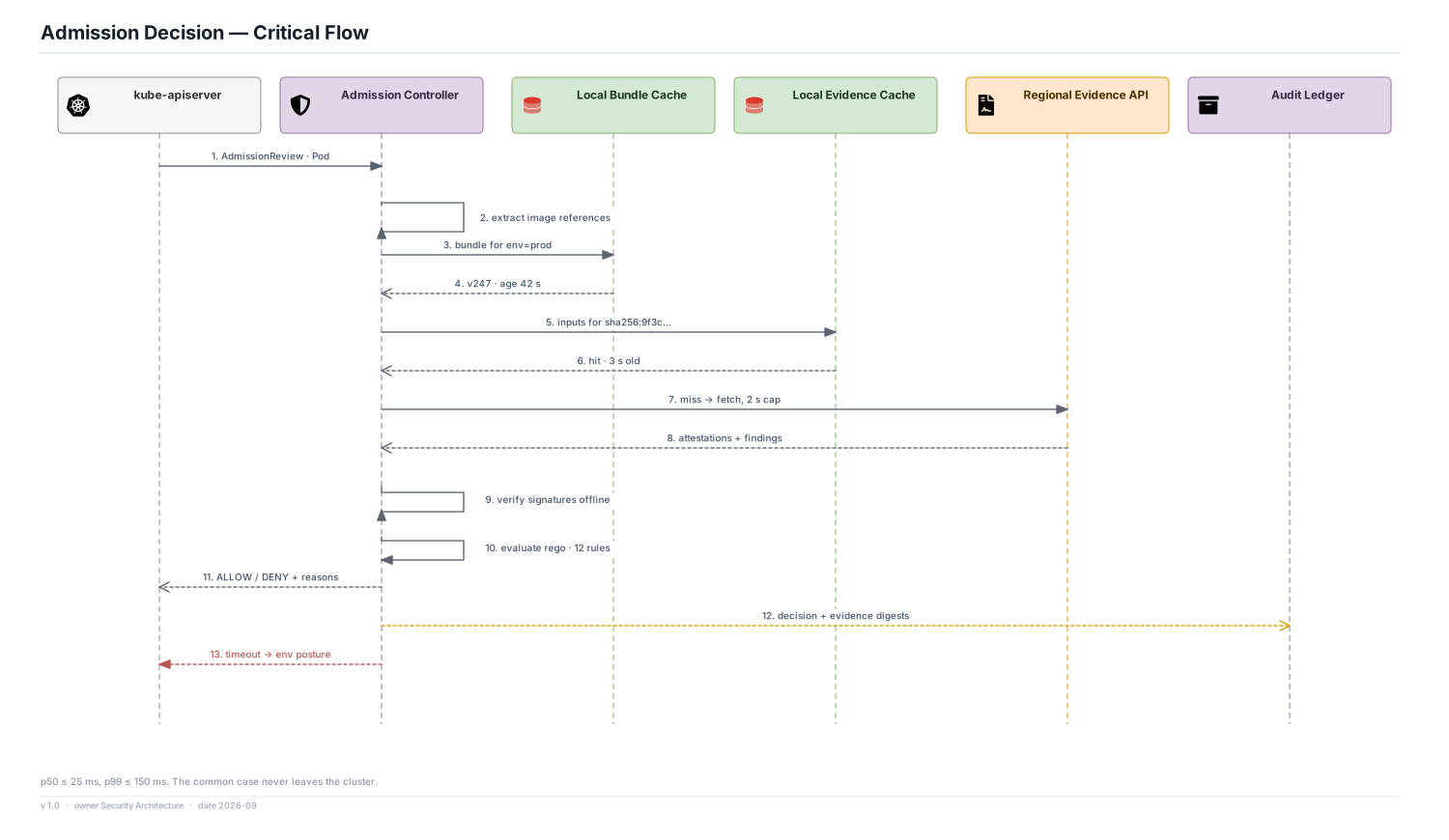
Container Registry and Software Supply Chain Platform · View 17 of 33 · 4 · Runtime
Answering question 1
- The enforcement point is a cluster admission webhook on Pod create, so workloads created by controllers cannot route around it
- A CI gate was rejected as the control: a gate that can be skipped by pushing differently is not a control
- A per-node agent was rejected as the primary point: it decides too late to give the developer a usable rejection message
Latency budget
- p50 ≤ 25 ms, p99 ≤ 150 ms, hard timeout 2 s — chosen to stay inside the cluster's own webhook budget
- The common case reads a local bundle and a local evidence cache and never leaves the cluster
- Signature verification p99 ≤ 40 ms per artifact using cached trust roots
When it is blind
- Beyond 30 minutes of cache staleness the environment's configured posture applies: fail-closed in production, fail-open elsewhere
- That posture is a stated policy choice recorded in the bundle, not a library default
- Every decision, ALLOW included, is logged with the bundle version and the evidence digests read