Container Registry and Software Supply Chain Platform · View 15 of 33 · 4 · Runtime
Decisions
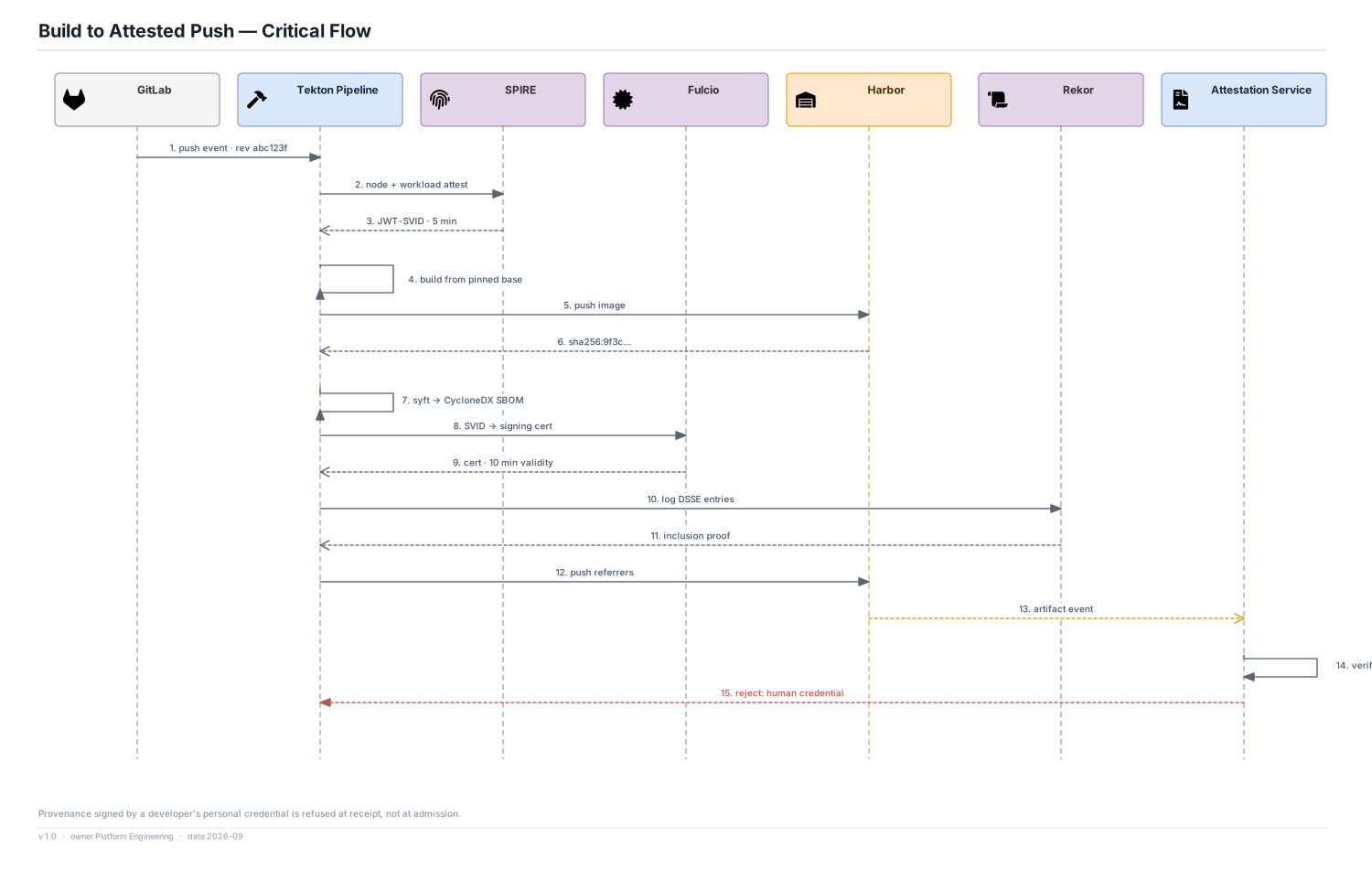
- The builder authenticates with a SPIFFE workload identity; a provenance document signed by a personal credential is rejected
- Provenance, SBOM, scan result, test result and promotion all use one DSSE envelope format and one verification path
- The source revision named in provenance is checked to exist in a repository on the allowed-source list
Answering question 3
- Keyless short-lived certificates from Fulcio for the normal path — no key custody, revocation is an identity operation
- Long-lived HSM-held keys for the air-gapped and base-image release paths, where the log and IdP are not reachable
- Both verify against TUF trust roots, so verification never calls the signing service
Risks
- Fulcio and Rekor are on the critical path of a build, though not of a deployment; an outage queues signing rather than stopping builds
- Artifacts signed while Rekor is down are admissible only in non-production until their proofs land