Container Registry and Software Supply Chain Platform · View 03 of 33 · 1 · Context and scope
The critical design decision
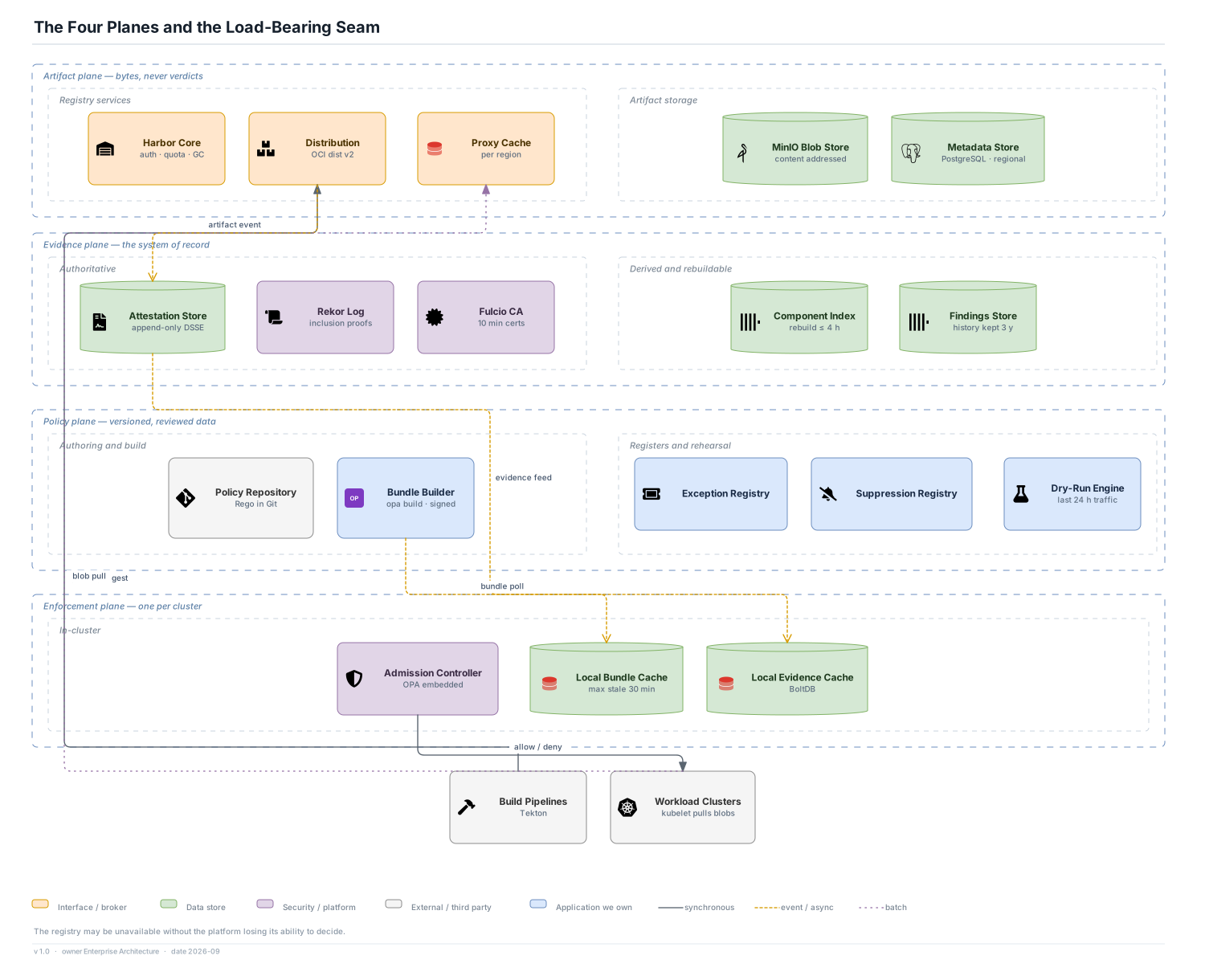
- The registry stores evidence; it never stores a verdict
- Every alternative collapses into a stored boolean that was true when written and decays silently afterwards
- The consequence: a policy evaluation sits on the critical path of every pod start, which forces the caching in act 5 and the degraded modes in act 6
What the separation buys
- The registry may be unavailable without the platform losing its ability to decide
- The evidence plane may be authoritative without ever serving a byte of an image
- Revocation becomes a real mechanism: an artifact's verdict changes without the artifact changing
What it costs
- Evidence must reach every enforcement point, and staleness becomes a first-class concern
- Two stores to operate and back up rather than one
- A verdict that changed after admission does not evict the running pod — a separate mechanism, deferred to phase 3