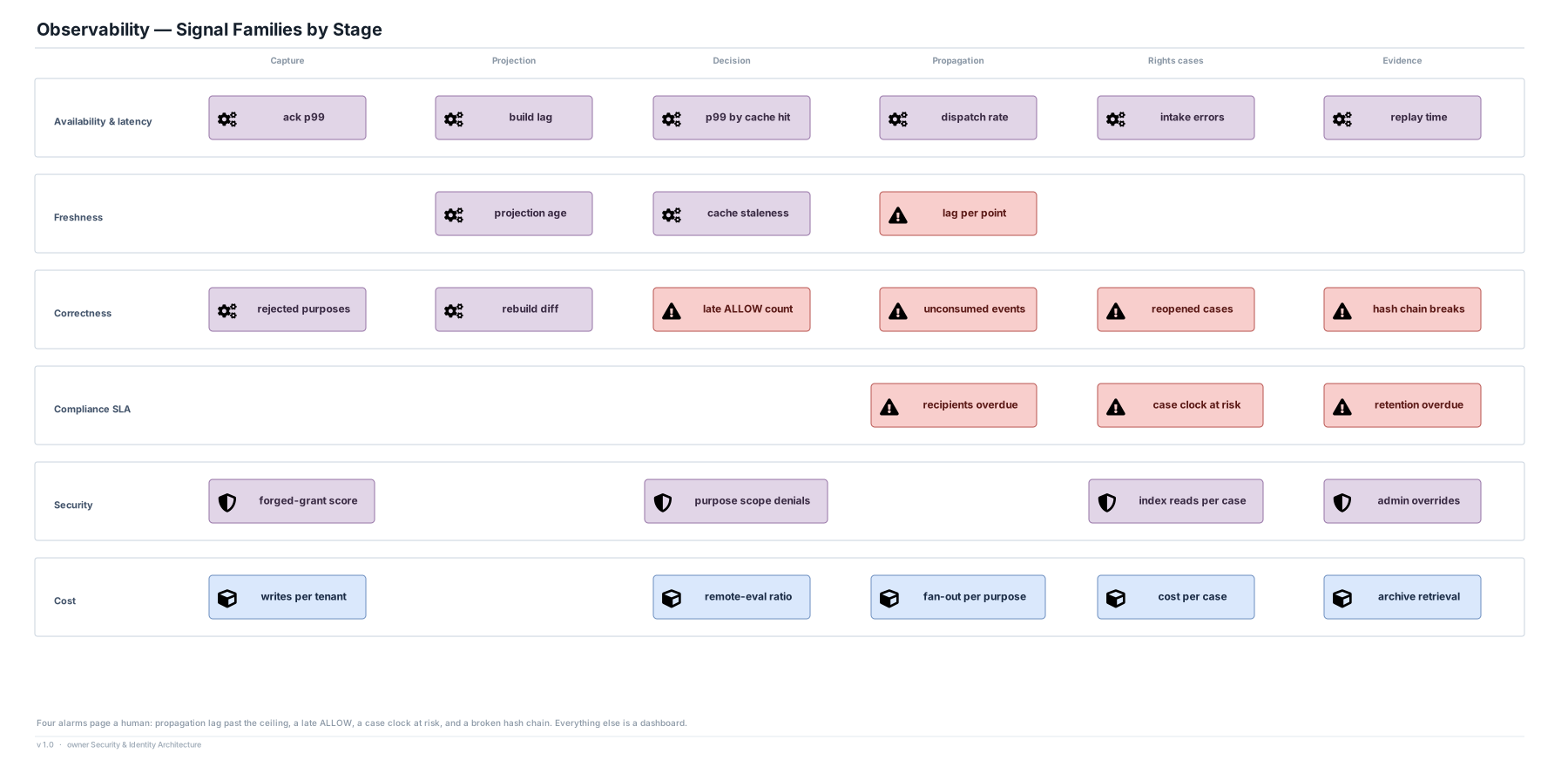
Four signals page: propagation lag past the ceiling, a late ALLOW, a case clock at risk, and a broken audit hash chain. Each maps to a distinct action by a distinct owner.
Propagation lag is a compliance metric rather than a performance one, which changes who is paged and what the response is: it is unlawful processing accruing, not a slow page.
Retention-overdue and recipients-overdue are findings against named system owners, not platform alarms. The platform detects; the owner remediates.
Assumptions
Decision outcomes sampled rather than fully audited; sample rate is a declared parameter with a stated detection confidence.
Remote-evaluation ratio is monitored and expected to stay low; steady-state decision cost is dominated by local cache hits.
Gaps
Freshness has no signal at Capture, Rights or Evidence, because nothing there is derived. Empty cells in this view are statements, not omissions.
There is no signal for "a system is using data for a purpose it never declared" other than the unregistered-use finding in view 19. That is the weakest detection in the package.