Consent & Privacy Service  ·  View 06 of 22  ·  People and journeys

Journey — Answer a Regulator

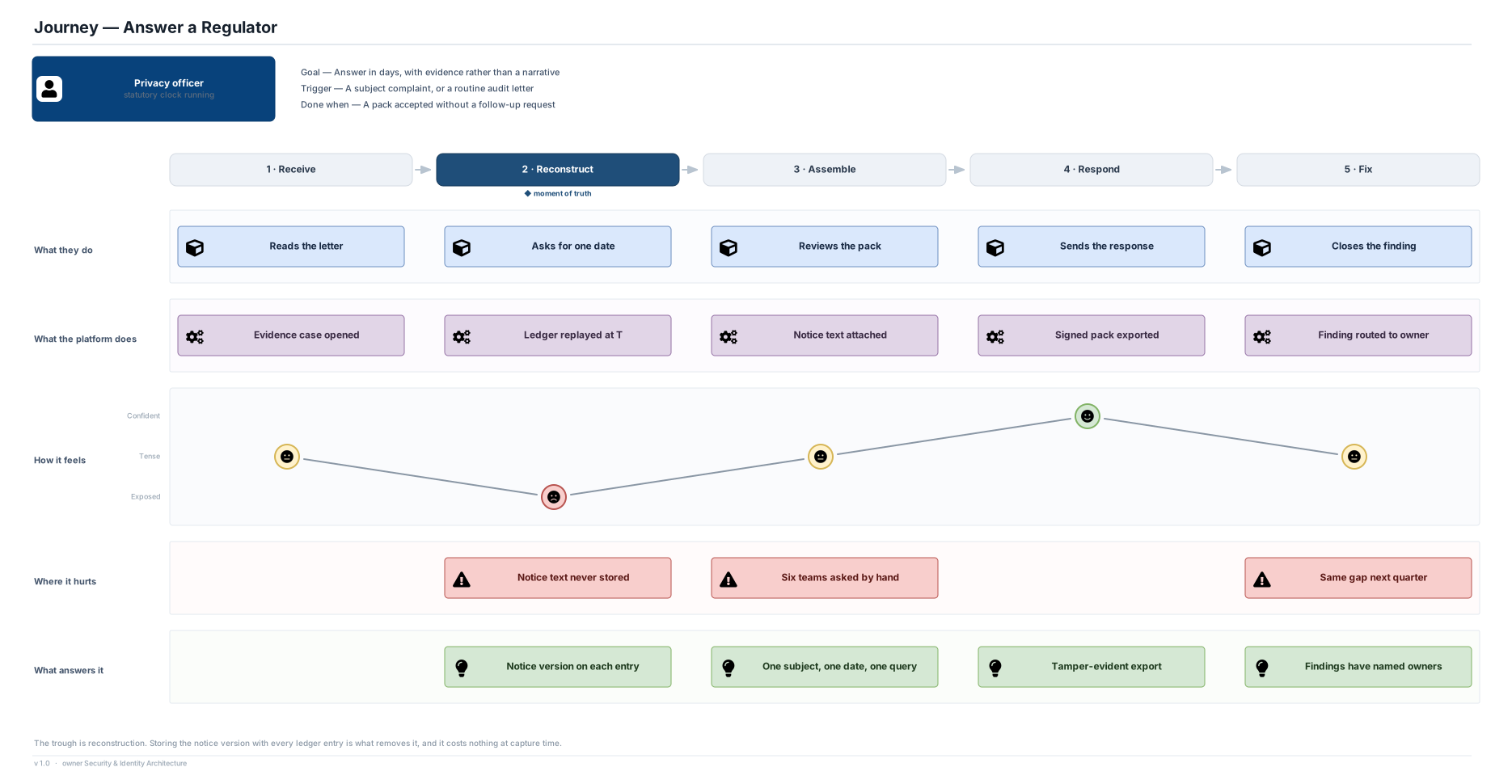
The trough is reconstruction, and it is removed for free at capture time by storing the notice version with the entry.

Editable source SVG draw.io All views
Privacy officer statutory clock running Goal — Answer in days, with evidence rather than a narrative Trigger — A subject complaint, or a routine audit letter Done when — A pack accepted without a follow-up request 1 · Receive 2 · Reconstruct ◆ moment of truth 3 · Assemble 4 · Respond 5 · Fix What they do Reads the letter Asks for one date Reviews the pack Sends the response Closes the finding What the platform does Evidence case opened Ledger replayed at T Notice text attached Signed pack exported Finding routed to owner How it feels Confident Tense Exposed Where it hurts Notice text never stored Six teams asked by hand Same gap next quarter What answers it Notice version on each entry One subject, one date, one query Tamper-evident export Findings have named owners Journey — Answer a Regulator The trough is reconstruction. Storing the notice version with every ledger entry is what removes it, and it costs nothing at capture time. v 1.0 · owner Security & Identity Architecture

What this view decides

  • Evidence is a by-product of capture, never an assembly job. The notice version and language shown are written into the ledger entry, because they cannot be recovered later.
  • Point-in-time replay — one subject, one purpose, one timestamp — is a product capability with an availability target, not a data-engineering favour.
  • A finding routes to the named purpose owner. A finding with no owner recurs next quarter, which is the journey's last phase failing.

Assumptions

  • Consent ledger retained 7 years after the relationship ends; administrative-action audit 7 years, write-once; decision audit sampled and retained 13 months.
  • Point-in-time state reproducible for 100% of subjects inside the ledger retention window.

Tension

  • The evidence proving an erasure happened must survive that erasure. It is retained under legal obligation, holds the minimum identifiers needed, and is stated plainly to the subject rather than engineered away.