Consent & Privacy Service · View 05 of 22 · People and journeys
The trough, and the answer
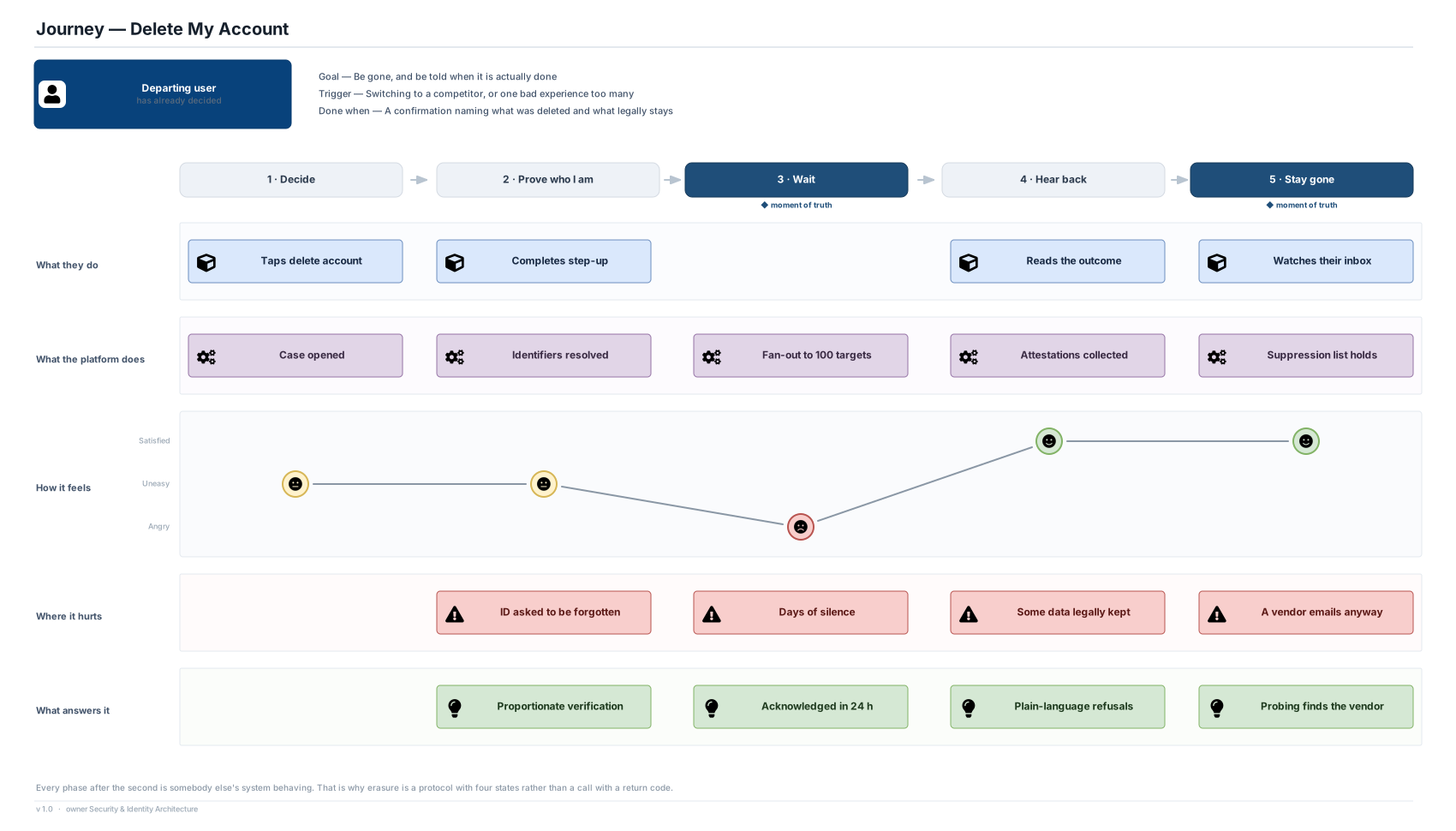
- The low point is Wait: days of silence while a hundred targets are instructed. The answer is a 24-hour acknowledgement, a case identifier, and a case state that is never inferred from elapsed time.
- Being asked to prove identity in order to be forgotten is the journey's most resented moment and is non-negotiable: an unverified erasure request is an attack on the subject, not a service to them.
- The final phase is the one most designs miss. A vendor emailing a deleted subject is detected by sampled absence probing, not by trusting the attestation that vendor already sent.
Assumptions
- Acknowledged within 24 h; verification decided within 72 h; attested complete across first-party systems within 7 days at p95; external recipients within 30 days absolute.
- A 5-day margin is held against the statutory ceiling.
Risks
- Partial fulfilment is lawful and will feel like refusal. The plain-language reason is the only mitigation, and it has to be written before the first case, not after the first complaint.
- The suppression list is the single control standing between a backup restore and a resurrected subject. A restore path that skips it voids every completed erasure.