Cloud Development Environment Platform · View 17 of 21 · Operations
Decisions
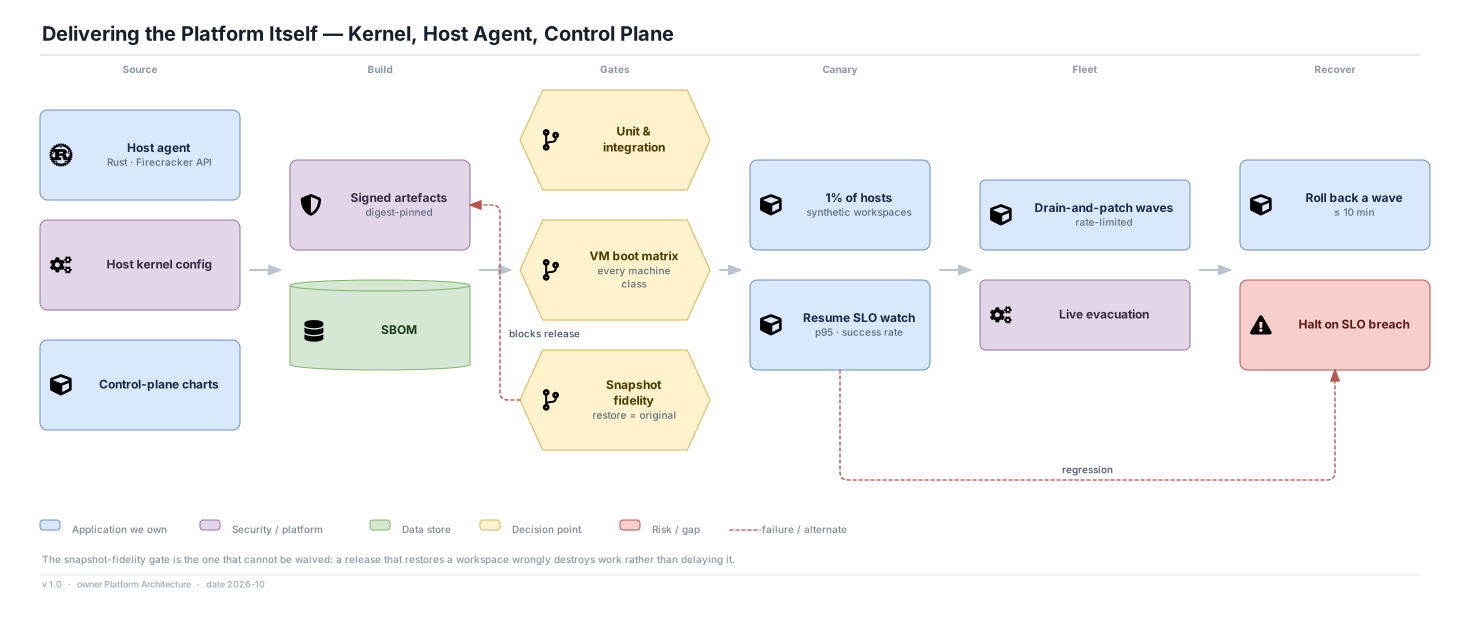
- Snapshot fidelity — a restored workspace is indistinguishable from the original — is a release gate, because a release that restores wrongly destroys work rather than delaying it.
- The canary is 1% of hosts carrying synthetic workspaces, watched on resume p95 and resume success rate rather than on error rate alone.
- Fleet rollout is the same drain-and-evacuate mechanism the operator journey uses; there is no separate maintenance path.
Assumptions
- A wave can be rolled back in ≤ 10 minutes; a resume-SLO regression halts the rollout automatically.
- Every artefact is signed and digest-pinned, with an SBOM retained per release.
Risks
- The kernel is the isolation boundary and the thing most often patched; a regression here is simultaneously a security fix and an availability risk.
- A canary on synthetic workspaces can miss what only real workspaces do — large disks, odd nested containers, long-running dev servers.