Cloud Development Environment Platform · View 11 of 21 · Data
Decisions
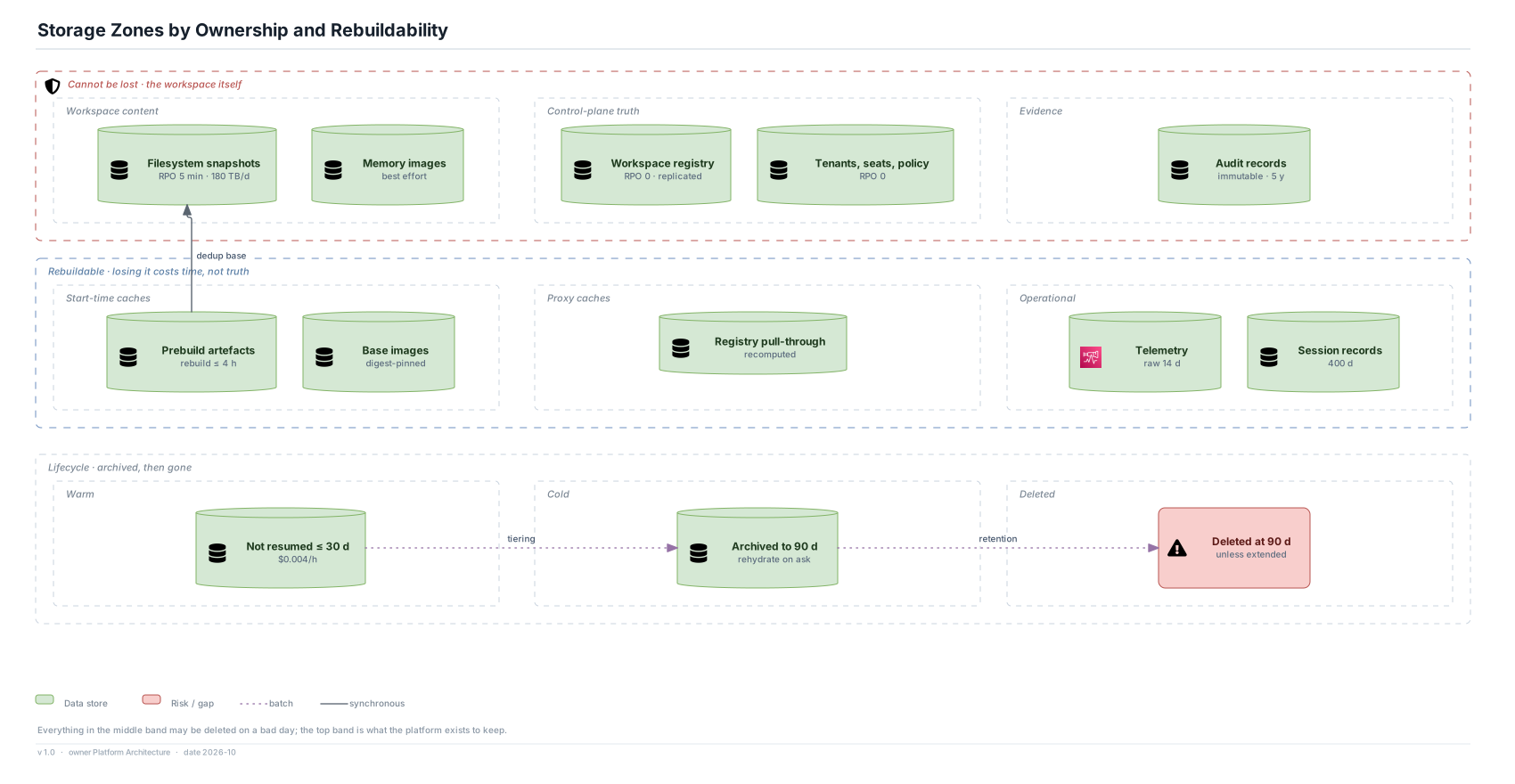
- Zones are drawn by rebuildability rather than by technology, because that is the question a backup budget actually answers: four of these stores can be lost and recomputed, and two cannot.
- Memory images are in the top band but marked best effort: losing one costs a cold boot, not a workspace, which is what makes the decay window in ADR-03 affordable.
- Archival is a zone, not a job: warm to 30 days, cold to 90, then deleted unless the tenant extends it.
Assumptions
- 2,400,000 hibernated workspaces retained at ≤ $0.004 per workspace-hour in storage and metadata.
- Snapshot durability ≥ 11 nines with integrity verified on every write and restore; prebuild capacity for the top 100 repositories rebuildable in 4 hours.
Risks
- Snapshot storage for workspaces that are never resumed is pure waste; the target is ≤ 3% of storage spend, and it needs watching rather than assuming.
- Customer-managed key revocation makes a tenant's whole top band unreadable by design — correct, and a support incident waiting to be mistaken for data loss.