Cloud Development Environment Platform · View 06 of 21 · People and journeys
What this settles
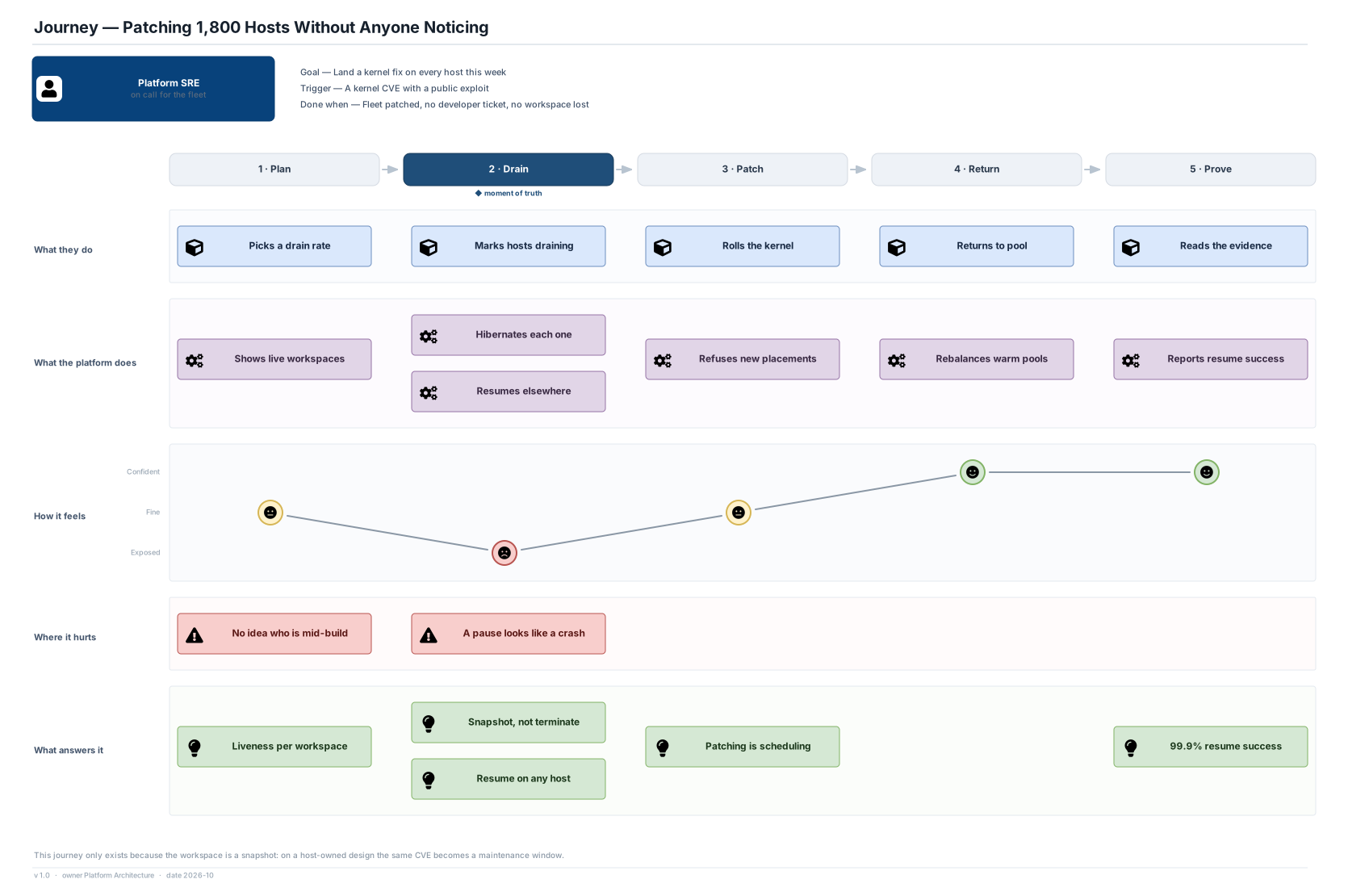
- Kernel patching is a scheduling problem, not a maintenance window: hosts are drained in waves, workspaces hibernate and resume elsewhere, and developers see a pause (ADR-13).
- The operator's trough is not knowing who is mid-build, which is why per-workspace liveness is an operational signal and not only a cost signal.
- Resume success rate is the evidence that the drain worked, which makes it a release gate for the platform's own changes (view 17).
Assumptions
- 1,800 hosts; drain waves rate-limited so that no more than a small fraction of concurrent workspaces pause at once.
- Resume success ≥ 99.9% of attempts; a failed resume leaves the workspace resumable.
Risks
- A drain that is slower than the CVE window pushes operators toward terminating workspaces, which is the one thing the design is meant to make unnecessary.
- Evacuation concentrates snapshot writes and block fetches; the storage tier must be sized for drain traffic, not only for steady state.