CI/CD Platform · View 02 of 22 · Context and scope
Decisions
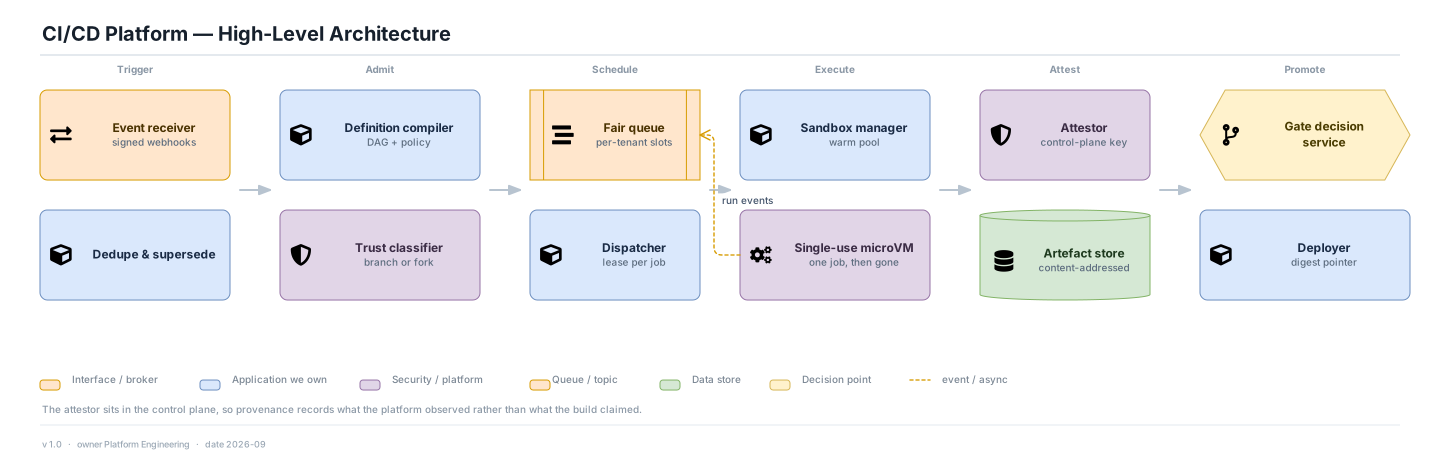
- Trust classification happens in Admit, once, before any capacity is committed. Nothing downstream can raise it.
- The attestor sits in the control plane and signs from what the platform observed. A build can produce a bad artefact but not a credible claim about one.
- Promote consumes a digest and evidence, never a source commit, so the gate has something verifiable to check.
Why six stages
- Each stage is a place a run can legitimately stop: rejected, queued, killed, failed, unsigned, or denied. A stage that cannot refuse is not a stage.
- The single feedback edge is run events flowing back to the scheduler, which is what lets a lost runner be re-dispatched rather than assumed successful.
Risks
- The control plane mediates every trusted act, so it is both a bottleneck and a blast radius. It must be more available than anything it serves.
- Single-use sandboxes make cold-start the platform's hardest performance problem; the warm pool is a permanent cost line.