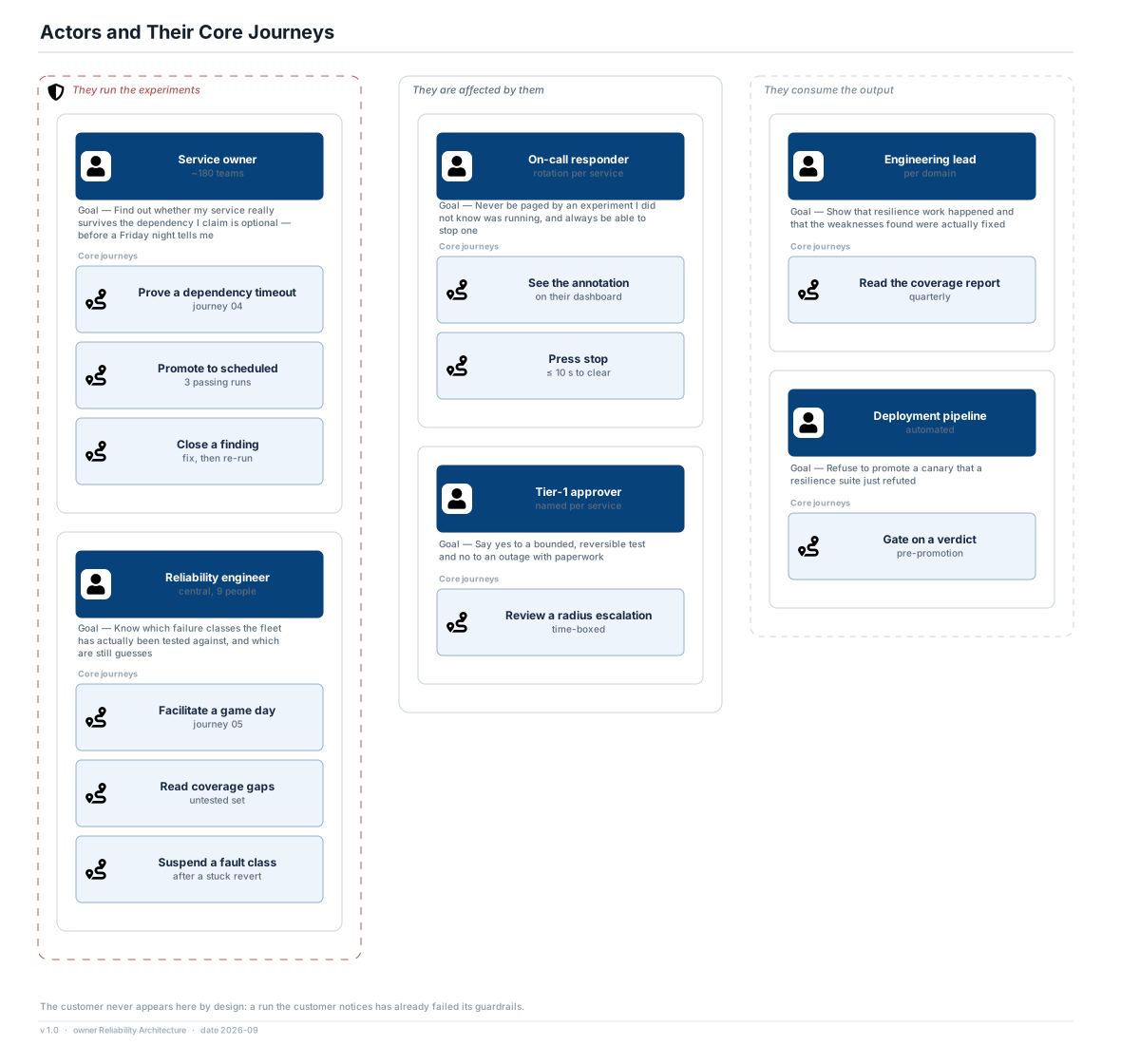
Service owners run their own experiments. A central team that runs chaos on other people's services produces findings nobody feels responsible for.
The on-call responder is a first-class actor with two journeys of their own: seeing the annotation, and pressing stop. Neither is a feature request.
The deployment pipeline is an actor, not an integration. It has a goal — refuse to promote a refuted canary — and the platform owes it a verdict it can gate on.
Assumptions
About 180 owning teams and a central reliability group of nine, which is what makes self-service mandatory rather than nice.
Tier-1 services have a named approver in the service catalogue.
What this changes
Because the reliability engineer's goal is coverage rather than execution, the untested-dependency report is a first-class output and not a dashboard afterthought.
Because the approver's goal is bounded reversibility, the approval card has to show the computed radius, not the requested one.