Chaos Engineering Platform · View 02 of 21 · Context and scope
Decisions
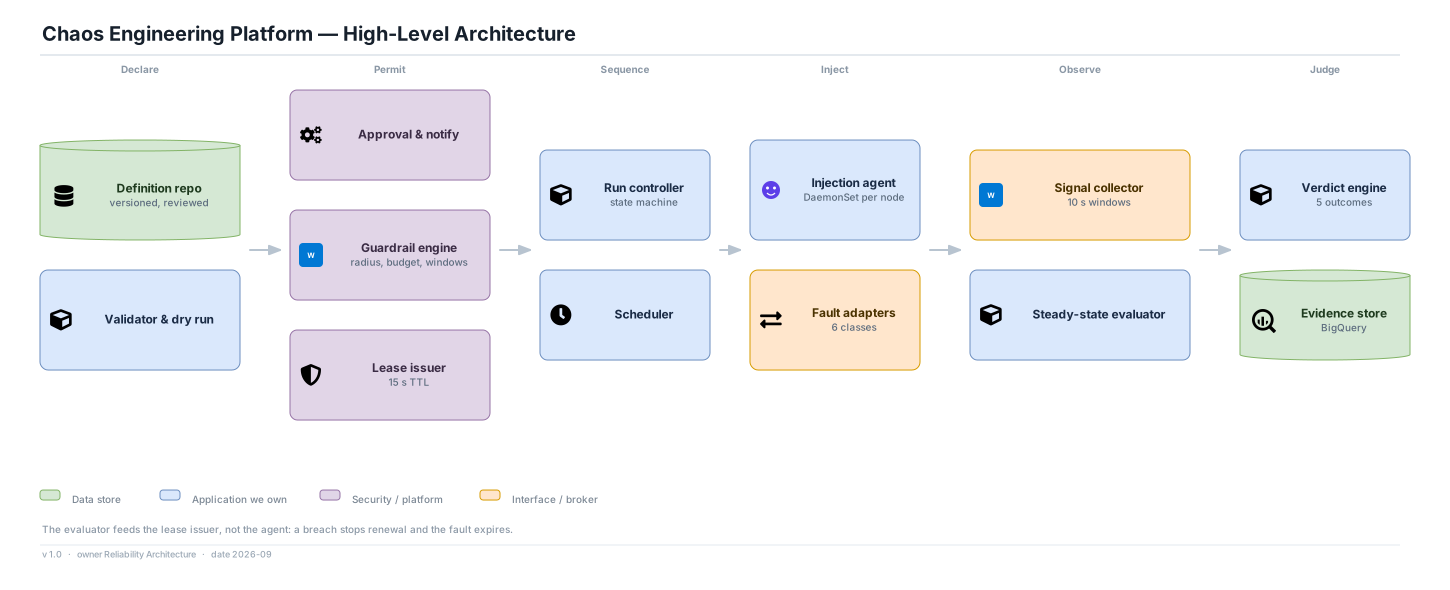
- Permission is its own stage, between declaration and sequencing. A run that has not been permitted cannot be sequenced, and sequencing cannot grant itself permission.
- The evaluator's output goes to the lease issuer, not to the agent. A breach withholds a renewal; it does not send a stop command that might not arrive.
- The verdict engine emits one of five outcomes, of which two are failures of the platform rather than of the target.
Assumptions
- Lease TTL 15 s, renewed every 5 s; steady state evaluated on 10 s rolling windows with signal freshness p95 ≤ 15 s.
- 200 concurrent runs fleet-wide, 2,000 runs a week at steady state.
Risks
- Renewal traffic becomes a load-bearing path of its own: 40,000 renewals per second at full fleet saturation.
- A long experiment is a chain of renewals, so a control-plane restart ends it rather than pausing it.