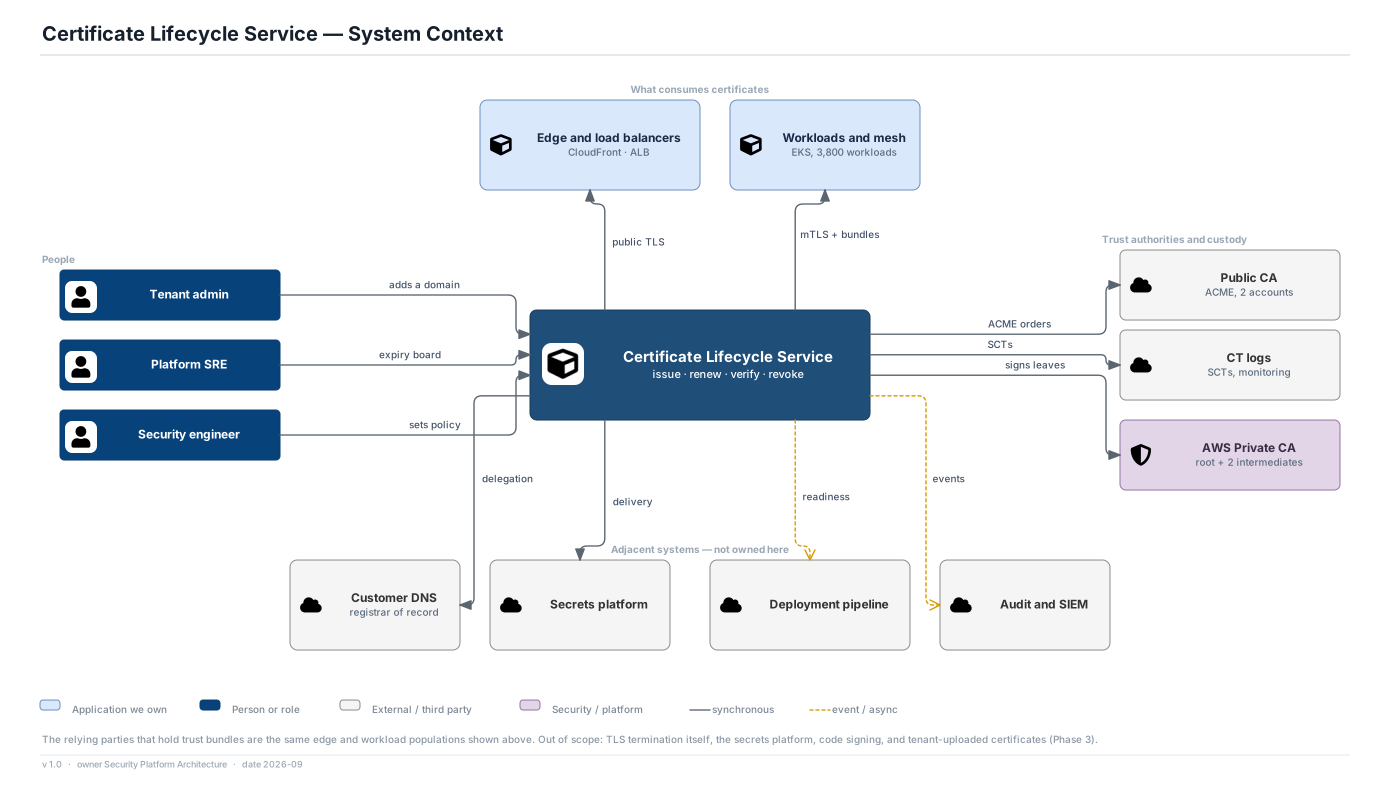
Certificate Lifecycle Service · View 01 of 21 · Context and scope
Decisions
- One service spans both trust domains — public-trust certificates for customer custom domains, private-trust identities for workloads — because the inventory and the escalation ladder are what they genuinely share.
- The public CA is a dependency the platform cannot replace, so it is integrated twice: two accounts, both pre-validated, either able to carry all new issuance within an hour.
- Customer DNS is drawn as an external system rather than an input, because the platform's authority to issue for a customer's domain is held there and can be withdrawn there.
Out of scope
- TLS termination itself — the platform supplies certificates to the edge and the mesh, and verifies them, but does not terminate.
- The secrets platform, used as a delivery channel and not owned here.
- Code signing, and tenant-uploaded certificates, which are Phase 3 in the requirement.
Assumptions
- 9,000 tenants, 24,000 customer custom domains, 3,800 internal workloads across 6 clusters in 3 regions, 140 platform-owned public hostnames.
- Every number in this package is a stated assumption from ask.md, to be replaced by measured telemetry before build.