Autoscaling Controller · View 36 of 37 · 6 · Assurance
The decision
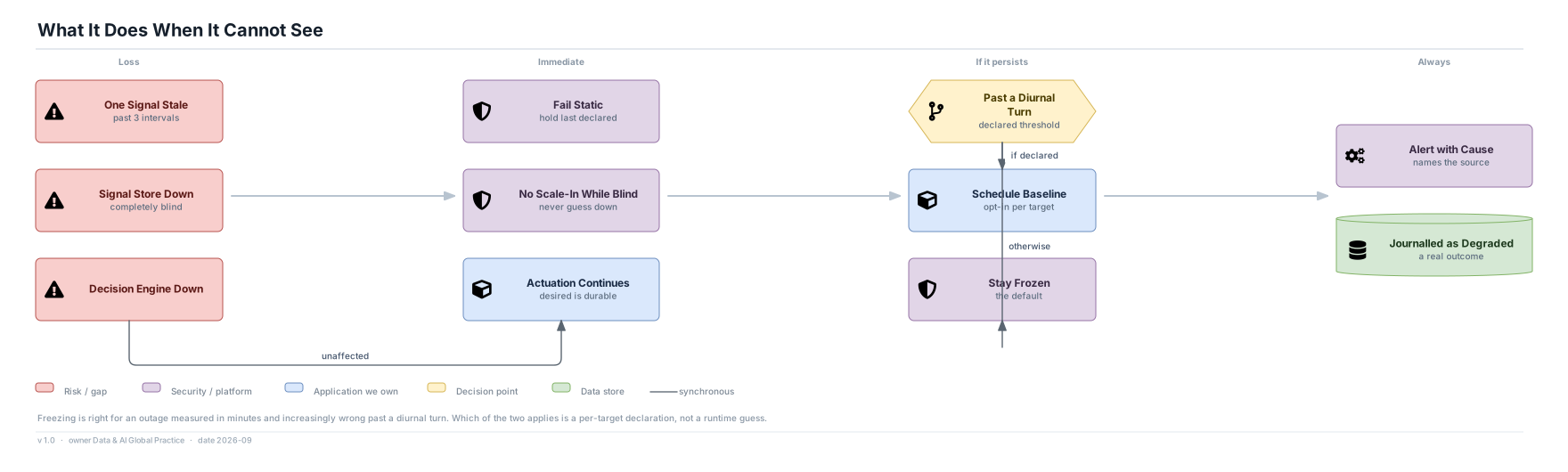
- Fail static by default: when signals are stale, the engine is down, or the journal cannot be written, the fleet holds its last declared capacity.
- Never scale in while blind. Scaling out on a stale signal wastes money; scaling in on one causes an outage.
- Per-target opt-in to a schedule-derived baseline once blindness passes a declared threshold, for strongly diurnal targets.
Why both, and why declared
- Freezing is safest for an outage measured in minutes and increasingly wrong as the outage passes a diurnal turn.
- Decaying towards a schedule tracks the day but acts on a guess, which is only defensible where demand is genuinely predictable.
- Which applies is a per-target declaration made in advance, never a runtime judgement made while blind.
Always
- The degradation is journalled as a real outcome with its cause, and alerted naming the source that stopped publishing.
- Actuation continues throughout: the desired-state record is durable and the reconciler does not need the engine.