Autoscaling Controller  ·  View 31 of 37  ·  5 · Operations

Cost and the Price of Stability

Attribution, efficiency, and the one number a policy is actually tuned against.

Editable source SVG draw.io All views
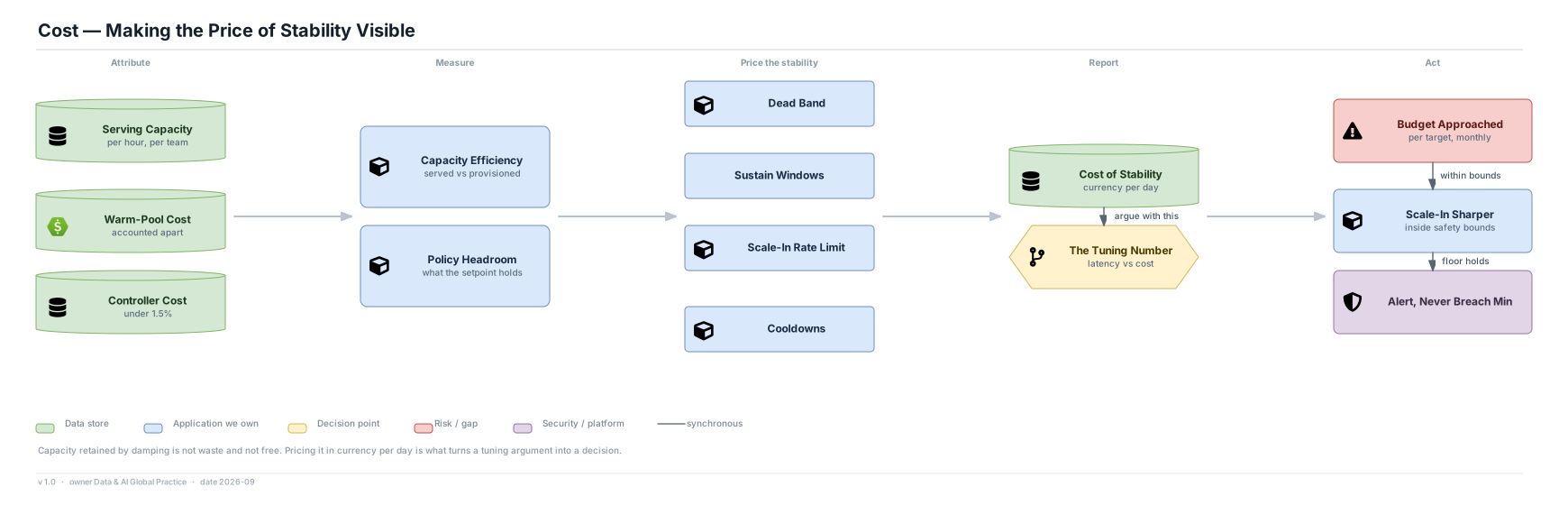
Attribute Serving Capacity per hour, per team Warm-Pool Cost accounted apart Controller Cost under 1.5% Measure Capacity Efficiency served vs provisioned Policy Headroom what the setpoint holds Price the stability Dead Band Sustain Windows Scale-In Rate Limit Cooldowns Report Cost of Stability currency per day The Tuning Number latency vs cost Act Budget Approached per target, monthly Scale-In Sharper inside safety bounds Alert, Never Breach Min within bounds floor holds argue with this Cost — Making the Price of Stability Visible Data store Application we own Decision point Risk / gap Security / platform synchronous Capacity retained by damping is not waste and not free. Pricing it in currency per day is what turns a tuning argument into a decision. v 1.0 · owner Data & AI Global Practice · date 2026-09

The decision

  • Cost of stability — capacity retained by dead bands, sustain windows, scale-in rate limits and cooldowns — is reported in currency per day.
  • That makes the latency-versus-cost trade visible rather than implicit, and it is the number the policy is tuned against.
  • Warm-pool cost is accounted separately from serving cost, so a pool cannot hide inside a target's bill.

Budgets

  • Declared monthly spend budget per target. As it is approached the controller raises scale-in aggressiveness inside safety bounds and alerts rather than breaching min.
  • Controller's own infrastructure under 1.5% of managed fleet compute spend.

Risks

  • Budget-driven aggressiveness is the one place cost is allowed to influence capacity. It is bounded by min and by the safety bounds, and every such adjustment is journalled with its reason.