Autoscaling Controller · View 24 of 37 · 4 · Runtime
Who owns the pool
- Per-target pools first, shared cross-target pools with contention arbitration deferred to phase 3.
- Per-target is predictable and wastes the most; shared is far cheaper and contends exactly when several targets burst together, which is the correlated case rather than the independent one.
- The measurement that decides whether to move to shared is burst correlation, and it is collected from day one.
Numbers
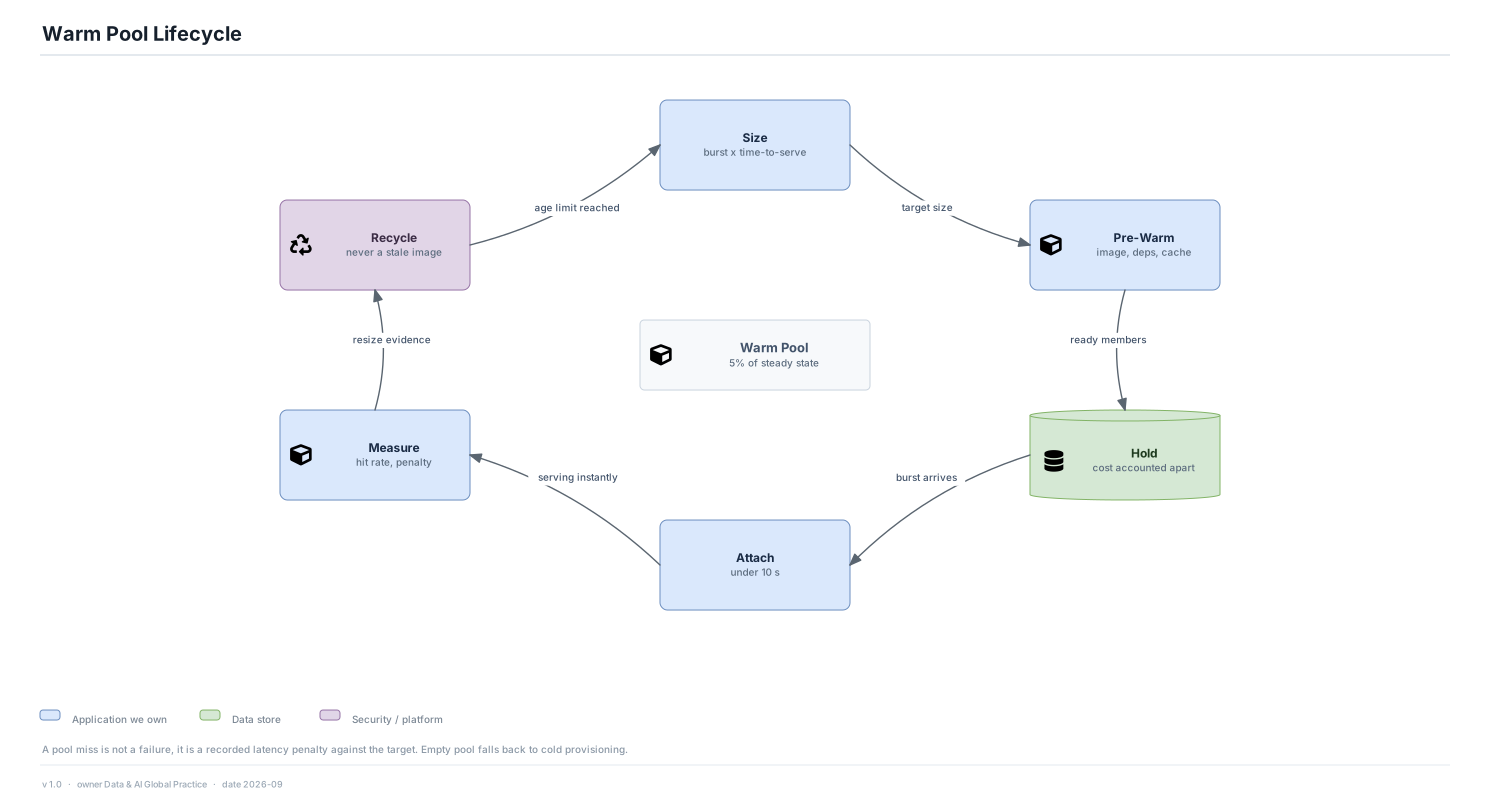
- Pool capped at 5% of steady-state capacity by default, sized from burst profile × measured time-to-serving.
- Attach under 10 s. Members recycled at a configured age so pooled capacity never runs a stale image.
- Pool cost is accounted separately from serving cost, and hit rate reported per target.
Risks
- A pool that is never hit is pure cost, and one that is always empty is pure theatre. Hit rate is the single number that decides whether the pool should exist at all.