Autoscaling Controller · View 20 of 37 · 4 · Runtime
Decisions
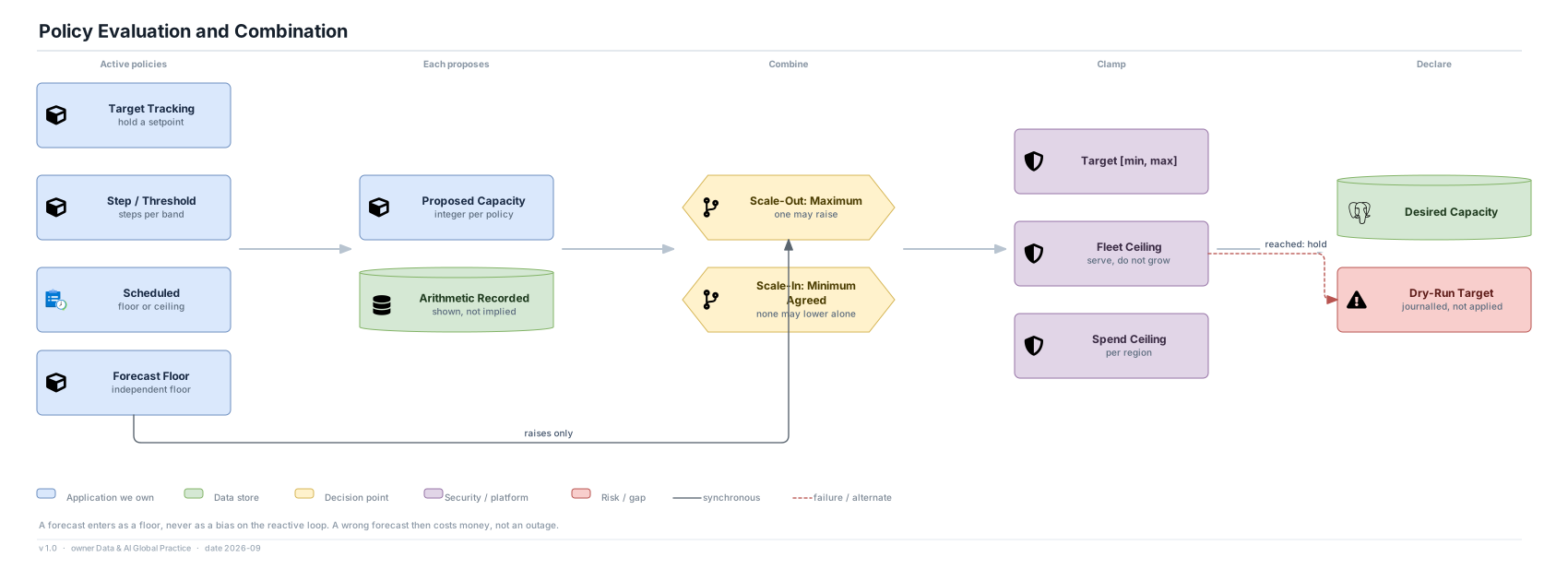
- Maximum on scale-out, minimum agreed on scale-in. One policy may raise capacity; none may lower it alone.
- A forecast enters as an independent capacity floor the reactive loop may exceed but not undercut, never as a bias on the reactive arithmetic.
- Clamps are applied last and recorded as adjustments, so a target pinned at max is visible as a clamp rather than as a coincidence.
Reactive, predictive, or both
- Both, but joined as a floor rather than a blend. A wrong forecast then costs money; a wrong blend would cost an outage.
- Purely reactive cannot beat a cold-start budget on a step change, which is the whole argument for a predictive component.
- Forecast error is bounded by the floor never exceeding the target's declared maximum and never suppressing a reactive scale-out.
Dry run
- Per-target dry run computes and journals decisions without actuating, which is how a new policy earns its way onto a real target.