Autoscaling Controller  ·  View 15 of 37  ·  3 · Data

Signal Lifecycle

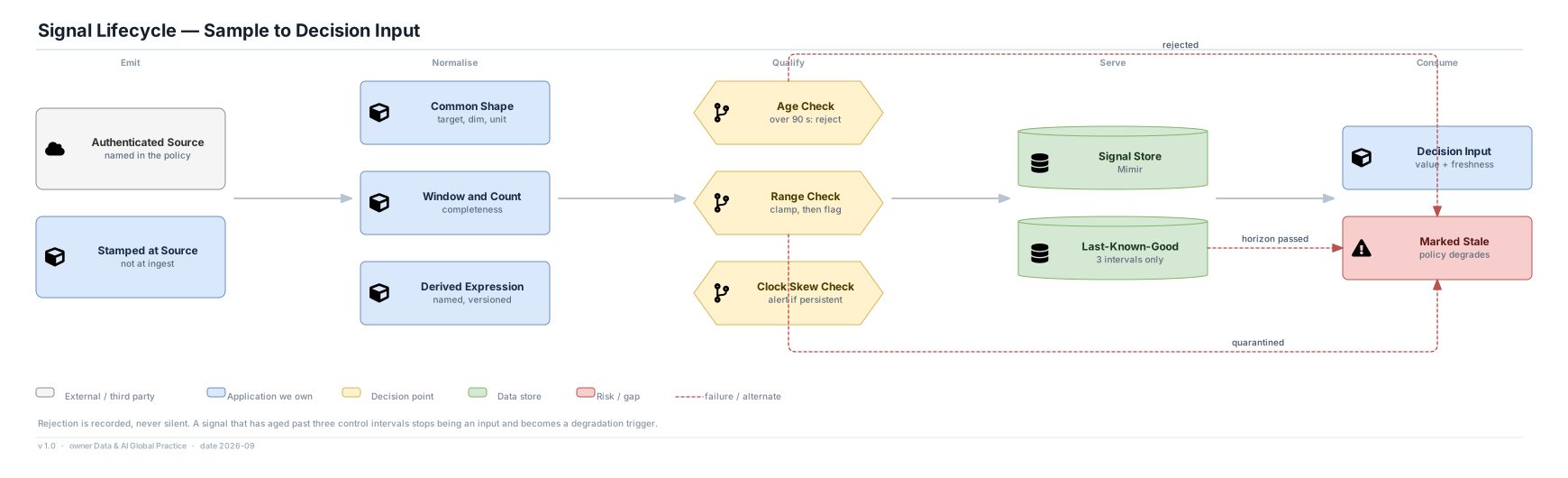
A sample from emission to decision input, and the three ways it can fail to get there.

Editable source SVG draw.io All views
Emit Authenticated Source named in the policy Stamped at Source not at ingest Normalise Common Shape target, dim, unit Window and Count completeness Derived Expression named, versioned Qualify Age Check over 90 s: reject Range Check clamp, then flag Clock Skew Check alert if persistent Serve Signal Store Mimir Last-Known-Good 3 intervals only Consume Decision Input value + freshness Marked Stale policy degrades rejected horizon passed quarantined Signal Lifecycle — Sample to Decision Input External / third party Application we own Decision point Data store Risk / gap failure / alternate Rejection is recorded, never silent. A signal that has aged past three control intervals stops being an input and becomes a degradation trigger. v 1.0 · owner Data & AI Global Practice · date 2026-09

Decisions

  • Timestamped at source, not at ingest, which is what makes the 90 s freshness check meaningful and clock skew detectable.
  • An implausible value is clamped to the declared range and the signal quarantined; capacity holds rather than following it.
  • Rejection is recorded. A signal that vanishes silently is indistinguishable from a signal that reads zero, and the two demand opposite responses.

Numbers

  • Reject over 90 s old at ingest.
  • Serve last-known-good for 3 control intervals, then mark stale.
  • Ingest to availability for decision: p99 ≤ 5 s.

Risks

  • Persistent clock skew makes a healthy source look stale and can freeze a target. It is alerted separately from staleness for exactly that reason.