Autoscaling Controller · View 11 of 37 · 2 · Structure
The decision
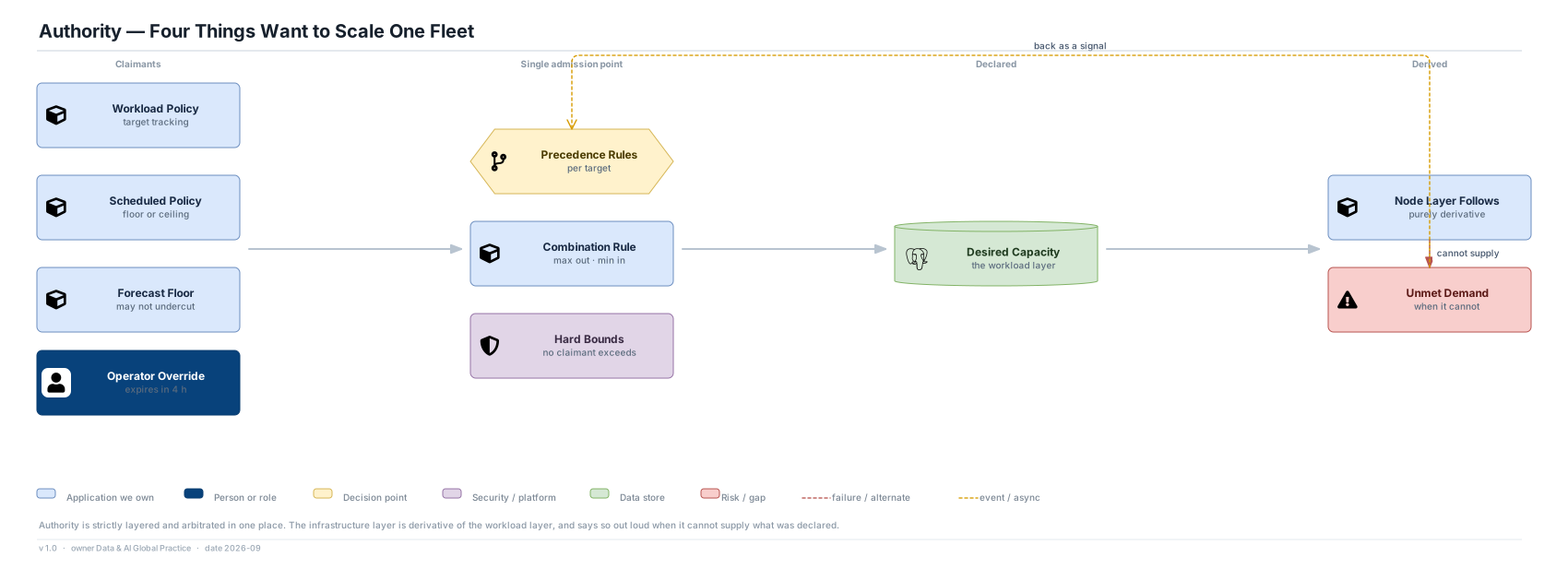
- Authority is strictly layered and arbitrated at a single admission point: the workload layer declares, the infrastructure layer follows.
- Combination is asymmetric — maximum on scale-out, minimum agreed on scale-in — so one claimant may raise capacity and none may lower it alone.
- Hard bounds apply after arbitration, so no claimant, including an operator, can exceed a target's declared maximum from inside the controller.
When the layer below cannot supply
- The node layer never invents a number. If it cannot supply what the workload layer declared, it emits unmet demand.
- Unmet demand re-enters the loop as a signal, which is what lets a policy react to scarcity instead of the reconciler retrying into it.
Rejected alternatives
- Precedence rules per target without a single admission point: cheap to build, impossible to reason about once two targets share a node pool.
- Letting both autoscalers act independently: the standard failure is the node autoscaler removing a node the workload autoscaler is about to fill.