Autoscaling Controller  ·  View 07 of 37  ·  2 · Structure

Signal Plane

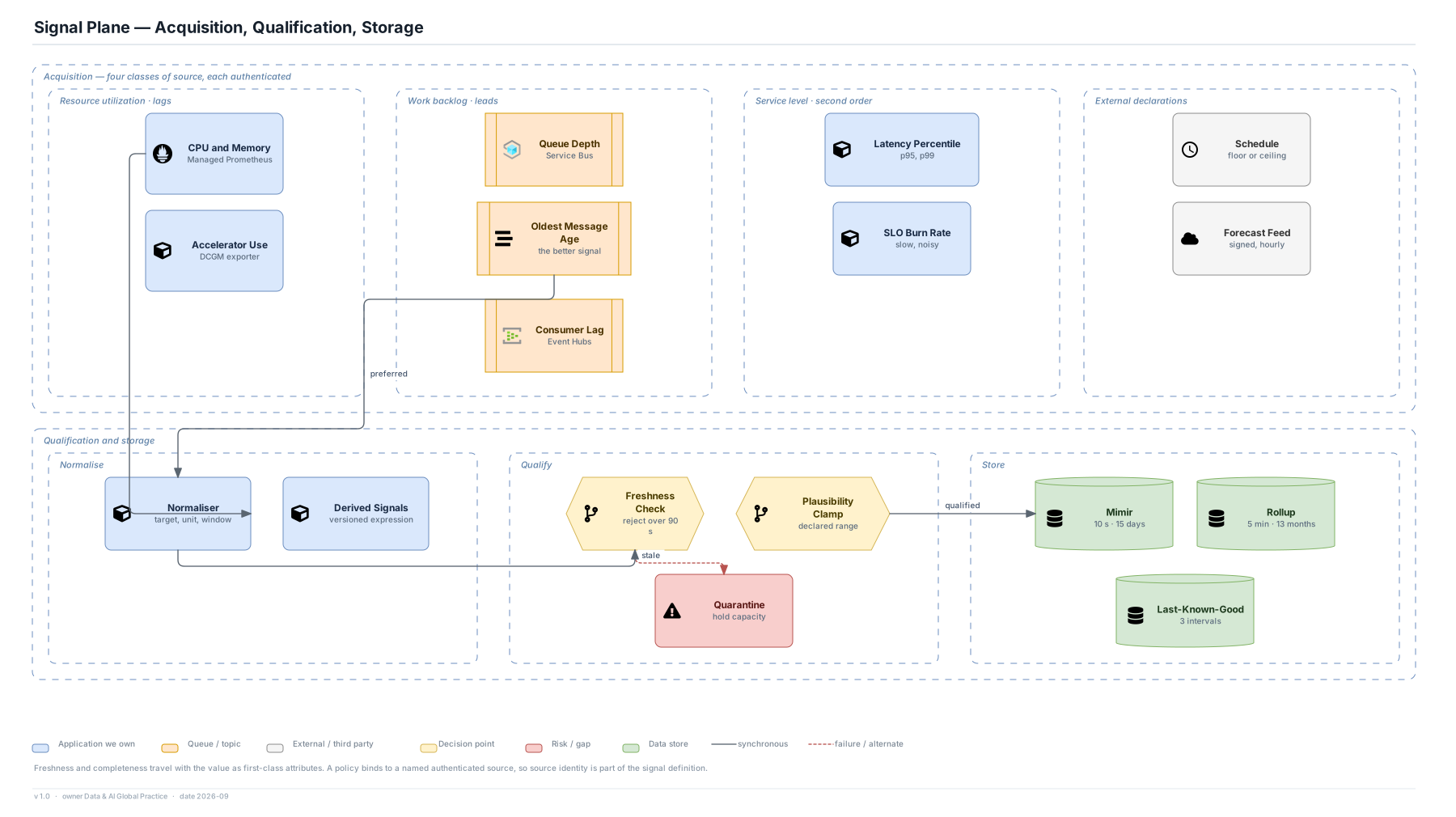
Four classes of source, one common shape, and a gate that qualifies every sample.

Editable source SVG draw.io All views
Acquisition — four classes of source, each authenticated Resource utilization · lags CPU and Memory Managed Prometheus Accelerator Use DCGM exporter Work backlog · leads Queue Depth Service Bus Oldest Message Age the better signal Consumer Lag Event Hubs Service level · second order Latency Percentile p95, p99 SLO Burn Rate slow, noisy External declarations Schedule floor or ceiling Forecast Feed signed, hourly Qualification and storage Normalise Normaliser target, unit, window Derived Signals versioned expression Qualify Freshness Check reject over 90 s Plausibility Clamp declared range Quarantine hold capacity Store Mimir 10 s · 15 days Rollup 5 min · 13 months Last-Known-Good 3 intervals preferred stale qualified Signal Plane — Acquisition, Qualification, Storage Application we own Queue / topic External / third party Decision point Risk / gap Data store synchronous failure / alternate Freshness and completeness travel with the value as first-class attributes. A policy binds to a named authenticated source, so source identity is part of the signal definition. v 1.0 · owner Data & AI Global Practice · date 2026-09

Decisions

  • Freshness and completeness are first-class attributes carried with the value, not properties inferred from it downstream.
  • Oldest-message age is preferred over queue depth: depth tells you how much work there is, age tells you whether you are keeping up.
  • Every signal declares whether it leads or lags demand, and the hierarchy in act 4 uses that classification directly.

Numbers

  • Samples older than 90 s at ingest are rejected and the rejection recorded.
  • Last-known-good is served for 3 control intervals, then the signal is marked stale.
  • 200,000 samples/second/region steady state, 3× burst for 300 s.

Risks

  • SLO burn rate is included because it scales what the user experiences, and ranked last because it is slow, noisy and second order.
  • Derived signals are versioned expressions; an unversioned expression would make a journalled decision unreadable a month later.