Audit Log Service · View 25 of 40 · 5 · Runtime
Question 5 answered
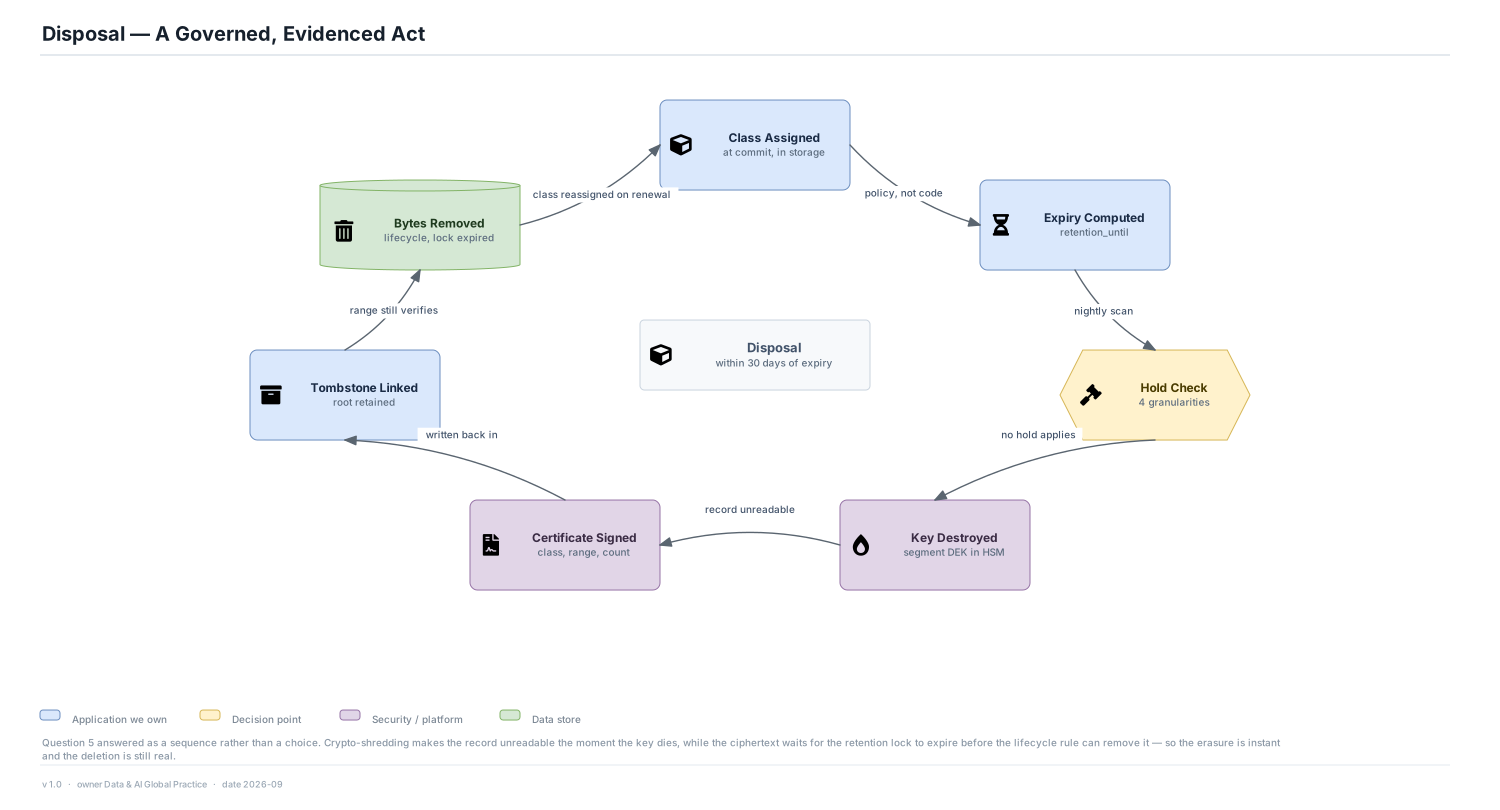
- Both, in order. Crypto-shredding destroys the segment's data key in the HSM the moment retention expires and no hold applies — the record becomes unreadable instantly and irreversibly. The ciphertext then waits for the retention lock to expire before a lifecycle rule removes the bytes.
- Shredding alone would leave 'the ciphertext still exists', which satisfies some regulators and not others, and inherits every future cryptanalytic risk. Physical deletion alone leaves a hole in the chain that verification cannot distinguish from tampering.
- Doing both, with a tombstone linking the retained Merkle root to a signed certificate, gives erasure that is immediate and deletion that is real, over a range that still verifies.
The certificate
- Names the retention class, the range, the record count and the policy under which disposal occurred, is signed, and is written back into the audit log as an ordinary record.
- Disposal happens within 30 days of expiry. A range under legal hold is skipped and the certificate for the surrounding range says why it waited.
- The retention engine acts only on records it did not create, under a schedule it cannot shorten.
Risks
- Crypto-shredding is only as final as the key destruction. Managed HSM purge protection and soft-delete windows must be configured so that a destroyed key cannot be recovered by anyone, including Microsoft support — this needs explicit confirmation before the first disposal window runs.