AI Agent Orchestration Platform · View 29 of 32 · 6 · Assurance and delivery
Decisions
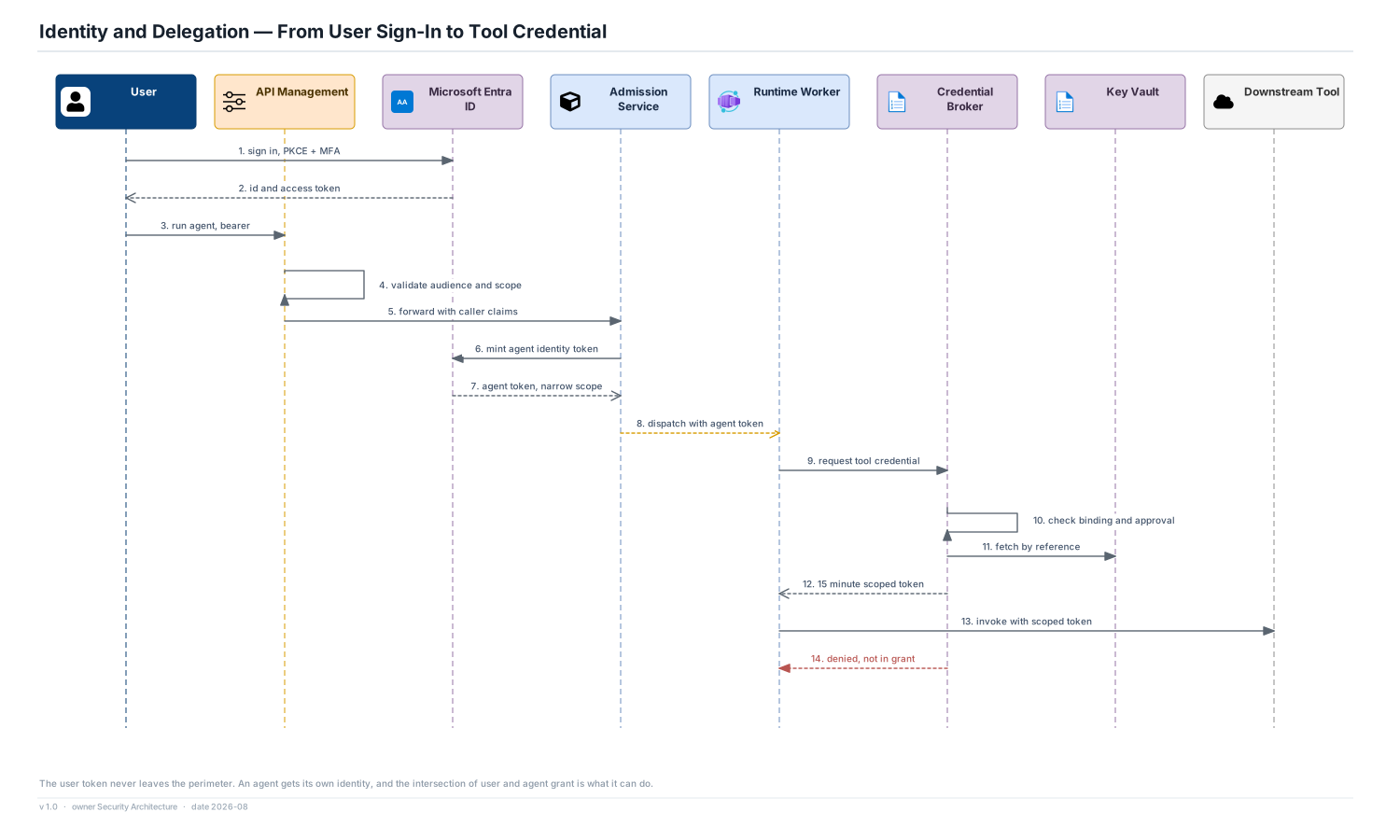
- The user's token never leaves the perimeter; the runtime receives an agent identity token with a narrow, purpose-scoped audience
- What an agent may do is the intersection of the caller's grant and the agent's own grant, never the union
- Tool credentials are brokered per call and live 15 minutes; the worker never holds a long-lived secret and never sees the vault directly
Mechanisms
- Entra workload identity federation for service-to-service; no client secrets in any workload
- On-behalf-of exchange where a tool genuinely requires end-user context, recorded in the audit ledger with both identities
- Credential rotation on a 90-day schedule, and immediate revocation propagating within the token lifetime
Risks
- Revocation is bounded by token lifetime; a 15-minute window of residual access after revocation is accepted and documented
- On-behalf-of chains are hard to reason about at depth; delegation depth for OBO is capped at one hop