AI Agent Orchestration Platform · View 28 of 32 · 6 · Assurance and delivery
The principle
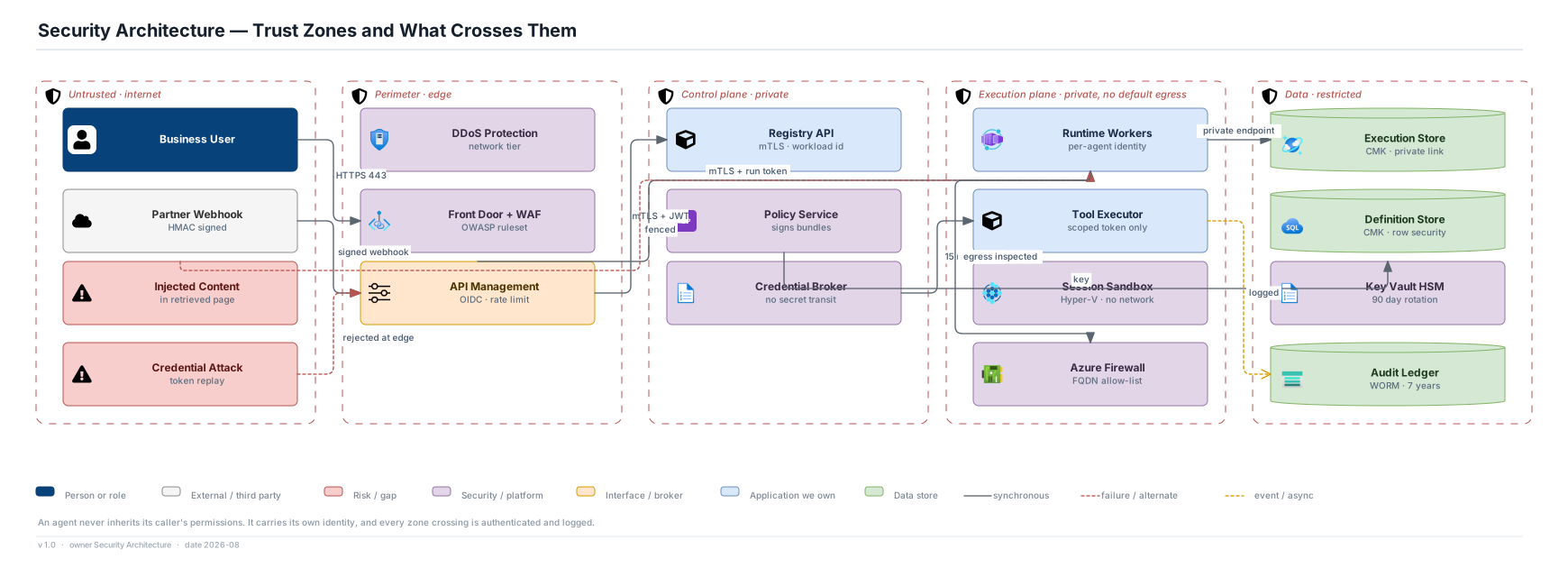
- An agent never automatically inherits its user's or its host's permissions; it carries its own identity and its own explicitly granted capabilities
- Service-to-service communication is zero-trust: mutual TLS and a verified token on every hop, including inside the private network
- The execution plane has no default egress; every outbound destination is on a versioned FQDN allow-list
Controls
- Enterprise SSO with OAuth and OIDC, RBAC everywhere and ABAC on data-classification decisions
- Customer-managed keys on the data stores, HSM-backed signing keys, 90-day credential rotation
- Encryption in transit and at rest, tenant isolation, network controls and data-residency pinning
Threats explicitly drawn
- Indirect prompt injection through retrieved content — mitigated by fencing and by denying tool authority to untrusted blocks
- Token replay at the edge — mitigated by short-lived tokens, audience validation and rate limiting
- Agent-generated code as an egress path — mitigated by a sandbox with no network route and output size caps