AI Agent Orchestration Platform · View 21 of 32 · 4 · Runtime
Decisions
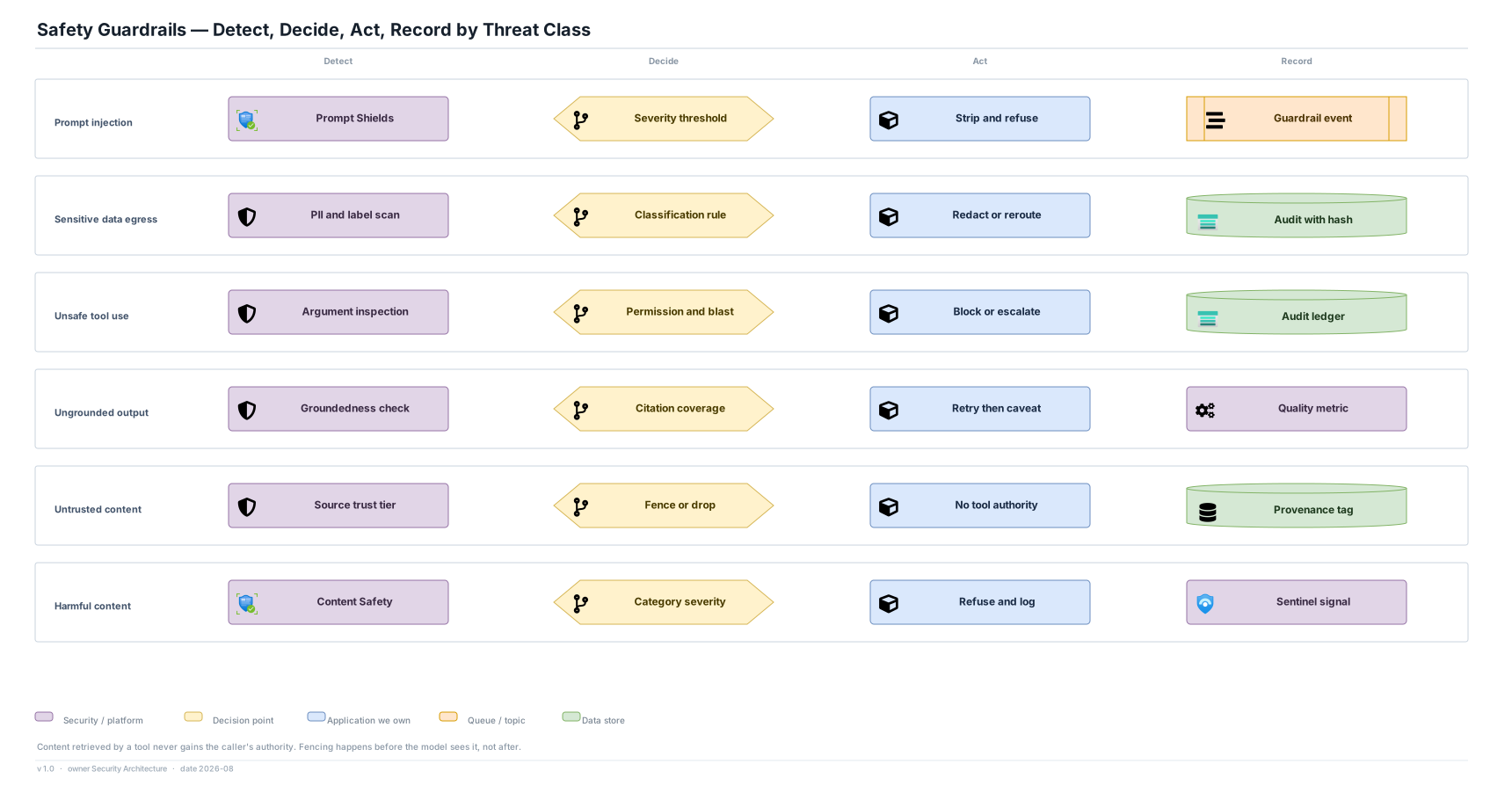
- Content retrieved by a tool never gains the caller's authority; fencing happens before the model sees it, not after it responds
- Guardrails are configured per agent from a central catalogue; an agent may add checks but may not remove an organisation-level one
- Every guardrail decision is an event, so a blocked action is as visible as a completed one
Coverage
- Input validation, output validation, tool-call validation, policy check, content classification, PII detection and redaction, structured-output enforcement and human escalation
- Groundedness checking is enabled for retrieval-backed agents and disabled for creative ones, declared in the spec
- A red-team suite of injection probes runs in CI against every agent version
Risks
- Guardrails add latency and cost per call; the measured overhead is tracked as an SLI and is part of the case for keeping them in-process
- Detection is probabilistic — prompt shields reduce injection risk, they do not eliminate it, which is why the sandbox has no default network path
- False positives block legitimate work; every block is reviewable and the review feeds threshold tuning