AI Agent Orchestration Platform  ·  View 05 of 32  ·  2 · Structure

Container and Component Architecture

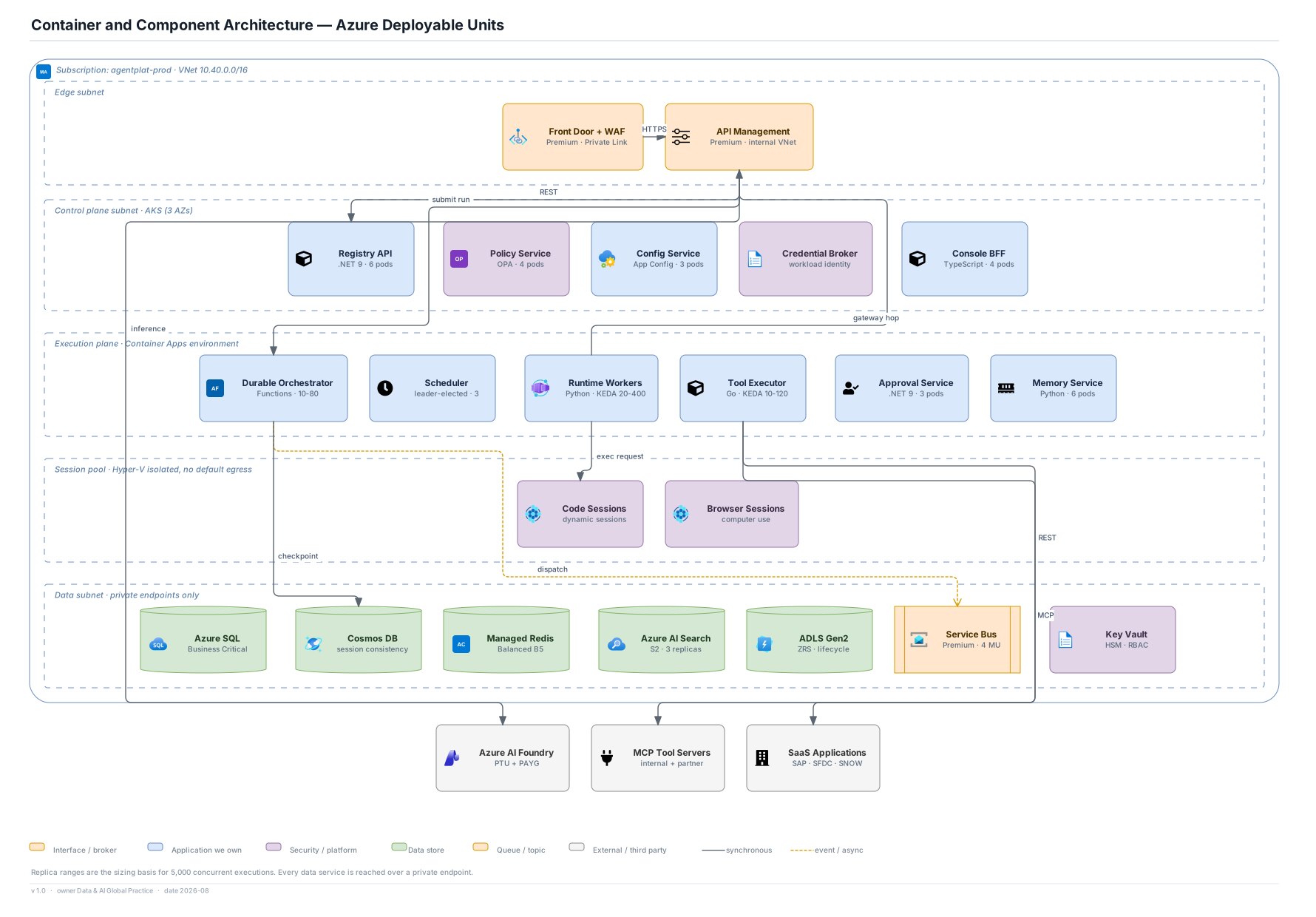
The deployable units, their technology, their replica ranges and the Azure service each one owns.

Editable source SVG draw.io All views
Subscription: agentplat-prod · VNet 10.40.0.0/16 Edge subnet Front Door + WAF Premium · Private Link API Management Premium · internal VNet Control plane subnet · AKS (3 AZs) Registry API .NET 9 · 6 pods Policy Service OPA · 4 pods Config Service App Config · 3 pods Credential Broker workload identity Console BFF TypeScript · 4 pods Execution plane · Container Apps environment Durable Orchestrator Functions · 10-80 Scheduler leader-elected · 3 Runtime Workers Python · KEDA 20-400 Tool Executor Go · KEDA 10-120 Approval Service .NET 9 · 3 pods Memory Service Python · 6 pods Session pool · Hyper-V isolated, no default egress Code Sessions dynamic sessions Browser Sessions computer use Data subnet · private endpoints only Azure SQL Business Critical Cosmos DB session consistency Managed Redis Balanced B5 Azure AI Search S2 · 3 replicas ADLS Gen2 ZRS · lifecycle Service Bus Premium · 4 MU Key Vault HSM · RBAC Azure AI Foundry PTU + PAYG MCP Tool Servers internal + partner SaaS Applications SAP · SFDC · SNOW HTTPS REST submit run dispatch exec request gateway hop inference MCP REST checkpoint Container and Component Architecture — Azure Deployable Units Interface / broker Application we own Security / platform Data store Queue / topic External / third party synchronous event / async Replica ranges are the sizing basis for 5,000 concurrent executions. Every data service is reached over a private endpoint. v 1.0 · owner Data & AI Global Practice · date 2026-08

Decisions

  • Control plane on AKS: long-lived, moderate scale, needs fine-grained network policy and workload identity
  • Execution plane on Container Apps: KEDA scaling on queue depth is the whole requirement, and a managed environment removes a cluster to operate
  • Code and browser tools run in Container Apps dynamic sessions — Hyper-V isolation per session, destroyed after use

Sizing basis

  • 20 to 400 runtime worker replicas covers 5,000 concurrent executions at an 8× peak-to-average ratio
  • Service Bus Premium at 4 messaging units sustains the dispatch rate with headroom for retry storms
  • Cosmos DB provisioned with autoscale; the checkpoint write is the dominant RU consumer, not reads

Risks

  • Cold-start latency on scale-out from low replica counts; mitigated by a minimum warm pool on the interactive queue
  • Dynamic session pool exhaustion under a code-heavy workload; needs a per-tenant session quota before general availability
  • AKS and Container Apps means two runtime operating models; accepted, revisit if Container Apps gains the network controls the control plane needs