AI Agent Orchestration Platform  ·  View 04 of 32  ·  2 · Structure

Layered Architecture

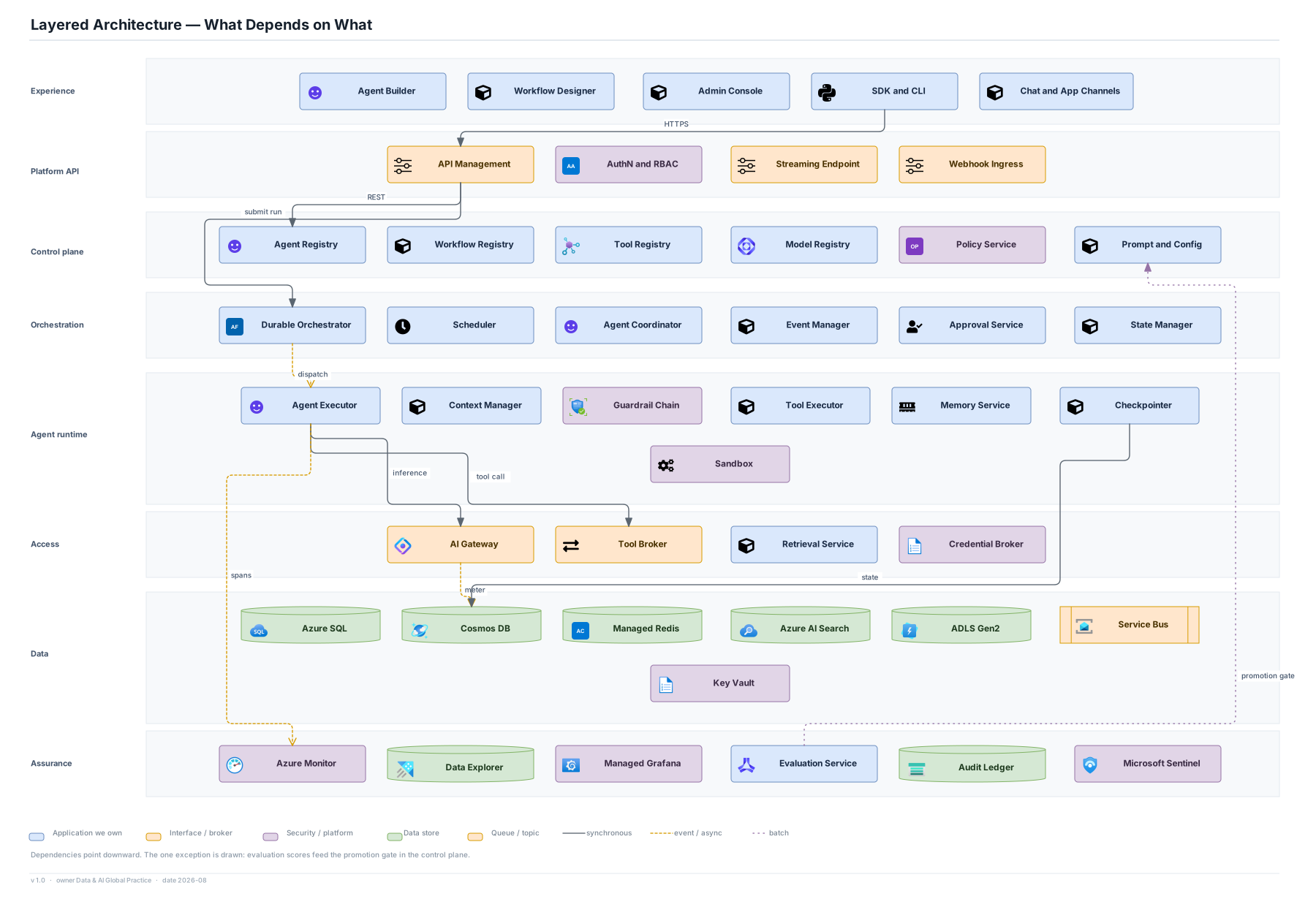
What depends on what, and the single dependency that points the wrong way.

Editable source SVG draw.io All views
Experience Agent Builder Workflow Designer Admin Console SDK and CLI Chat and App Channels Platform API API Management AuthN and RBAC Streaming Endpoint Webhook Ingress Control plane Agent Registry Workflow Registry Tool Registry Model Registry Policy Service Prompt and Config Orchestration Durable Orchestrator Scheduler Agent Coordinator Event Manager Approval Service State Manager Agent runtime Agent Executor Context Manager Guardrail Chain Tool Executor Memory Service Checkpointer Sandbox Access AI Gateway Tool Broker Retrieval Service Credential Broker Data Azure SQL Cosmos DB Managed Redis Azure AI Search ADLS Gen2 Service Bus Key Vault Assurance Azure Monitor Data Explorer Managed Grafana Evaluation Service Audit Ledger Microsoft Sentinel HTTPS REST submit run dispatch inference tool call meter state spans promotion gate Layered Architecture — What Depends on What Application we own Interface / broker Security / platform Data store Queue / topic synchronous event / async batch Dependencies point downward. The one exception is drawn: evaluation scores feed the promotion gate in the control plane. v 1.0 · owner Data & AI Global Practice · date 2026-08

The rule

  • A layer may call the layer below it and may publish events upward; it may not call upward synchronously
  • The agent runtime never reaches a data service directly — it goes through access-layer components that carry the identity and the audit
  • Assurance is a layer, not a bolt-on: nothing above it is allowed to be untraceable

The exception, drawn not hidden

  • Evaluation scores feed the promotion gate in the control plane — a genuine upward dependency
  • It is asynchronous and batch, so a failed evaluation store blocks promotion rather than execution
  • Reviewed each release; if it ever becomes synchronous it must be redesigned

Extension points

  • Model provider, agent framework, tool provider, memory provider, vector store, guardrail, evaluation, identity, notification and observability are all interfaces, not implementations
  • The orchestrator depends on the workflow-engine port, not on Durable Functions directly
  • A second engine (Temporal on AKS) can be added behind the same port without touching agent code