Webhook Delivery Service · View 20 of 20 · Assurance
The asymmetry
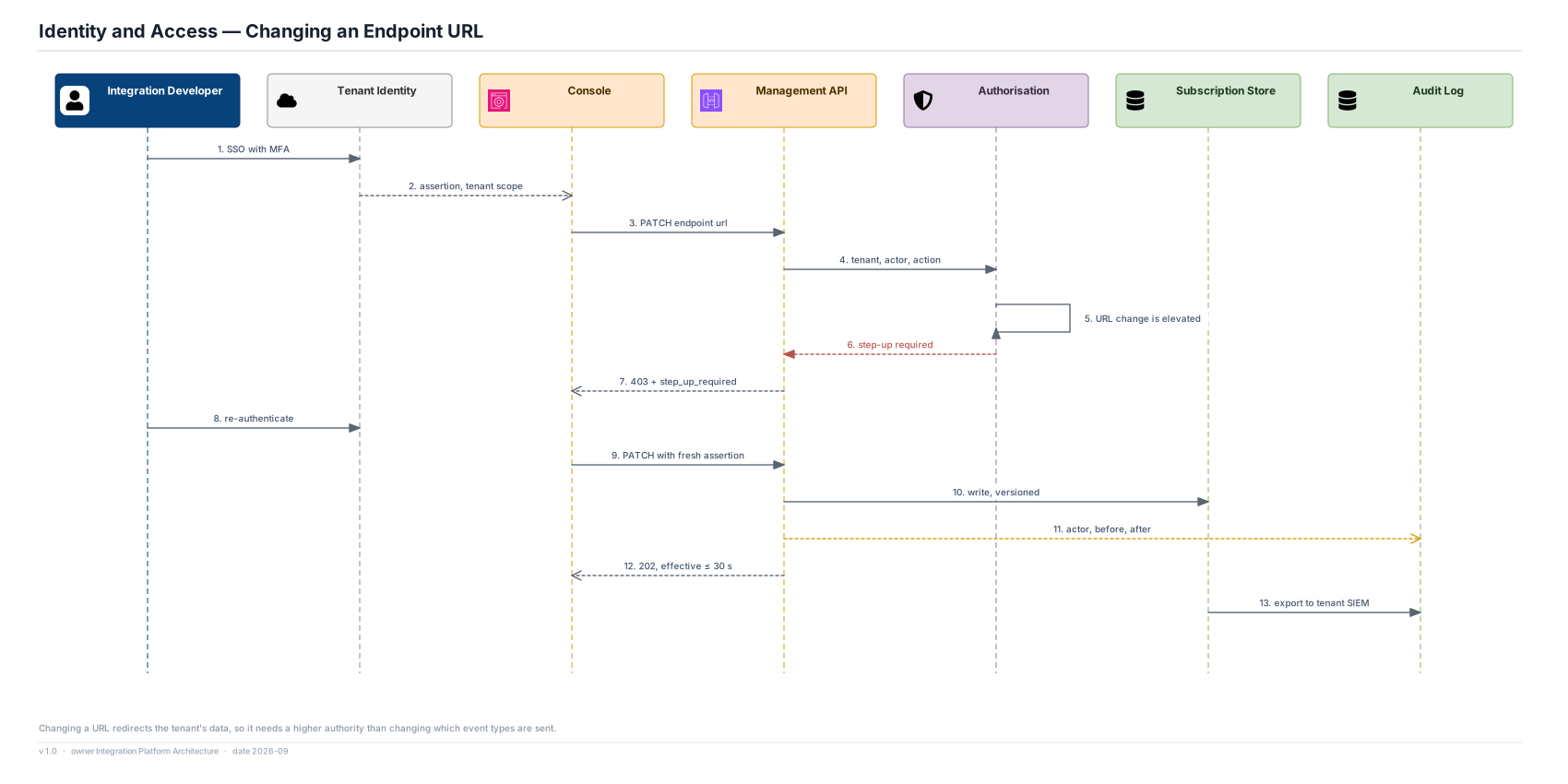
- Changing which event types an endpoint receives is routine. Changing its URL redirects the tenant's data to somewhere new, and is authorised separately and at a higher bar (ADR-16).
- Step-up is returned as a machine-readable `step_up_required`, not a generic 403, so an automated client can respond correctly rather than retrying into a wall.
- Every subscription change, secret rotation, enable/disable and replay is written to an audit record independent of the delivery telemetry, and exported to the tenant's own SIEM.
Assumptions
- Tenant SSO with MFA is the identity source; the platform holds no passwords of its own.
- A subscription change is effective within 30 s p99; an unsubscribe or endpoint deletion within 5 s p99, because continued delivery after deletion is a data-protection incident rather than a scheduling lag.
- Audit retention 400 days.
Risks
- The elevated-action list is a judgement call made once and then rarely revisited. If it is drawn too narrowly, an account takeover redirects a tenant's events with a single routine-looking API call.
- Continued delivery after a tenant deletion is the failure with the worst regulatory consequence on this platform, and it is enforced by a propagation bound rather than by a synchronous check on the delivery path.