Webhook Delivery Service · View 12 of 20 · Runtime
Decisions
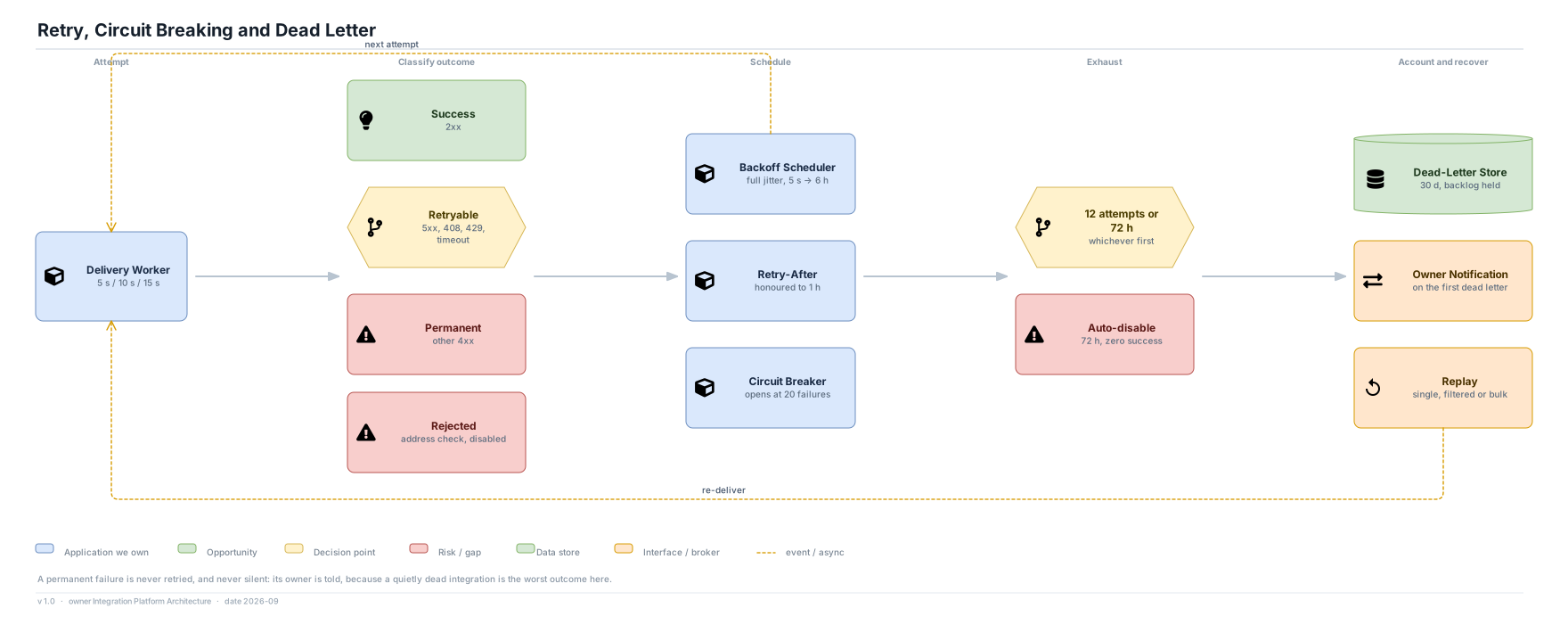
- Four outcome classes, published: success, retryable, permanent, rejected-before-dispatch. A developer's first question is which class their failure landed in, and an unclassifiable failure is a support ticket.
- The retry schedule is the platform's, not the customer's: 12 attempts over 72 hours, full-jittered exponential from 5 s, capped at 6 h. Customer-configurable retries let a tenant configure a self-inflicted denial of service and make capacity unplannable (ADR-08).
- `Retry-After` is honoured up to an hour, because a consumer telling the platform when to come back is the most useful signal it will ever get.
- A permanent failure is never retried and never silent. Its owner is told, because a quietly dead integration is the worst outcome this platform can produce (ADR-09).
Numbers, all assumptions
- Circuit opens at 20 consecutive failures; probes once every 5 minutes with a single attempt.
- Auto-disable after 72 hours of continuous failure with zero successes; the backlog is retained for the dead-letter window regardless.
- Retries assumed at 12% of the 45,000 attempts/s steady state. Above 25% an alarm fires, because retry traffic is capacity spent producing nothing.
Open
- Auto-disable is the platform breaking a working configuration during the customer's own incident. It is justified only if the notification is reliable and the backlog survives — see ADR-14 for the argument and what would change it.
- Whether named retry profiles should replace the single fixed schedule is deferred to Phase 2 rather than settled here.