Streaming Video Encoding & Packaging Pipeline  ·  View 15 of 22  ·  Runtime

On-Demand Regeneration

What happens when a viewer asks for a rendition that does not exist.

Editable source SVG draw.io All views
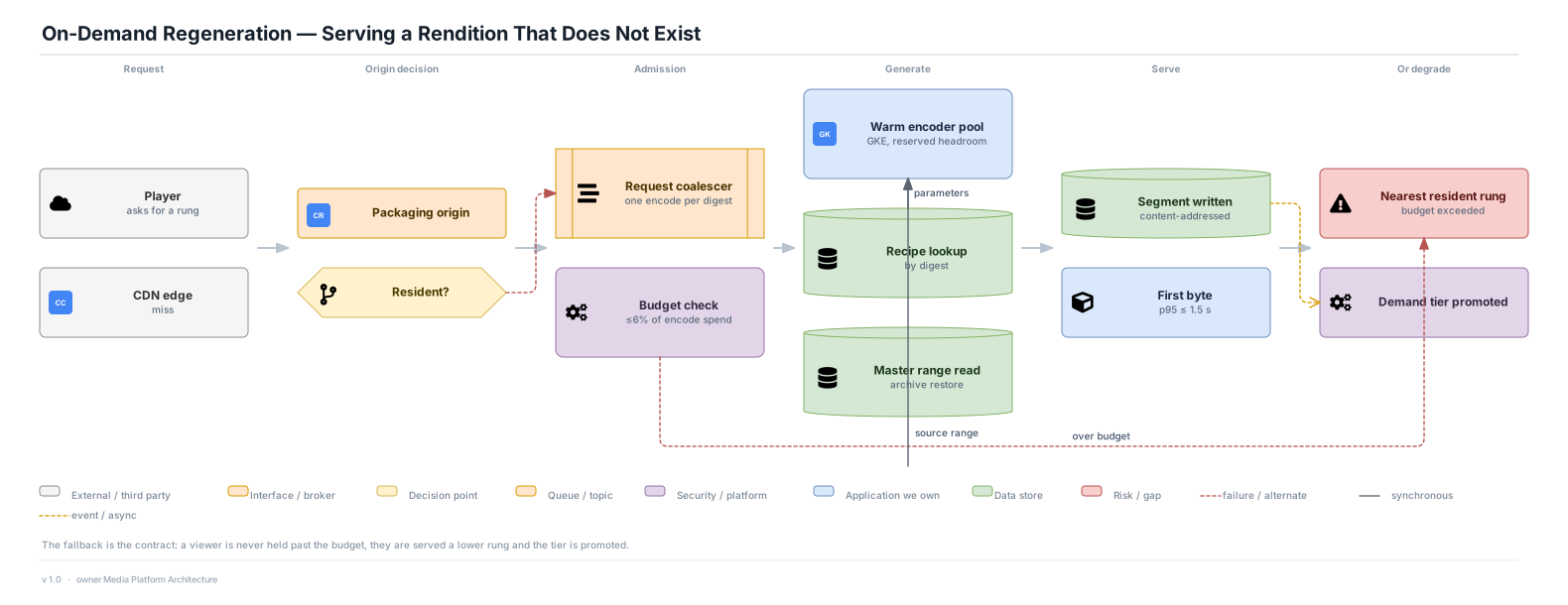
Request Player asks for a rung CDN edge miss Origin decision Packaging origin Resident? Admission Request coalescer one encode per digest Budget check ≤6% of encode spend Generate Warm encoder pool GKE, reserved headroom Recipe lookup by digest Master range read archive restore Serve Segment written content-addressed First byte p95 ≤ 1.5 s Or degrade Nearest resident rung budget exceeded Demand tier promoted over budget parameters source range On-Demand Regeneration — Serving a Rendition That Does Not Exist External / third party Interface / broker Decision point Queue / topic Security / platform Application we own Data store Risk / gap failure / alternate synchronous event / async The fallback is the contract: a viewer is never held past the budget, they are served a lower rung and the tier is promoted. v 1.0 · owner Media Platform Architecture

The budget is a circuit breaker

  • On-demand generation is capped at an assumed 6% of total encode spend. Past the cap the viewer is served the nearest resident rung rather than held.
  • If the cap is being hit routinely, the eviction policy is wrong, not the cap — that signal is on the observability grid for exactly that reason.

Two mechanisms that make it work

  • Coalescing on the rendition digest: concurrent requests for the same missing rendition produce one encode.
  • Archive-class master reads are the slow part, so the first-byte budget is really a restore-plus-encode budget. Assumed p95 ≤ 1.5 s, p99 ≤ 3.5 s.

Open

  • Placement — batch fleet, dedicated warm pool beside the origin, or the edge — is Question 7. This view assumes the warm pool, which is the only option compatible with both the latency budget and the spend cap, but it is an assumption and not a finding.