URL Shortener & Link Management Service · View 13 of 23 · Data
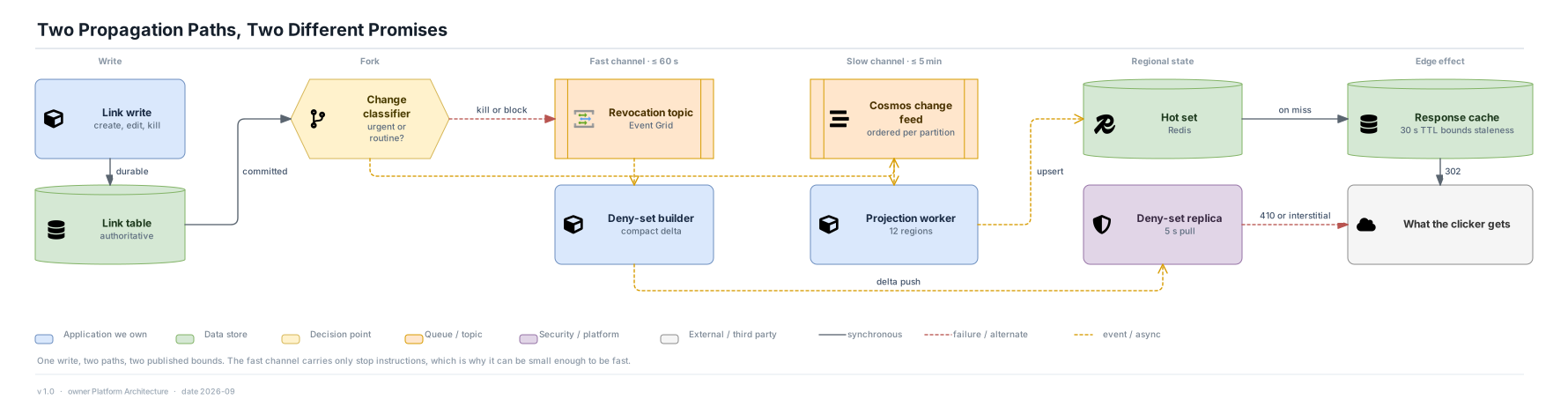
Why two channels
- Revocation must be effective in 60 s; an edit may take 5 minutes. Sizing one channel for the tighter deadline means paying that cost on every routine edit.
- The fast channel carries a compact delta of codes that must stop — small enough to push to 12 regions every few seconds.
- The slow channel carries full records off the change feed and can be replayed from any point, which is what makes the projection rebuildable.
The numbers
- Revocation: 30 s p95, 60 s p99 globally. Deny-set pull interval 5 s. Edge response cache TTL 30 s, which bounds the worst case.
- Edits: 5 minutes p99 globally, 10 s p99 for a newly created link, 1 s p99 in the creating region.
- All five are stated assumptions and are the numbers most worth arguing with in the whole package.
Risks
- Two sources of truth on the read path can disagree: a code present in the hot set and also in the deny-set must always lose. The deny-set is therefore checked first, unconditionally (view 09).
- If the change classifier mislabels a kill as a routine edit, the platform silently misses its safety promise while every dashboard stays green. The 60 s synthetic probe in view 20 exists for exactly this.