URL Shortener & Link Management Service  ·  View 04 of 23  ·  People and journeys

Journey — A Clicker Follows a Short Link

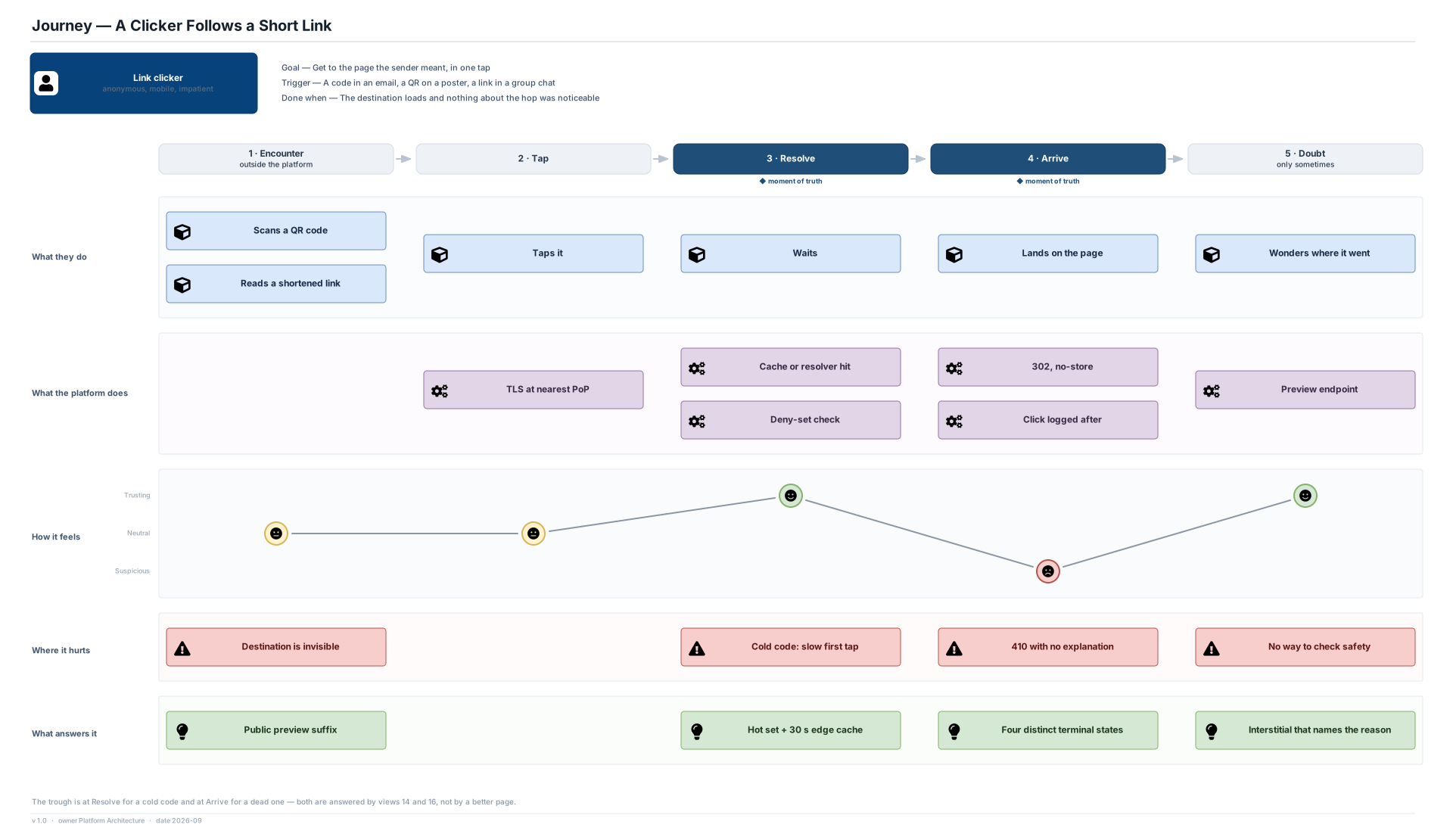
The only journey that happens 150,000 times a second, and the two phases where it fails: a cold code and a dead one.

Editable source SVG draw.io All views
Link clicker anonymous, mobile, impatient Goal — Get to the page the sender meant, in one tap Trigger — A code in an email, a QR on a poster, a link in a group chat Done when — The destination loads and nothing about the hop was noticeable 1 · Encounter outside the platform 2 · Tap 3 · Resolve ◆ moment of truth 4 · Arrive ◆ moment of truth 5 · Doubt only sometimes What they do Scans a QR code Reads a shortened link Taps it Waits Lands on the page Wonders where it went What the platform does TLS at nearest PoP Cache or resolver hit Deny-set check 302, no-store Click logged after Preview endpoint How it feels Trusting Neutral Suspicious Where it hurts Destination is invisible Cold code: slow first tap 410 with no explanation No way to check safety What answers it Public preview suffix Hot set + 30 s edge cache Four distinct terminal states Interstitial that names the reason Journey — A Clicker Follows a Short Link The trough is at Resolve for a cold code and at Arrive for a dead one — both are answered by views 14 and 16, not by a better page. v 1.0 · owner Platform Architecture · date 2026-09

Where it actually hurts

  • Resolve is the trough for a cold code. It is also the click the campaign owner tests with before launch, which is why first-click latency matters out of proportion to its share of traffic.
  • Arrive is the trough for a dead code: a bare 404 tells the clicker nothing and makes the sender look incompetent.
  • Doubt is not a UX phase — it is the phishing question. A clicker who cannot inspect a link is being asked to trust a stranger's abbreviation.

What answers each trough

  • Cold code → hot set plus a 30 s edge response cache, and pre-warming at creation (view 15).
  • Dead code → four distinct terminal states, never one generic error (view 09, ADR-14).
  • Doubt → a public preview endpoint and a platform-owned interstitial that names the reason (ADR-13).

Deliberate omission

  • No consent or cookie step is drawn, because the design records no identifier that would need one: country and device class are derived and the raw IP is dropped at ingestion.