URL Shortener & Link Management Service · View 02 of 23 · Context and scope
The shape
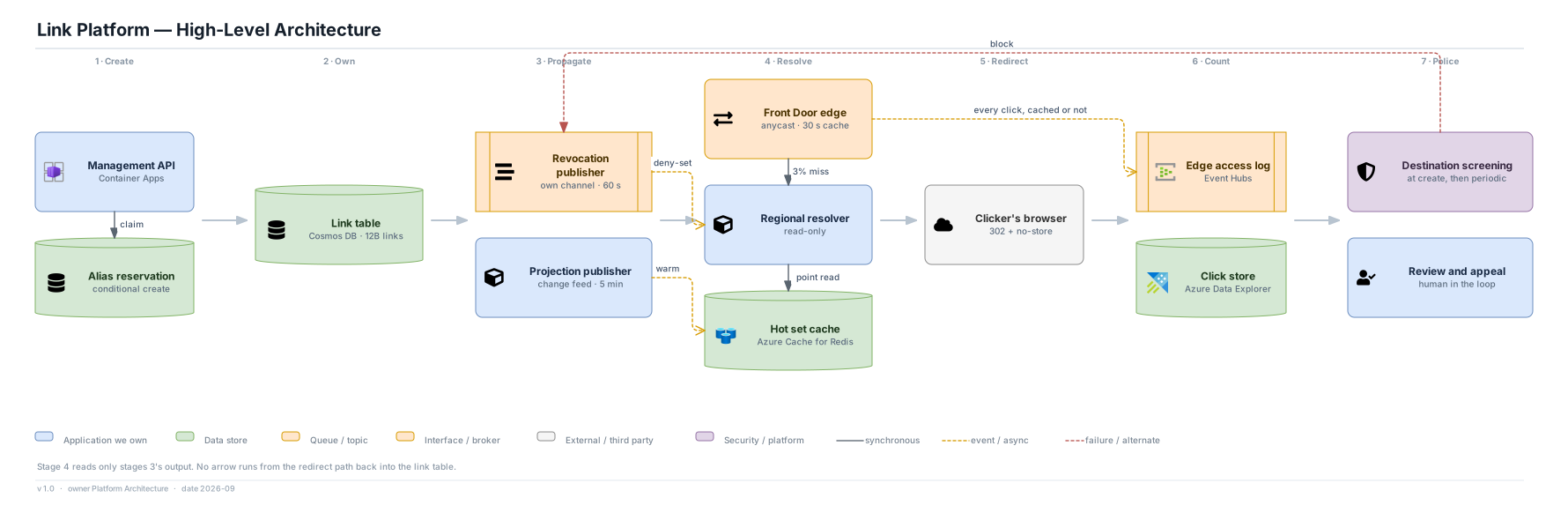
- Create and own (stages 1–2) are the management plane; resolve and redirect (stages 4–5) are the redirect plane; stage 3 is the only thing that joins them.
- Counting happens in stage 6, after the response has left, from the edge access log rather than from application code.
- Policing (stage 7) writes back only through the revocation channel, which is why an abuse block can be fast without the rest of propagation being fast.
What is deliberately absent
- No arrow runs from the redirect path back into the link table for the purpose of serving a click — only the cold read on a cache miss.
- No arrow runs from the click pipeline into the redirect path at all. An analytics outage is invisible to a clicker.
- No synchronous dependency on the management plane exists anywhere in stages 4–5, which is what lets creation fail for four hours without a single failed redirect.
Risks
- Stage 3 is a single logical component owning two very different promises (60 s and 5 min); if it is built as one channel, the tighter promise silently costs what the looser one does not need.
- Stage 6 depends on the edge log being complete. A sampled or truncated log becomes a billing dispute, not a monitoring gap.