Storage Tiering Service · View 28 of 31 · 7 · Assurance
Decisions
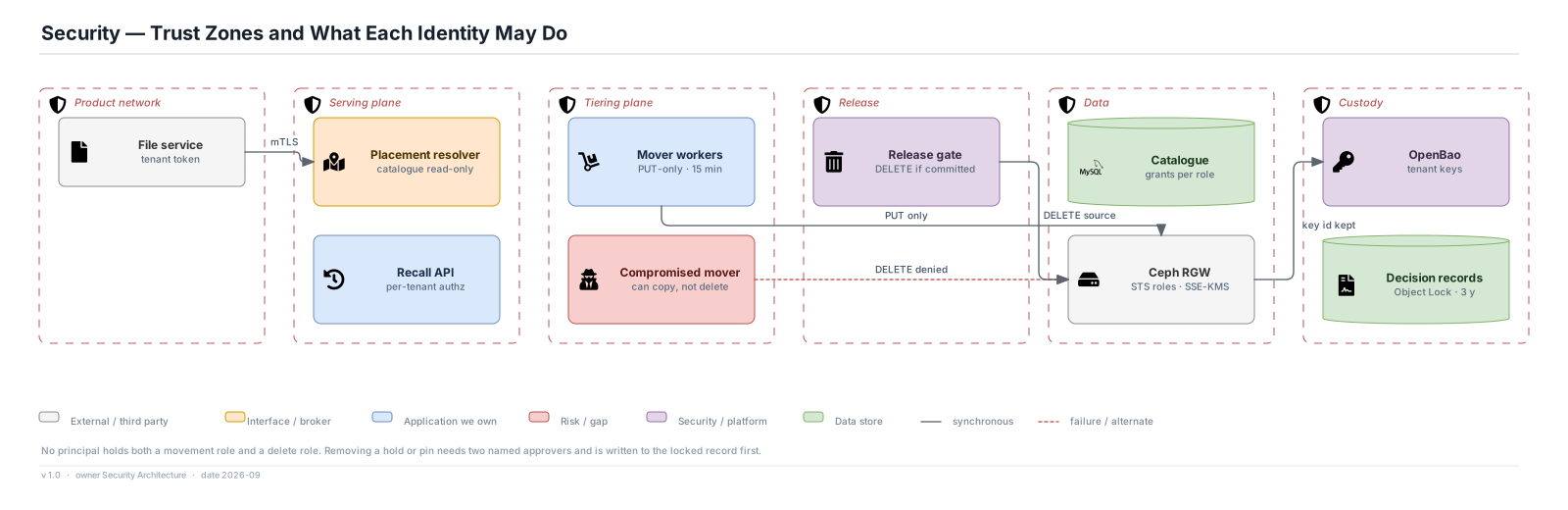
- Movement and deletion are separate principals in separate deployments. Movers can PUT into a named destination tier; only the release gate can DELETE, and only a source whose destination the catalogue records as committed (ADR-29).
- The resolver carries the caller's tenant token through to authorisation. An object is not readable to anyone because it is cold, and not unreadable because it is hot.
- SSE-KMS key ids are recorded per placement and per pack, and the mover writes with the source's key id. A movement never re-keys or de-keys an object.
Threats considered
- A compromised mover: can exfiltrate what it may read and write copies; cannot delete. Bounded to 15-minute credentials scoped to one tier.
- A malicious hold removal: needs two approvers and is written to the Object-Locked record before it takes effect.
- Bulk recall as staging for exfiltration: every job names a principal and an authority, and is reviewed by security above 1 million objects.
Assumption
- The file service authenticates end users. The tiering service authorises tenants and roles, and never sees end-user credentials.