SLO and Error Budget Service · View 02 of 21 · Context and scope
Decisions
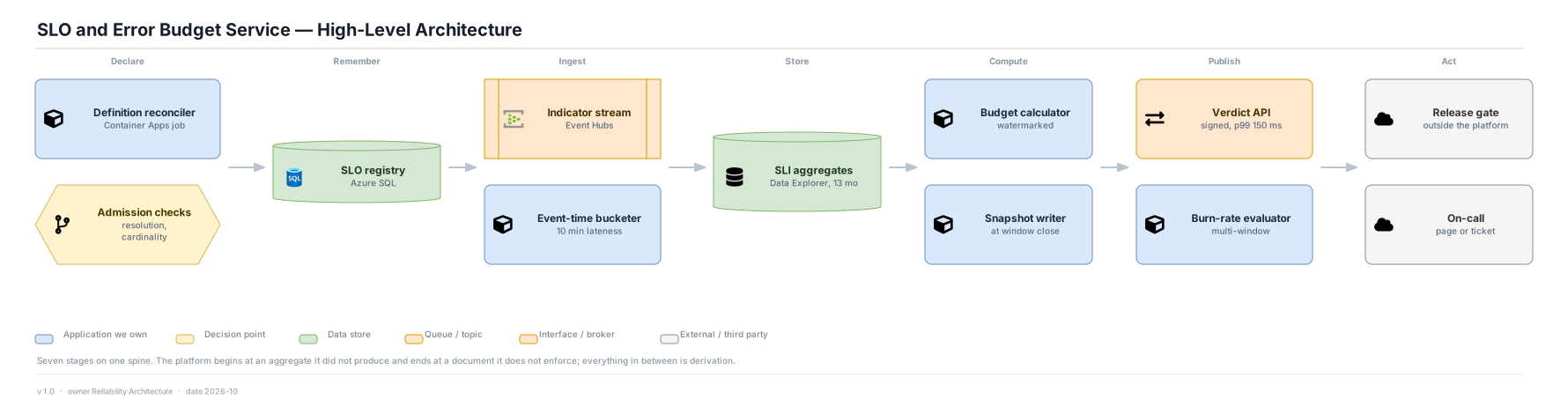
- Ingest and computation are separate stages with a durable store between them, so a computation outage is a freshness problem rather than a data-loss one (ADR-07).
- Publication splits in two: a synchronous verdict for the gate and an asynchronous burn-rate evaluation for on-call. They read the same derived state but have different latency and availability targets (ADR-09).
- Admission sits before the registry, not after it, so an unmeasurable objective is refused at authoring time rather than published as a meaningless figure (ADR-15).
Targets
- Budget freshness p95 ≤ 60 s, p99 ≤ 120 s from event timestamp to updated state — assumed.
- Verdict API p99 ≤ 150 ms in-region at 400 rps steady state, 2,000 rps for 120 s during a coordinated release window — assumed.
- Fast-burn page dispatched within 5 minutes (p95) of a 14.4× burn beginning — assumed.
Risks
- The spine has one authoritative input. If the outcome cube's dimensions are wrong, every stage downstream is confidently wrong and no amount of recompute fixes it (ADR-03).
- Two publication paths reading one projection means a staleness bug degrades a page and a release decision simultaneously.