Service Mesh Platform · View 29 of 31 · 7 · Assurance
Decisions
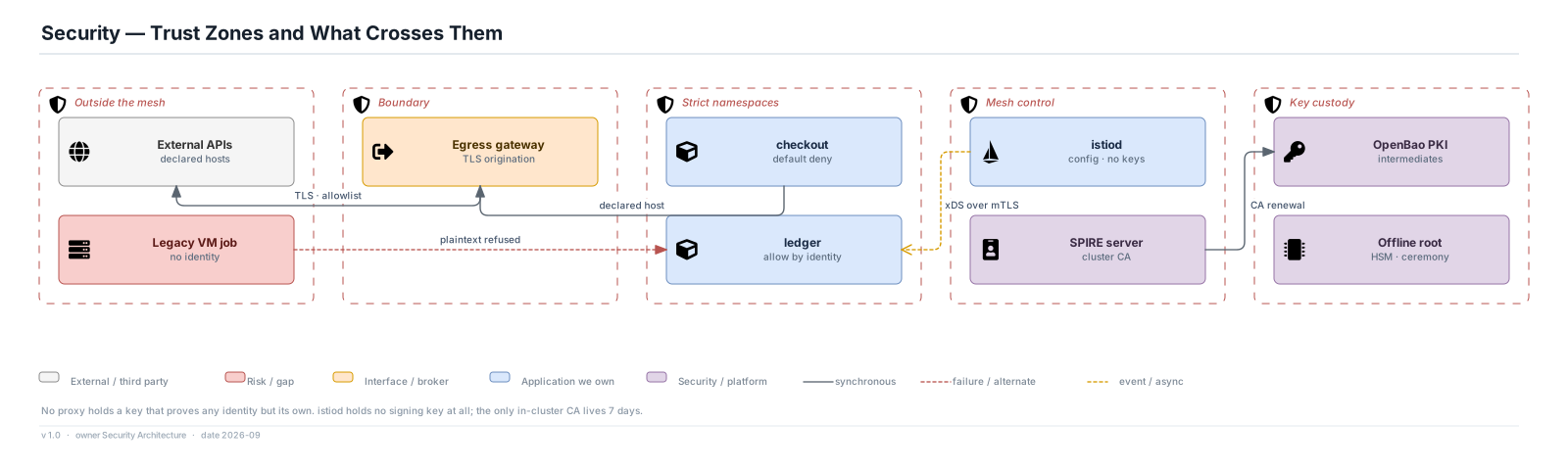
- No proxy holds a credential for any identity but its own workload's. A compromised proxy impersonates exactly one service, and only until its certificate expires.
- istiod holds no signing key. Compromising the configuration compiler lets an attacker change routes and policy, which is audited and reverted; it does not let them mint identities.
- Proxies accept configuration only from an istiod whose certificate chains to the mesh root and carries the control plane's SPIFFE ID.
Separation of duties
- Routing, authorisation and identity live in three repositories with three owner groups. Each has an Argo CD project that can create only its own resource kinds, so one team cannot change the others' configuration.
Residual risks
- A workload in a permissive namespace can still receive plaintext. The plaintext report makes that visible; closing it is the migration in view 04, not a platform switch.